Watermelon Ice Cream Hack Explained: 2 Ingredients, No Machine
Freeze a seedless watermelon overnight. Hollow out a well in the center, pour in heavy cream or a dairy-free alternative, scrape until fluffy. Two ingredients, no machine, no churning. The watermelon ice cream hack is exactly that simple, and it works.
What it isn't: a make-ahead project. Scrape it, eat it immediately. That constraint shapes every decision in this guide.
The trend behind it has been hard to miss. According to TikTok data reported by Fast Company earlier this month, the #watermelonicecream hashtag grew 1,371% in a single month, quadrupling over the week of July 10 alone. Numbers like that usually signal either a gimmick with a good camera angle or something that genuinely delivers. This one delivers.
Before the melon goes anywhere near the freezer, confirm two things: your freezer is at 0°F (-18°C) or colder, and you have a cleared shelf where a watermelon half can lie flat overnight. Both matter more than they sound.
What you'll need
Video of the Day
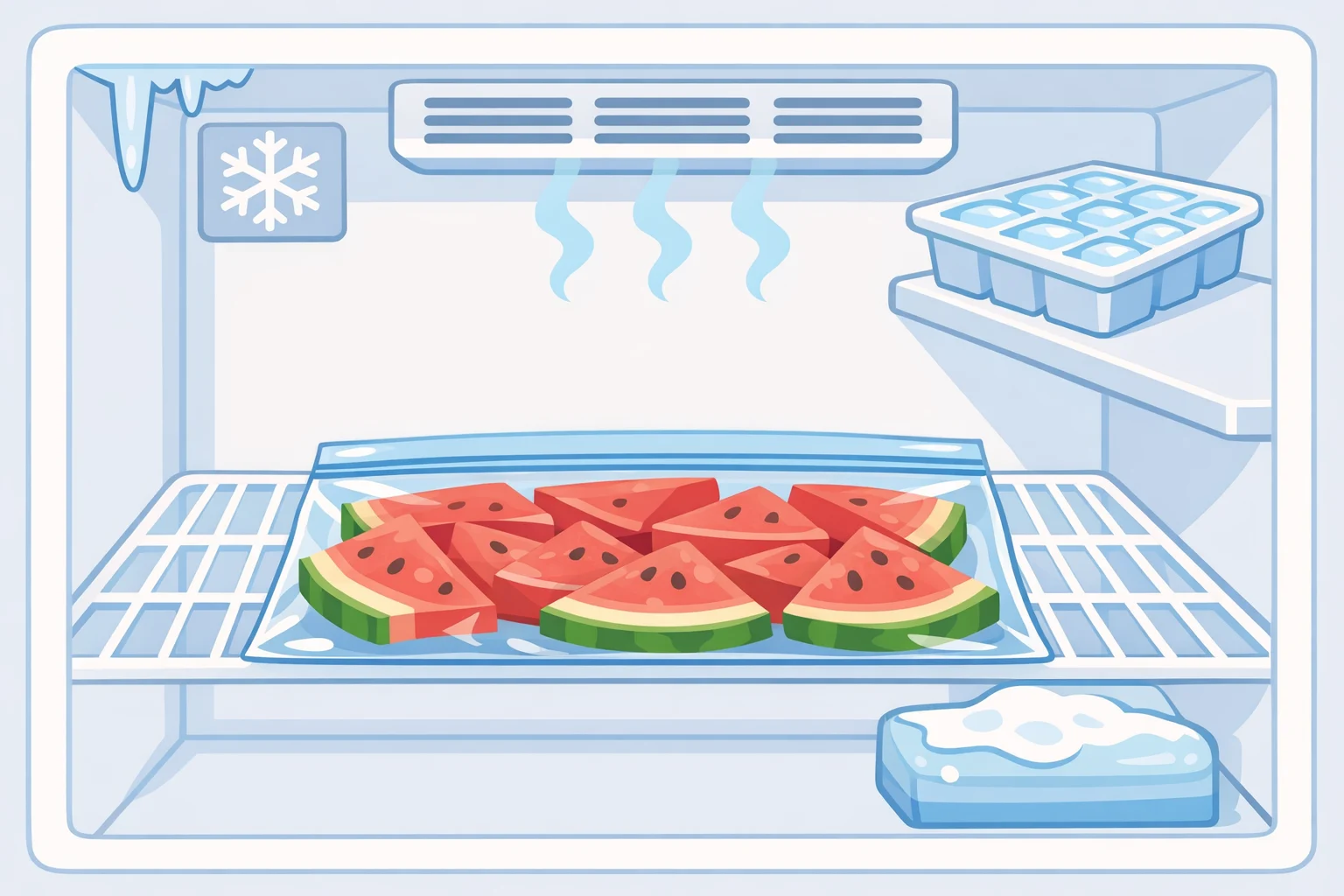
One seedless watermelon. Size matters less than shelf space; a large melon that has to be wedged in sideways won't freeze evenly. Creator Kirsten Titus said in a video that she cleared freezer space specifically to fit hers, as Fast Company noted earlier this month. That's not incidental. A melon crammed against other items freezes unevenly, and uneven freezing produces uneven texture when you scrape.
The second ingredient is a liquid, and the choice is the most consequential variable in the whole recipe. That's covered in Step 4.
Equipment: a large spoon or sturdy fork for scraping, plastic wrap, and that cleared shelf. Nothing else.
Video of the Day
Why the watermelon ice cream hack works
Watermelon is almost entirely water. Freeze a slice and thaw it, and you get a puddle. Serious Eats explains that high-water-content fruits freeze into their crisp structure but collapse into a watery slump once thawed, because ice crystals expand during slow home-freezer conditions and rupture cell walls. Thawed watermelon isn't just soft; it's structurally compromised.
The scraping method uses that liability as the mechanism. Rather than trying to preserve the fruit's texture, it deliberately destroys the frozen structure through friction, breaking the ice into fine pieces while folding in fat from the liquid you've poured in. The property that makes watermelon a poor candidate for standard freezing is exactly what the hack exploits.
This also explains why the liquid choice matters so much. Fat interferes with ice crystal growth. Research on frozen dessert storage quality published last December found that higher-fat formulations resisted crystal growth more effectively, producing a smoother, less gritty texture. With a low-fat liquid poured into a frozen watermelon shell, you're starting with a structural disadvantage. With heavy cream or full-fat coconut milk, the fat does real work during the scrape.
How to make watermelon ice cream: step by step
Step 1: Check your freezer temperature
Make sure your freezer is at 0°F (-18°C) or colder before anything goes in. Warmer storage temperatures produce larger ice crystals, and larger crystals create a coarser, grittier texture, according to the same frozen dessert research. The USDA recommends -18.8°C as the standard for home freezers, cited through that same study. If your freezer has been running warm, let it stabilize before the melon goes in. An hour is reasonable.
Step 2: Halve the watermelon and create a well
Cut the melon in half lengthwise. From the center of each half, scoop out enough flesh to form a shallow well. You're building a vessel for the liquid you'll add later, not gutting the melon. Reserve or eat the scooped fruit separately. Don't make the well so deep that you compromise the structural walls of the rind; you'll be scraping against those walls and need them intact.
Step 3: Dry the surface, wrap tightly, and freeze overnight
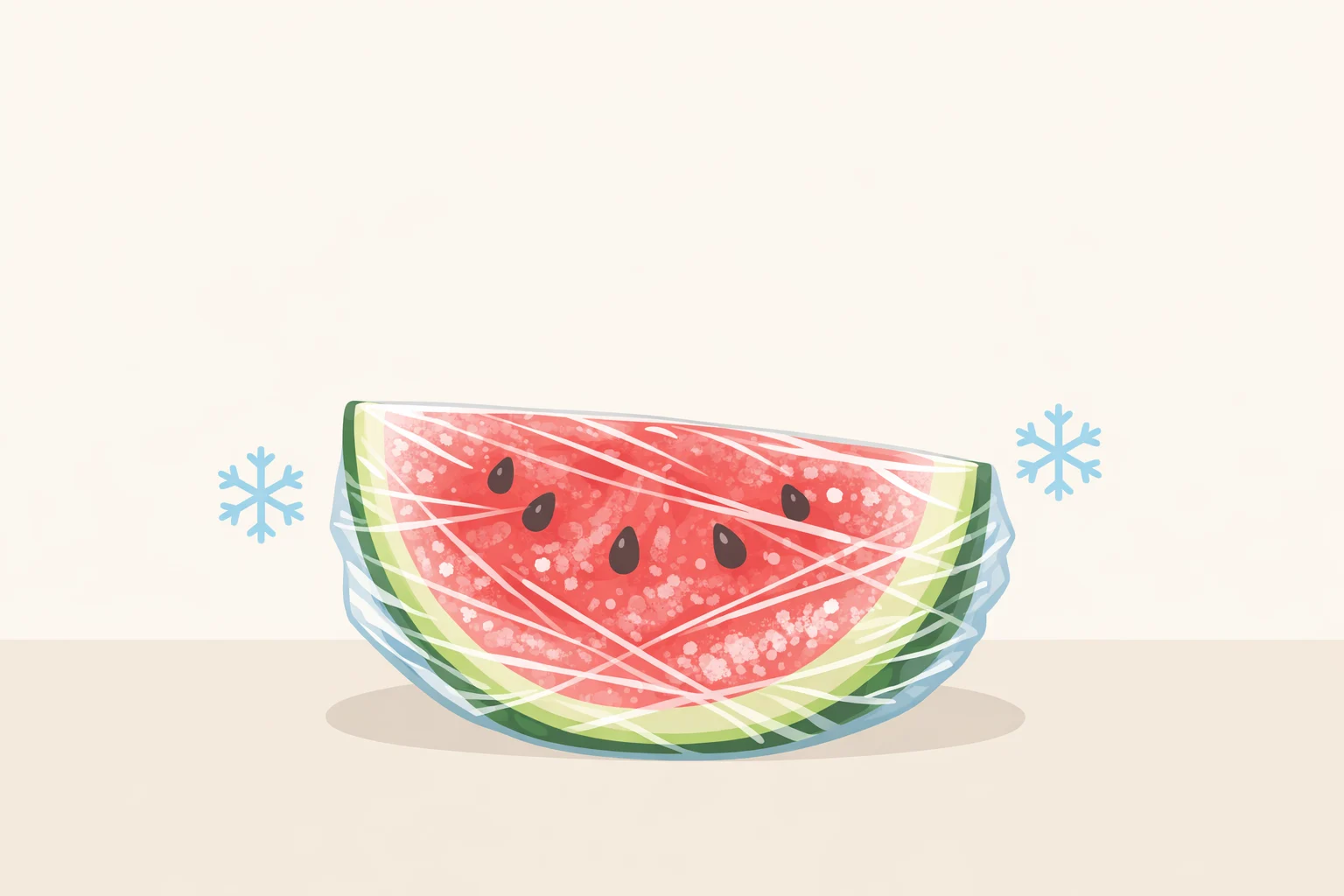
Pat the exposed flesh dry before wrapping. Surface moisture freezes into its own separate ice layer, and Serious Eats notes that any excess moisture on fruit turns to ice and causes uneven freezing. Press plastic wrap directly against the flesh to limit air contact; air accelerates freezer burn and uneven crystal formation. Lay it flat, flesh side up, and leave it overnight.
The melon needs to be solid all the way through. Surface-only freezing produces chunky shards when you scrape, not the fluffy texture you're after. Press the rind firmly when you take it out. If it still has give anywhere, it needs more time.
Step 4: Choose your liquid
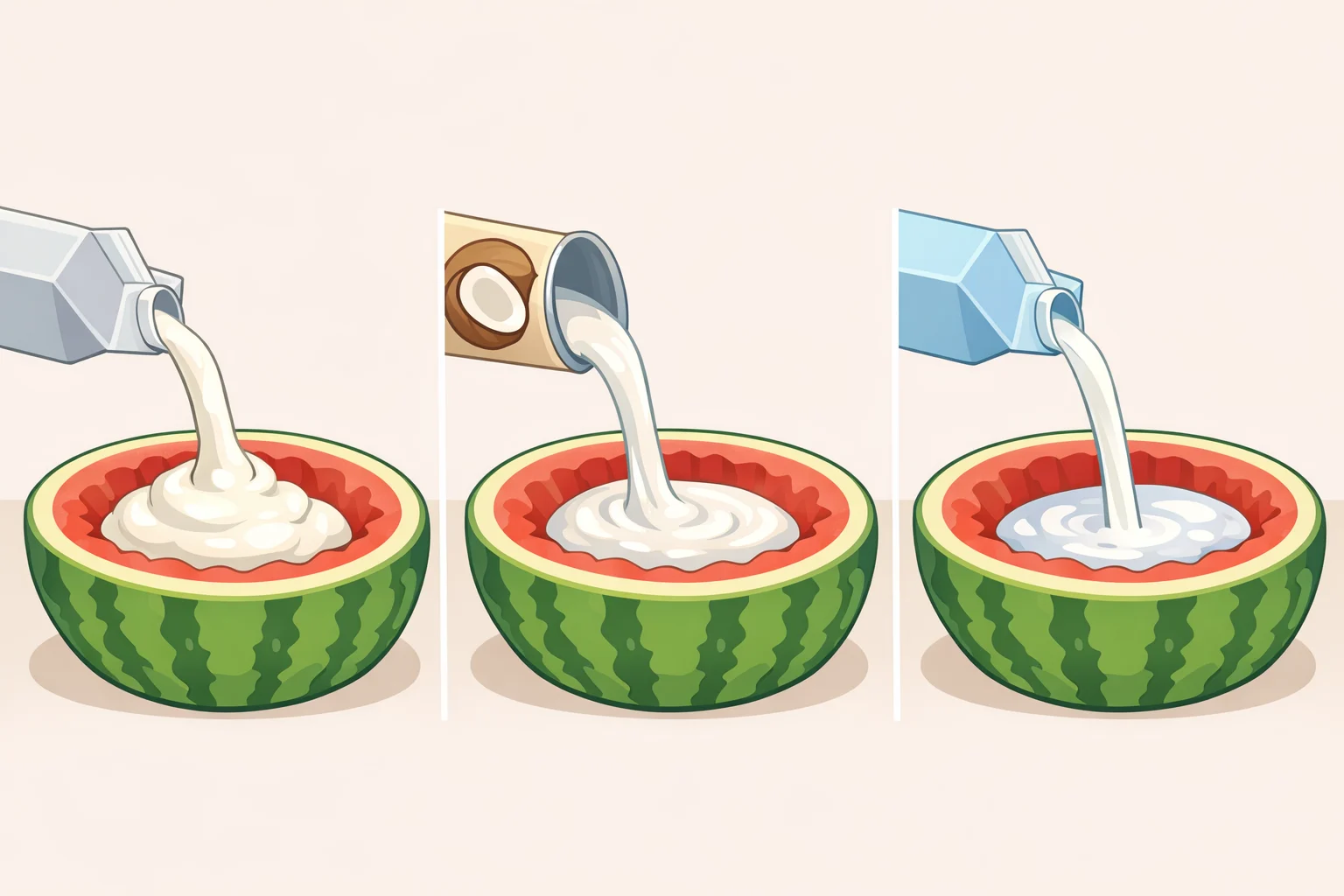
Pour your liquid of choice into the hollow just before scraping. Start conservative, enough to coat the well. Add more only if the mixture is too thick to work. Too much liquid and the scraping action turns everything to slush.
Your options, with realistic expectations for each:
- Heavy cream the richest result. Research on frozen dessert texture found that higher-fat formulations resist ice crystal growth more effectively, producing a smoother mouthfeel. If something close to soft-serve texture is the goal, this is the choice.
- Full-fat coconut milk the strongest dairy-free option, and a genuinely competitive one rather than a fallback. The same research found that non-dairy frozen desserts containing slightly more fat showed greater resistance to texture degradation than leaner dairy versions. Full-fat coconut milk also adds a mild tropical note that pairs well with watermelon.
- Whole milk workable. Expect a lighter, somewhat icier result than cream. Fine if you want something less indulgent; the texture will be noticeably thinner.
- Low-fat plant milks the least fat, the least creaminess. The result will taste like watermelon but land closer to granita than to the viral watermelon ice cream you've seen on TikTok. Not a failure, just a different dessert.
One consistent principle across all of these: fat content correlates with creaminess. The research supports that direction as a general finding, not a guarantee for any specific combination inside a watermelon rind. Start with less liquid than you think you need.
Step 5: Scrape until fluffy
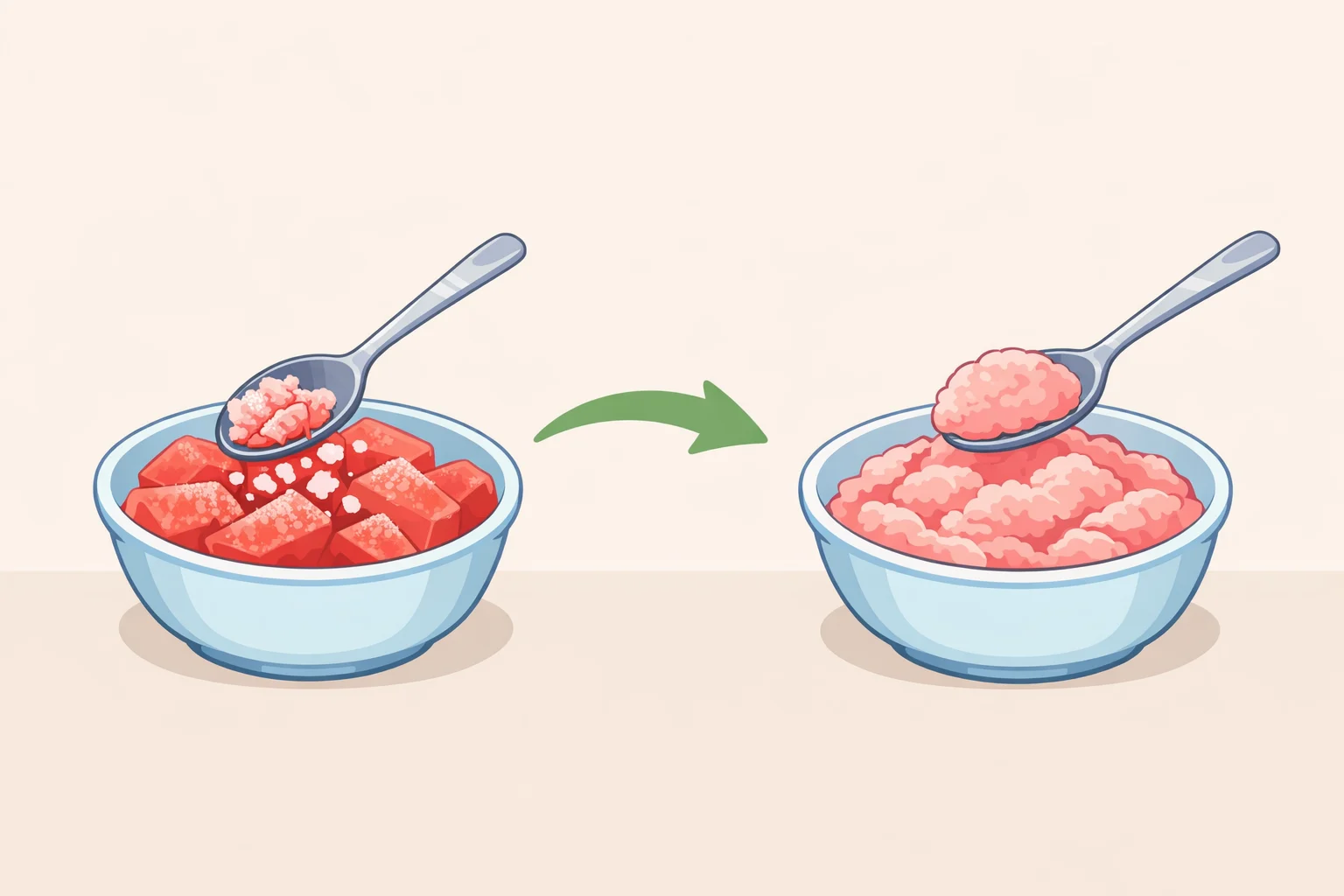
Use a large spoon or sturdy fork. Start at the outer edges, where the flesh is densest and coldest, and work toward the center. The goal is constant motion, shaving the frozen surface and folding it into the liquid simultaneously. Keep going until the mixture transforms from icy shards into something light and spoonable. Stopping too early leaves you with coarse chunks; the transformation takes sustained work.
If the surface is so solid the spoon barely makes a dent, let the melon sit at room temperature briefly, just enough to take the very edge off, then try again. Don't linger. If the surface starts weeping liquid instead of scraping into fluff, it's begun to thaw unevenly. Work faster, or slide it back into the freezer for a few minutes and start fresh.
The scraping motion is doing more than breaking up ice. Friction generates heat at a micro scale, and that heat, combined with the fat in the liquid, is what produces the fluffy texture. Stirring slowly won't get you there. Speed and pressure are part of the mechanism.
Step 6: Serve immediately from the rind
Eat it straight from the shell, with a long spoon, outside if possible. This is the format.
Transferring the finished dessert to a bowl and returning it to the freezer will collapse the texture. The scraped crystals regroup as temperature fluctuates, and what comes back out will be gritty rather than fluffy. The serve-immediately rule isn't a quirk of the recipe; it's a direct consequence of the same ice crystal physics that make the scraping work in the first place. Refreeze a granita and you get a solid block. Same principle here.
Troubleshooting
Chunky instead of fluffy. The melon probably wasn't frozen all the way through, or the scraping stopped too early. A solid overnight freeze at the correct temperature fixes the first. For the second: keep going. The fluffy result requires sustained effort.
Icy and watery instead of creamy. Two culprits: a low-fat liquid, or too much of it. Switch to heavy cream or full-fat coconut milk, and use less than you think you need. There's no recovery once the mixture turns watery; a fresh melon is the real fix.
Too hard to scrape. Let the melon rest at room temperature briefly before trying again. If your freezer runs particularly cold, this brief rest may become a standard part of the process. Don't walk away from it; the window between scrapeable and weeping is short.
Didn't fit in the freezer. A halved watermelon is bulkier than it looks. Choose a melon that fits your freezer shelf with room to lie flat, and clear the shelf before you start. This is a planned project; the prep is real even if the recipe isn't complicated.
When this hack is worth making, and when it isn't
The 2-ingredient frozen watermelon dessert earns its place because it turns a structural liability into a feature. Watermelon's enormous water content, the reason it freezes badly and thaws worse, is exactly what makes the scraping method possible. The cell walls rupture during freezing. The scraping breaks what's left into fine, workable crystals. The fat in the liquid holds them apart long enough to eat. Nothing about this fights the fruit's nature.
It's worth making when you have a hot afternoon, a small group, and no plans to store leftovers. It's not worth making if you're hoping to prep it hours ahead, portion it into bowls, or return any of it to the freezer. The physics don't bend.
Liquid choice remains the one variable most within your control once the method is set. Heavy cream for the richest outcome. Full-fat coconut milk for a dairy-free version that holds up well and adds a mild tropical note. Whole milk if lighter and slightly icier works for you. Whatever you choose, start with less than you expect to need.
Make it outside. Eat it there.