How to Hand-Wash Clothes the Right Way, According to Experts
Learning how to hand-wash clothes correctly comes down to one counterintuitive insight: the wash itself is nearly foolproof. The rinse, water removal, and drying are where things go wrong. A cashmere sweater can survive aggressive handling in soapy water and then be permanently distorted by wringing it out over the sink.
Silk, cashmere, lace, and embellished items can be damaged by machine agitation and heat in ways that can't be reversed, according to Good Housekeeping's Home Care & Cleaning Lab. Hand-washing prevents the stretching, color transfer, and premature wear that accumulate over machine cycles, Lysol CA notes. The Fabric Index puts the active time at about ten minutes per garment less than a dry-cleaner drop-off.
What you'll need before starting:
- A clean sink or basin
- Gentle or delicate-specific detergent (see the detergent section below)
- Two clean, dry towels
- A flat, clean surface for drying
Hand-wash, machine-delicate, or dry clean? Decide before you fill the sink
Video of the Day
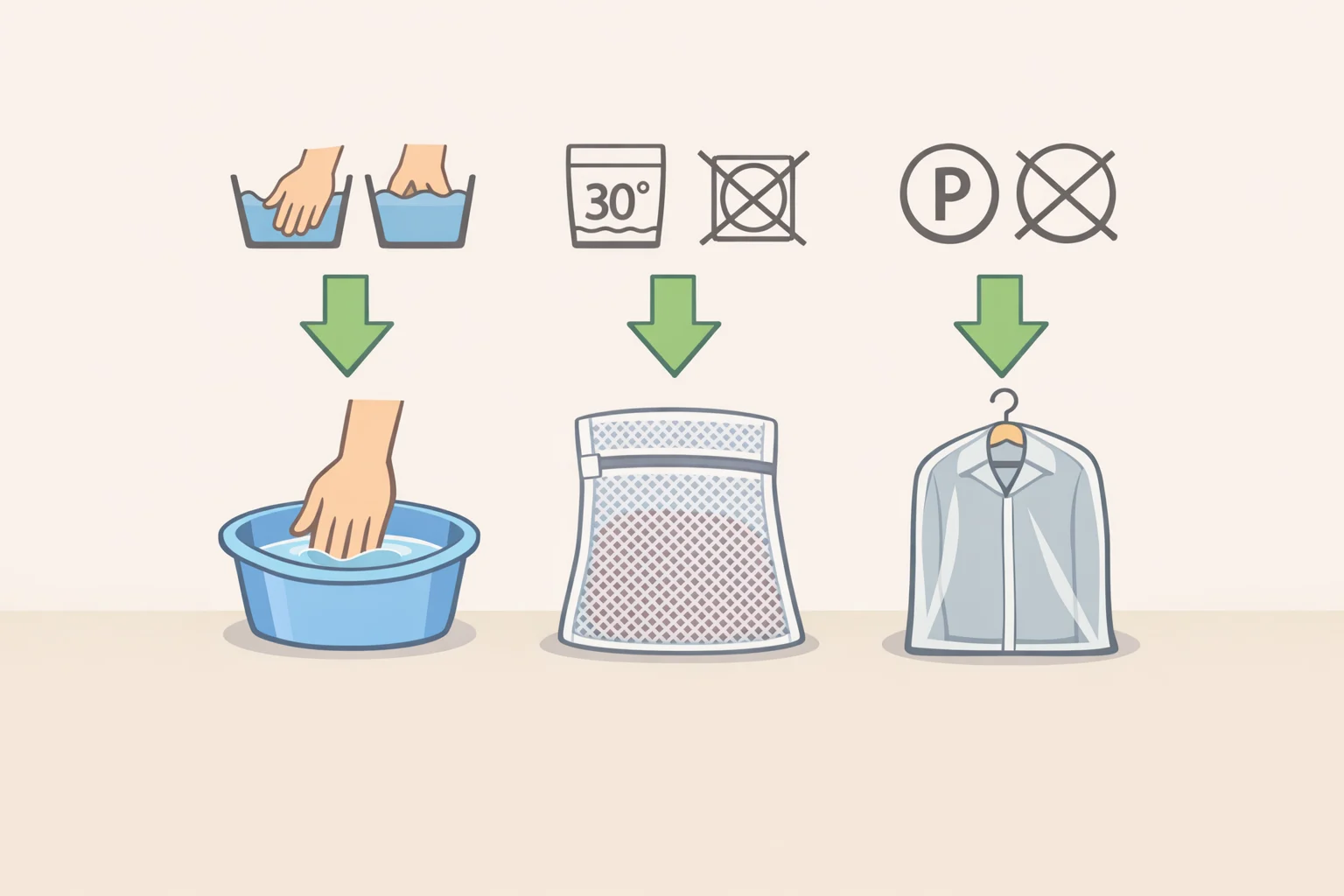
Not everything that feels fragile needs the sink treatment. A quick triage saves time and prevents the wrong method from doing the wrong kind of damage.
Hand-wash: Anything labeled "hand wash only." Also the right call for silk, cashmere, wool, lace, embellished pieces, and structured bras. Lace and fine knits are prone to damage from friction, while items with long straps, strings, or underwire can tangle, stretch, and lose their shape in a spin cycle, Good Housekeeping reports. No care label? Cool water with a gentle detergent is the lowest-risk default, per The Fabric Index.
Machine-delicate with a mesh bag: A reasonable shortcut for items that aren't strictly "hand wash only" but still need protection. A mesh bag reduces friction and prevents tangling, Good Housekeeping advises. It won't replicate hand-washing, but it limits most of the damage. Use a cold cycle and skip the dryer.
Dry clean only: If the care label says "dry clean," hand-washing in cool water may be a safe alternative. If it says "dry clean only," that distinction is deliberate take it to the cleaner, Good Housekeeping advises.
Before anything goes in the water: separate by color and fiber type. Washing like items together prevents dye transfer and keeps temperature and soak time decisions simple, Good Housekeeping recommends. Turn items prone to fading or pilling dark colors, sweaters, leggings inside out before they hit the water, per Good Housekeeping.
Video of the Day
Choose your detergent: two things that actually matter
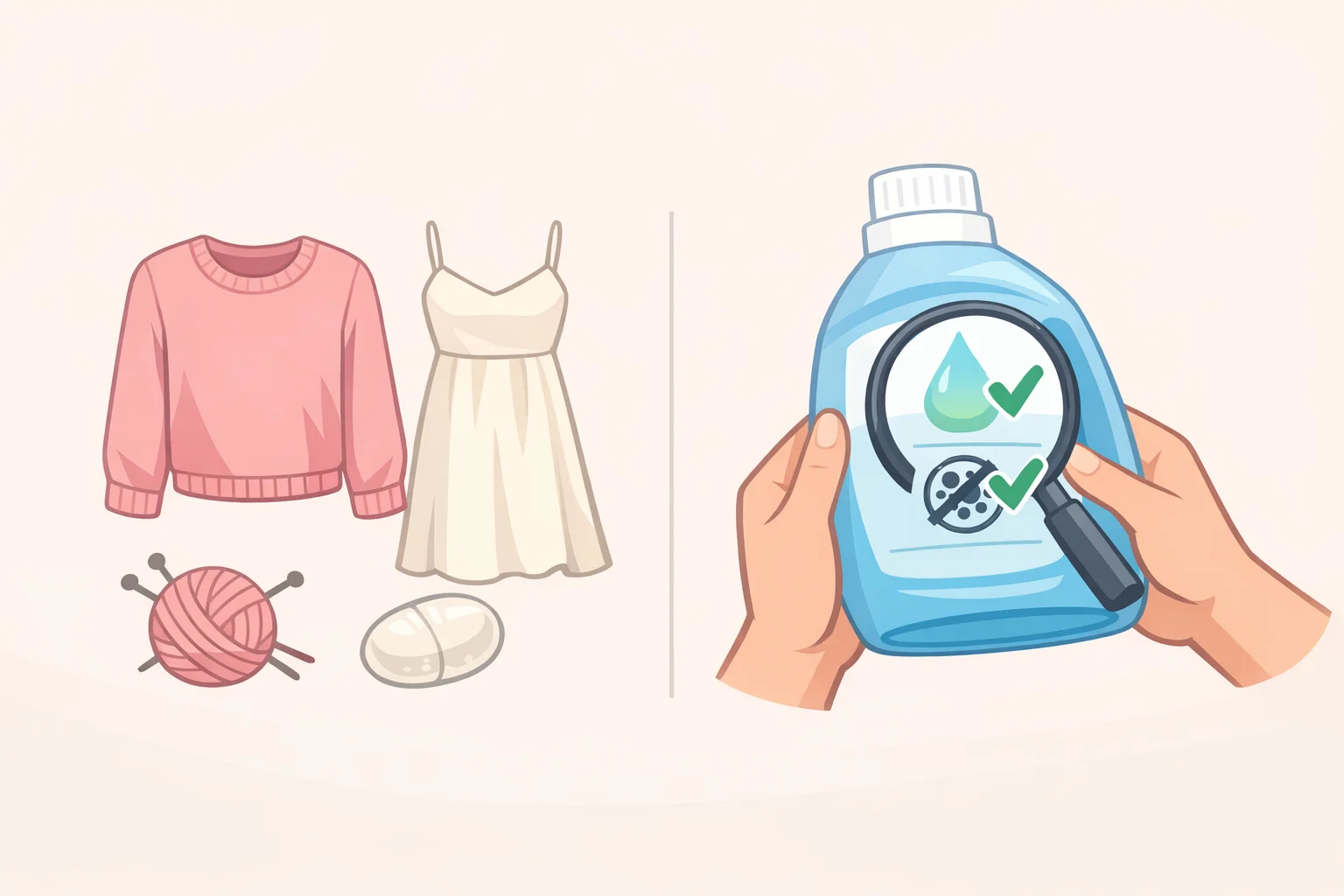
Start with the practical rule: reach for a gentle, fine fabric, or "free and gentle" detergent. Mild dish liquid works in a pinch, Good Housekeeping confirms. For wool and silk specifically, two properties are worth checking beyond the label.
pH. Standard laundry detergents run between pH 9 and 11. That alkalinity suits cotton and synthetics well, but protein-based fibers like wool and silk are chemically vulnerable to high pH it attacks the molecular structure of the fiber itself, according to Cleaning Science World. In wool, high-pH exposure triggers the felting process that causes irreversible shrinkage. In silk, it dulls the natural luster and can leave the fabric stiff and brittle. A pH-neutral detergent keeps these fibers at their point of maximum chemical stability. Delicate-specific detergents are designed with this in mind. "Free and gentle" and fine fabric options are gentler choices than standard detergents, though they aren't guaranteed to be pH-neutral worth checking the label if you're washing wool or cashmere regularly.
Enzyme content. Many standard detergents contain protease enzymes that break down protein-based stains. The problem: a protease enzyme cannot distinguish between a food stain and a silk blouse, as Cleaning Science World explains. Over repeated washes, these enzymes can slowly hydrolyze the garment itself, leading to fabric thinning and eventual structural failure. Specialized delicate detergents are typically formulated without proteases. If the garment is silk or cashmere, looking for "enzyme-free" on the label is worth the extra step.
Amount: One teaspoon per garment. More soap means residue trapped in the fabric after rinsing, not cleaner clothes, per The Fabric Index.
How to hand-wash clothes in the sink: step by step
This sequence works for most hand-washable garments. Fabric-specific notes for bras, sweaters, and underwear follow immediately after.
Step 1: Pre-treat any stains. Apply a small amount of liquid detergent or stain remover directly to the stain and work it in gently with your fingertips. Don't scrub. Vigorous rubbing spreads the stain and abrades the fiber surface two problems harder to fix than the original mark. Let it sit two to three minutes before moving on, per Good Housekeeping.
Step 2: Fill the sink, then dissolve the detergent. Add water first, detergent second. Dissolving before the garment goes in prevents concentrated product from sitting directly on fabric. Add one teaspoon and swish until fully dissolved, per Good Housekeeping.
For temperature: cool to lukewarm is the safe default for most delicates, below 29°C / 85°F, per Lysol CA. Wool, silk, and bright colors need cold water specifically. Hot water can shrink wool, damage silk, and set certain stains rather than lift them, according to The Fabric Index. When in doubt, go cooler.
Step 3: Submerge and soak. Place the garment in the water and gently press it under the surface. Squeeze the soapy water through the fabric every couple of minutes circulating the detergent, not agitating. If the water discolors, that's typically excess dye releasing, not damage to the fabric, Good Housekeeping notes.
Soak times by item type, per Good Housekeeping:
- Most everyday delicates: 5 minutes
- Sweaters and heavier knits: at least 10 minutes
- Bras: 15 minutes
- Underwear: up to 30 minutes (for silk or lace underwear, treat those as delicates and keep the soak shorter)
The Fabric Index recommends not exceeding ten minutes as a general ceiling extended soaking doesn't improve cleaning and can stress fine fibers even in cool water.
When lifting heavy wet garments thick sweaters, long knit dresses support the weight from underneath with both hands. A saturated sweater is far heavier than it looks; letting it hang from one end stretches the fabric before it ever reaches the towel, Good Housekeeping warns.
Step 4: Rinse thoroughly. This stage matters more than the wash. Drain the sink and refill with cool, clean water. Squeeze water gently through the fabric to clear the detergent. Repeat until the water runs completely clear typically two to three passes, per The Fabric Index. For lightweight items like tights or swimsuits, a faucet sprayer over a colander handles this faster than repeated sink fills, Good Housekeeping suggests.
Detergent residue left in fabric stiffens it, attracts soil, and can continue to stress delicate fibers between washes particularly with higher-alkalinity products used on silk or wool. Keep rinsing until the water is completely clear.
Optional: Add a tablespoon of white distilled vinegar to the final rinse. It neutralizes trace alkalinity left by the detergent and may help wool and cashmere fiber scales re-contract toward the garment's original dimensions, per The Fabric Index. The mechanism is supported by Cleaning Science World, which notes that an acidic rinse after washing can help re-contract wool and cashmere fiber scales.
Step 5: Remove water without wringing. Never wring a hand-washed garment. Lift it and gently squeeze water out with both hands. Then lay it flat on a clean dry towel and roll the towel and garment together like a scroll, pressing gently as you go until the towel has absorbed most of the remaining moisture, per Good Housekeeping. This is the stage where most garments get permanently distorted wringing stresses fiber bonds and changes the shape in ways that are difficult to reverse, The Fabric Index notes.
Step 6: Reshape and dry flat. Transfer the garment to a second dry towel or clean flat surface and reshape it by hand to its original dimensions. This matters most for knits, which will dry in whatever shape you leave them. Lay it completely flat don't hang it. Gravity on a saturated garment pulls it out of shape as it dries, Lysol CA warns. Once the front side is dry, flip it to finish.
Drying time varies by fabric weight. Synthetics are done in a few hours; cashmere can take up to 24 hours depending on humidity, per The Fabric Index. Don't put hand-washed items in the dryer unless the care label explicitly permits it.
How to hand-wash bras and sweaters
The core method covers most garments. These two categories have specific adjustments worth knowing.
Bras and delicate underwear
Use lukewarm water for bras and warm water for underwear both run warmer than the cold-water rule for silk and wool, unless the care label specifies otherwise. Dissolve detergent completely before adding any garments. Soak bras for 15 minutes and underwear up to 30 minutes; multiple pieces can go in together if they're the same color and fiber type, per Good Housekeeping.
Skip the towel roll for bras. Squeeze each component separately cups, straps, back then blot with a towel. Reshape the cups by hand and dry flat.
Sweaters and knits
Flip the sweater inside out before it goes in the water. This protects the outer surface from friction and slows color fading. Use lukewarm water with a gentle detergent or mild dish liquid; soak for at least 10 minutes, working the water through the fabric every few minutes. The towel-roll step is especially important here a wet sweater is heavy, and it needs to shed significant moisture before flat drying can work efficiently. Reshape the body, sleeves, and neckline before setting it down to dry, per Good Housekeeping.
Common mistakes that undo good work
Using too much detergent. More soap doesn't clean better. It leaves residue in the fiber that stiffens the garment and attracts soil over time. One teaspoon per garment, The Fabric Index confirms.
Using hot water. Hot water can shrink wool, damage silk, and lock in certain stains rather than lifting them, per Good Housekeeping. Cool or lukewarm covers nearly every hand-washing situation.
Soaking too long. Five minutes is right for most everyday delicates. The longer times for sweaters, bras, and underwear exist for practical reasons specific to those items for anything without special instructions, more time doesn't improve cleaning and can stress fine fibers, per The Fabric Index.
Wringing. Covered in the steps above, but worth a one-line reminder: use the towel-roll method instead.
Hanging wet delicates to dry. Gravity plus saturated weight equals a stretched-out garment. Dry flat, unless the label says otherwise, per Lysol CA.
Skipping the rinse. Keep rinsing until the water runs completely clear residue stiffens fabric and traps soil.
Keeping up with it
The most practical system: fifteen minutes once a week, batched by color and fiber type, The Fabric Index suggests. Wash in the evening. Lighter fabrics will be ready by morning; heavier knits and cashmere may need the full day, per The Fabric Index.
Done consistently, this prevents the compounding wear that machines impose on vulnerable garments stretching, fading, the gradual fiber thinning that accumulates wash after wash, per Lysol CA. Three decisions drive most of the result: use a gentle, ideally enzyme-free detergent for silk and wool; never wring; dry flat and reshape while the garment is still damp.
Worth noting where the method doesn't apply: if a garment bleeds heavily, has internal structure like boning or padding that can't be safely submerged, or the label clearly says "dry clean only," hand-washing is the wrong tool. Take it to someone who handles those properly.