Why Do My Clothes Smell After Washing? Causes & Fixes
If you're wondering why do my clothes smell after washing, the answer almost always comes down to one of two problems: a washing machine that has become a source of contamination, or synthetic fabrics that trap and hold odor compounds in ways no standard detergent can fully address. This guide walks through both, in order, so you can identify which problem you actually have and fix it without wasting time on the wrong solution.
Before anything else, a quick diagnosis. The fix depends entirely on the cause.
- Every load comes out smelling musty, regardless of fabric type. Your washing machine is the most likely culprit. Start at "Why your washer is making clothes smell."
- Only gym clothes and synthetic gear retain odor. The machine may be fine. The problem is fiber chemistry. Skip to "Why synthetic fabrics are a different problem."
- One load smells and you haven't dried it yet. Rewash it immediately with hotter water where the care label permits. The dryer locks odor into fabric and makes it significantly harder to remove, according to Consumer Reports.
By the time a musty smell shows up on clothes consistently, the underlying cause inside the washer has usually been developing for weeks or months, Real Simple reported earlier this month. The smell you notice is a lagging indicator, not an early warning.
Before you start: Gather your washer's owner's manual, a manufacturer-approved washing machine cleaner, and microfiber cloths. Confirm you have access to the drain filter and detergent drawer. Check care labels on any garments you plan to rewash at higher temperatures.
Why your washer is making clothes smell
Video of the Day
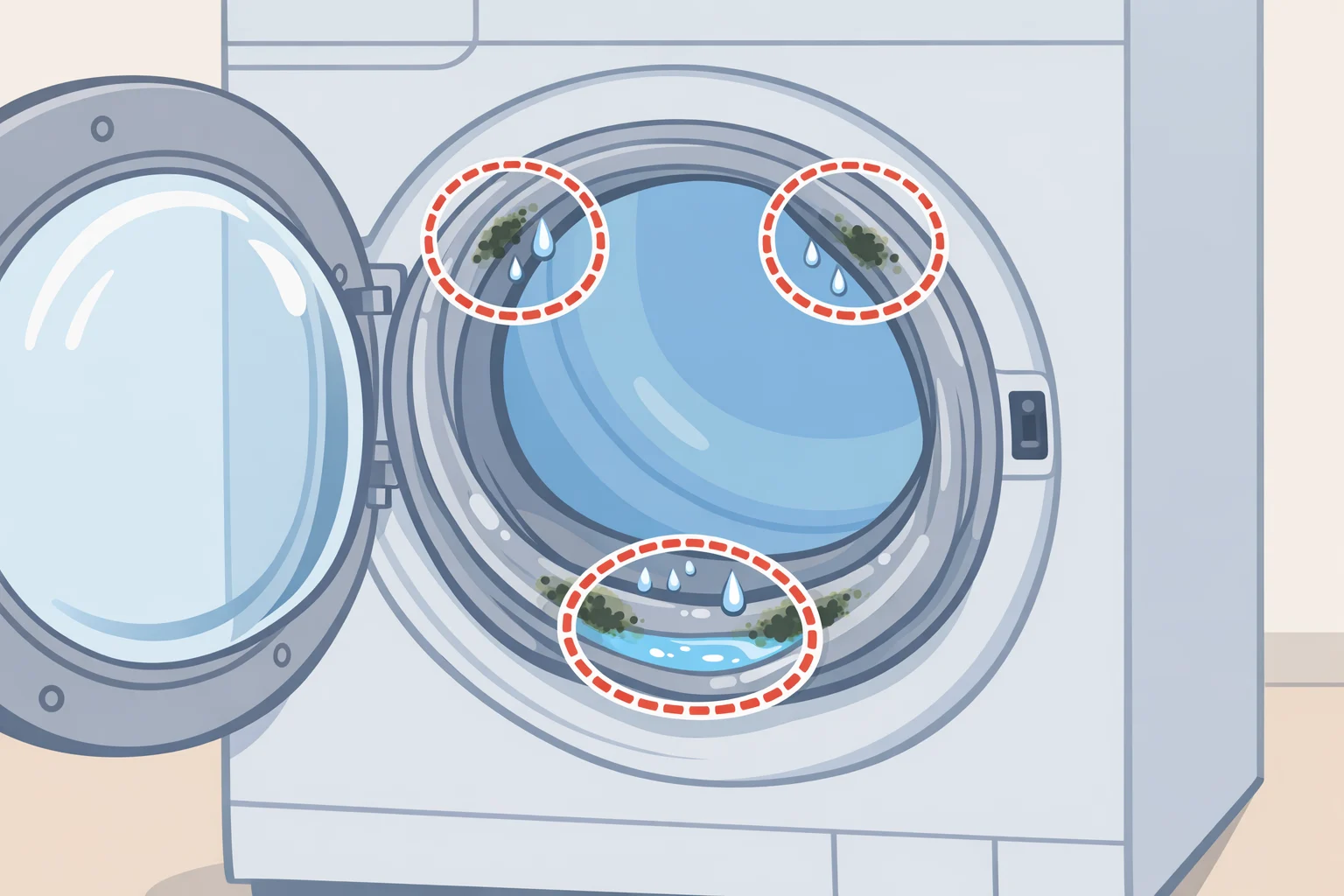
Trapped moisture is the root cause. A closed, damp washing machine drum creates near-perfect conditions for mold and mildew, which can establish within just 24 to 48 hours of a wet cycle ending, Consumer Reports found. Front-load washers can be especially vulnerable if the door stays closed, because moisture lingers around the rubber gasket after every cycle.
Moisture alone isn't the whole story. Fabric softener residue, mineral deposits, skin oils, soap scum, and organic matter build up over time inside the drum, gaskets, drain filter, and detergent drawer, feeding ongoing microbial growth, Real Simple reported earlier this month. The damp, earthy smell that transfers to clothes comes from microbial volatile organic compounds released as mold spreads.
Confirm the machine is the source. Open the door and smell the drum directly, then pull back the rubber gasket on a front-loader and smell inside the fold. Check the detergent drawer cavity too. If those areas smell musty, the washer is the likely source of what's ending up on your clothes.
Check the laundry room while you're at it. Musty odors can originate from trapped moisture not just inside the drum but on surrounding surfaces, including walls, floors, and utility sinks. In chronically damp spaces like basements, running a dehumidifier to keep ambient humidity between 35% and 50% is part of the fix, not optional, per Real Simple.
Skip the vinegar trick unless your manual allows it. Pouring distilled white vinegar into the detergent dispenser is all over the internet. Ignore it. Vinegar can degrade rubber seals and hoses, potentially causing leaks, which creates a far worse moisture and mold problem than the one you started with. Consumer Reports advises against it unless your owner's manual specifically recommends it.
Video of the Day
Why do my clothes smell after washing even when the washer looks clean?
This is the question that trips people up. A drum that looks clean can still harbor mold in the gasket folds, drain filter, and detergent compartment. If the machine still smells after a full manufacturer-approved cleaning, or clothes keep coming out musty load after load in what you believe is a freshly cleaned washer, the problem may indicate hidden buildup or a maintenance issue that warrants service. Surface cleaning has limits. Some problems require a repair.
How to deep-clean a smelly washing machine
Rewashing clothes in a contaminated machine will re-contaminate them. Clean the machine first, then rewash. These steps go in order for a reason.
Step 1: Read the owner's manual. Every machine has different recommended products and procedures. The manual specifies what's safe for your specific appliance. Manufacturers know their machines best, and one-size-fits-all solutions can do more harm than good, per Real Simple and Consumer Reports.
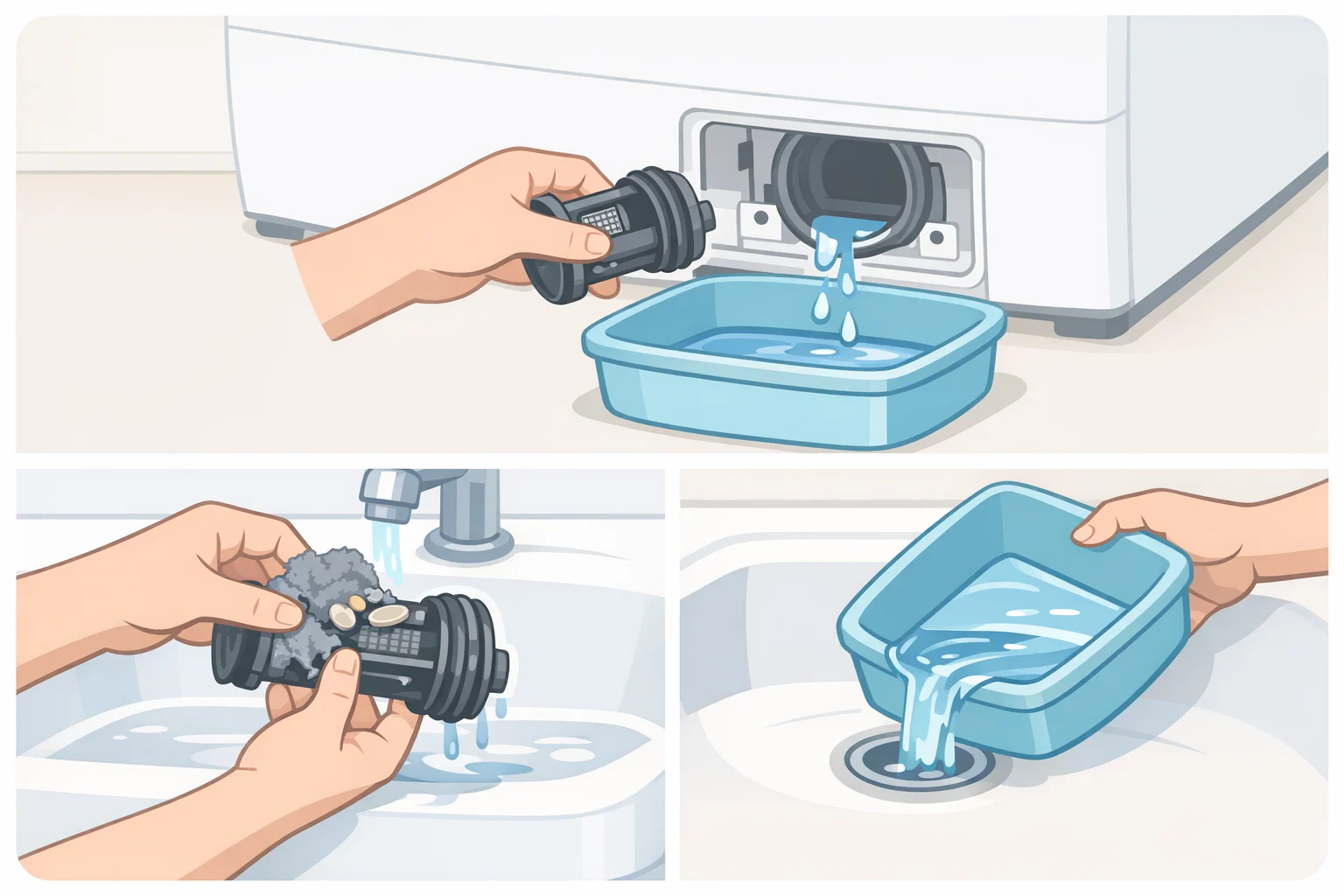
Step 2: Clear the drain filter. Locate the drain filter, typically behind a small access panel at the base of front-loaders, and remove trapped lint, debris, and buildup. A clogged filter holds standing water and organic matter, keeping the contamination cycle going, per Real Simple.
Step 3: Soak and scrub the detergent drawer. Pull out the detergent tray and soak it in your approved cleaning solution. While it soaks, clean the cavity behind it. Residue accumulates in the compartment itself, not just the removable drawer, per Real Simple.
Step 4: Wipe down the drum, gaskets, lid, and surrounding surfaces. Spray the inside of the drum, rubber door seals, the lid or door, and any accessible interior surfaces. Use clean microfiber cloths, swapping frequently to avoid spreading contamination from one area to another. On front-loaders, pull the gasket fold open and clean inside it that's where mold most commonly hides. Wipe down the exterior of the machine and any adjacent walls, floor, or utility sink as well, per Real Simple.
Step 5: Run a hot self-clean cycle. Use the machine's self-clean setting, or run the hottest, longest available cycle with an empty drum and a manufacturer-approved cleaner. Hot water reaches interior surfaces and recesses that manual wiping misses. No self-clean cycle? An empty hot wash works, per Real Simple.
Step 6: Let everything dry completely. After the cycle finishes, leave the door, lid, and detergent tray open until the interior is fully dry. This is also the habit to maintain after every future load. For front-loaders especially, it is the single most effective preventive measure available, Consumer Reports found.
Now rewash the affected clothes. Once the machine is clean, rewash smelly garments at a higher water temperature than usual, where care labels permit. If the load hasn't been dried yet, this is often enough on its own. For whites and cotton that still retain odor after rewashing, a diluted bleach soak followed by a full wash with similar garments is an option, per Consumer Reports. Laundry sanitizers from brands like Lysol and Clorox are also recommended by garment care professionals for persistent cases, though Consumer Reports notes it has not independently tested some of these products, so treat them as a reasonable option rather than a guaranteed fix.
Why synthetic fabrics are a different problem and what to do about it
Even after a thorough machine cleaning, polyester activewear may keep smelling. That's not a laundering failure. It's a fiber chemistry problem, and it requires a different approach.
Across multiple wear trials, polyester has consistently received the highest odor intensity ratings of any textile type. Wool performs best; cotton ranks close to wool. Polyester is reliably the worst, according to a review published in iScience via PMC in 2023. The mechanism is straightforward: fresh sweat is odorless, but bacteria on the skin break down sweat compounds into odorous molecules, and synthetic fabrics create a more hospitable environment for that bacterial activity than natural fibers do.
The detergent choice matters more here than most people realize. A 2024 study on moisture-wicking polyester found that a sports-specific detergent removed approximately 76% of one key odor compound and nearly 88% of another in a single wash cycle, significantly outperforming standard detergents used the same way, per a Journal of Surfactants and Detergents study published last year. For athletic gear washed regularly, that gap adds up.
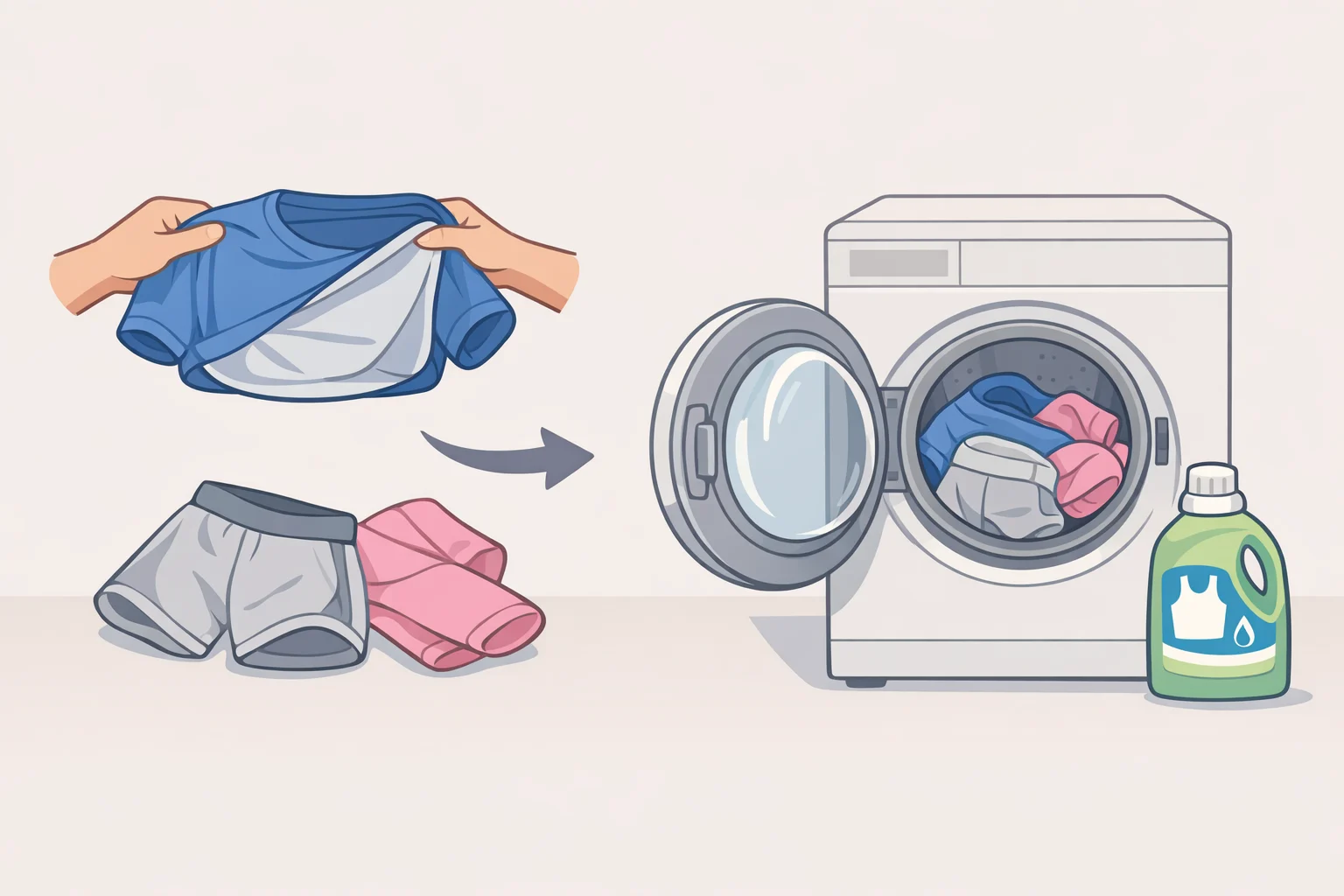
What to do differently for synthetics. Use a detergent formulated specifically for activewear. Options include Persil Activewear Clean and Hex Performance, Consumer Reports noted last fall. Turn garments inside out before washing to expose the most bacteria-laden surfaces to detergent and water directly. Where care labels allow, wash at higher temperatures. Stubborn synthetic odor may take more than one cycle to clear.
One more thing on finishing products. Some treatments marketed for athletic odor work partly through added fragrance that masks remaining smell rather than eliminating the source compounds, the same Journal of Surfactants and Detergents study found. A garment can smell clean out of the dryer and still carry odor compounds that become apparent once worn and warmed. Masking is not the same as removal.
Keeping the problem from coming back
Three habits do most of the work. Leave the washer door or lid open after every cycle. Remove wet laundry as soon as the wash finishes a phone timer set before you start a load is the simplest way to make this automatic. Wipe down the rubber door seal regularly. Together, these eliminate the moisture conditions that allow mold to establish, per Consumer Reports.
Get the detergent right. High-efficiency washers require HE-formulated detergent. Standard detergent in an HE machine produces excess suds that don't rinse out fully, leaving residue that feeds bacterial and mold growth over time, undoing every cleaning step already taken, Real Simple reported earlier this month. It's an easy mistake that quietly reverses months of good maintenance.
Schedule routine deep cleans before odor becomes noticeable. By the time the smell is apparent, the buildup has been accumulating for a while. Cleaning roughly once a month under regular household use keeps contamination from reaching that threshold, per Real Simple.
The framework worth keeping
Two distinct problems, two distinct fixes. A musty smell on every load, regardless of fabric, is a machine maintenance problem. Clean the washer first, rewash clothes second, and build the door-open habit going forward. A persistent smell on polyester activewear, even after the machine is clean, is a fiber chemistry problem. Switch to a sports-specific detergent, wash inside out, and expect the process to take more than one cycle.
If the machine still smells after a full approved deep clean, or clothes keep coming out musty load after load, the problem may indicate hidden buildup that warrants a service call. Not more detergent, not another cleaning product. Some problems need a repair, not a routine.