Professional Cleaning for Indoor Air Quality in Rowlett TX: Evidence-Based Guide
Most people hire a cleaning service because they want their home to look presentable. What happens to the air they breathe afterward is rarely part of the conversation but for Rowlett homeowners, it should be. Professional cleaning for indoor air quality in Rowlett TX is a real, evidence-backed intervention, but the evidence is narrower than most service pages suggest: cleaning can meaningfully reduce allergens and particulates, but only when it targets the right surfaces, uses low-emission products, and works alongside filtration and moisture control. Done wrong, it can briefly make things worse.
The EPA notes that Americans spend roughly 90% of their time indoors, where some pollutant concentrations run two to five times higher than outdoor levels, a gap that widens in homes with limited fresh-air exchange (EPA, Indoor Air Quality, updated May 2026). Most of those pollutants originate inside the building itself, including VOCs released by cleaning supplies, paints, and household products (EPA, Indoor Air Quality, updated May 2026). The EPA links cleanliness directly to healthier indoor air, advising homeowners to reduce asthma triggers such as mold and dust mites and keep all areas clean and dry, but that guidance comes with conditions, and those conditions define everything that follows (EPA, Care for Your Air).
What cleaning can realistically affect and what falls outside its reach
Video of the Day
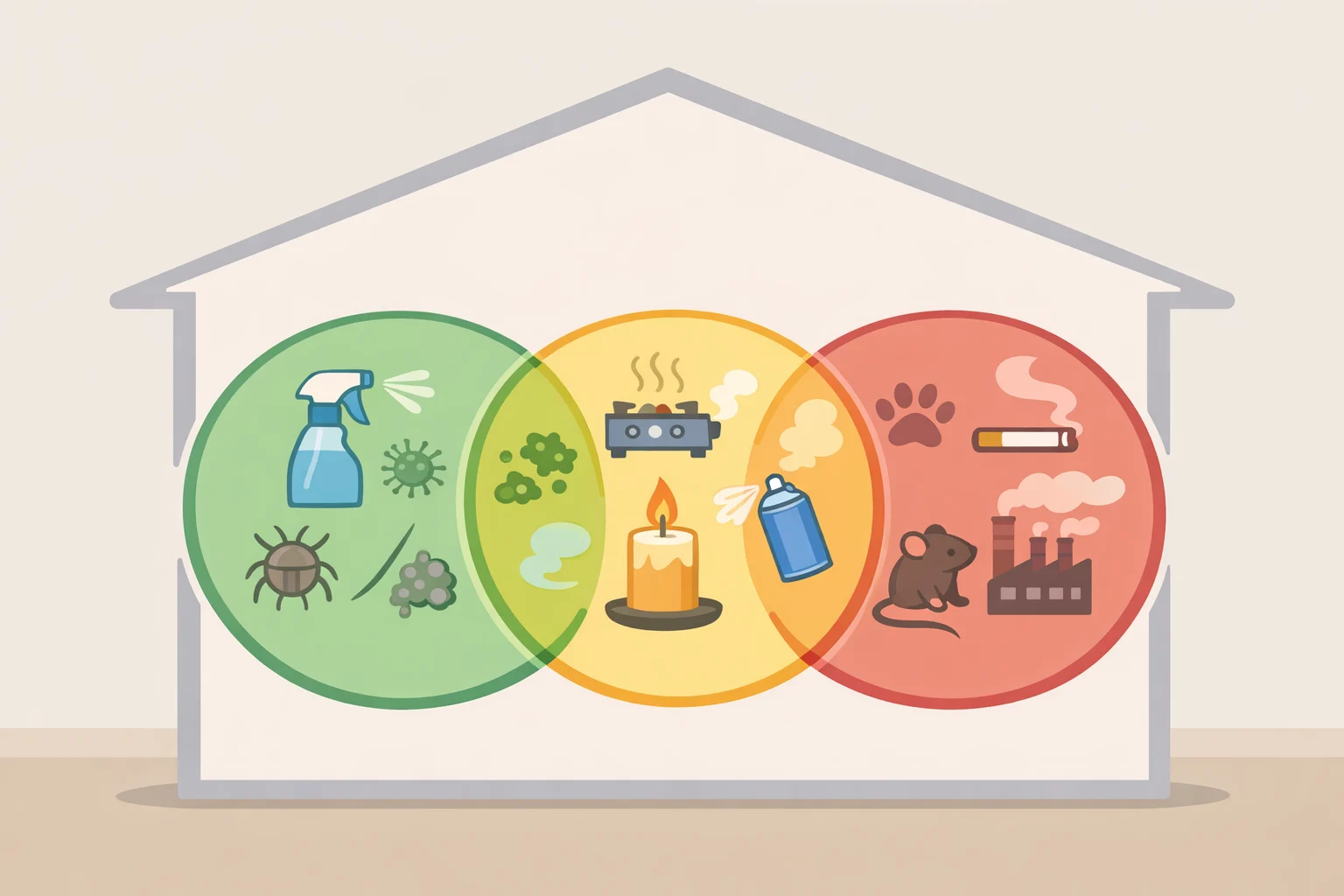
Before evaluating whether professional cleaning improves indoor air quality, it helps to understand which pollutants it can actually influence. Think of your home's air as carrying three categories of problem: things cleaning can address directly, things cleaning supports but doesn't solve alone, and things cleaning can't touch at all.
What's in scope: Cleaning can reduce biological allergens (dust mites, pet dander, mold residue), settled particulate matter, and depending on product choice, the VOC load introduced by the cleaning process itself.
What's partly in scope: Mold control depends heavily on moisture management. A cleaning service can remove visible mold residue, but without resolving the humidity or water intrusion driving it, the problem returns. The EPA's position is direct: the key to mold control is moisture control, and water-damaged materials need to be dried within 24 to 48 hours to prevent mold from establishing (EPA, Care for Your Air).
What's out of scope: Serious indoor pollutants like radon and carbon monoxide are not housekeeping problems. Neither is lead or asbestos in older building materials. The EPA identifies these as significant IAQ hazards (EPA, Indoor Air Quality, updated May 2026), but no cleaning service addresses them. Framing "better IAQ" primarily as a cleaning outcome misrepresents how those risks are managed.
The air exchange factor: When windows stay closed during a Texas summer, the air exchange rate, the pace at which indoor air is replaced by outdoor air, drops. The EPA identifies air exchange rate as a key determinant of indoor pollutant concentrations, shaped by building design, natural ventilation through open windows and doors, and mechanical systems like fans and air handlers (EPA, Indoor Air Quality, updated May 2026). Whatever pollutants are present in a closed-up home accumulate faster and persist longer. That context makes the specifics of how and what gets cleaned more consequential than they'd be in a freely ventilated space.
Health effects linked to chronic indoor pollutant exposure include eye, nose, and throat irritation, headaches, fatigue, and respiratory disease, none of which require living in a visibly dirty home to develop (EPA, Indoor Air Quality, updated May 2026). Dust mites, mold, pet dander, cockroach allergens, and particulate matter are all confirmed asthma triggers (EPA, Indoor Air Quality, updated May 2026).
Video of the Day
Where cleaning helps most: allergen reservoirs and why thoroughness is the variable
The strongest evidence connecting cleaning to better indoor air quality comes from allergen control research, specifically around dust mites. The core finding: thorough cleaning works; partial cleaning doesn't.
A meta-analysis synthesizing 35 trials and 2,419 patients found that total bedroom allergen control produced meaningful improvement in patient-reported outcomes for house dust mite–induced allergic asthma, with a risk ratio of 3.39 (95% CI: 1.04 to 11.04). Partial bedroom control, targeting some surfaces but not others, was statistically non-significant and was explicitly described as not recommended (PubMed meta-analysis, June 2024). The study focuses on people with allergic asthma, so it doesn't prove that professional cleaning improves air quality for every household. What it does show is that for individuals sensitive to dust mite allergens, the difference between thorough and superficial cleaning is clinically meaningful, not just cosmetic.
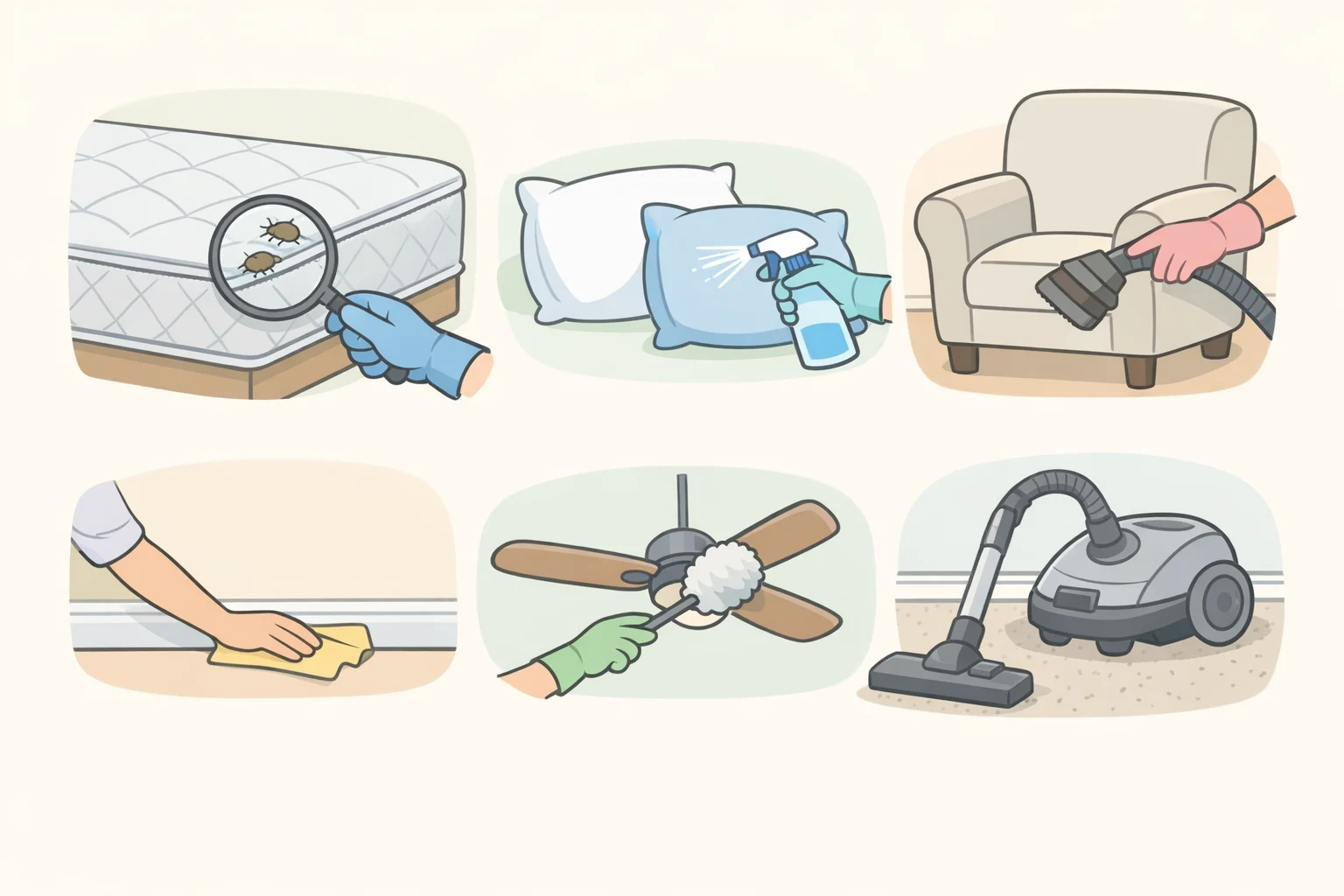
What "thorough" means in practice: Superficial cleaning wipes visible surfaces and vacuums open floor areas. Reservoir-focused cleaning treats the surfaces and materials where allergens actually accumulate:
- Mattresses and pillows (primary dust mite habitat)
- Upholstered furniture, curtains, and fabric surfaces
- Baseboards, ceiling fan blades, and ventilation covers where dust settles
- Carpets and rugs, vacuumed with HEPA-filtered equipment
- Bedrooms as a priority, since that's where the research shows the clearest benefit and where occupants spend the most concentrated time
The bedroom emphasis matters particularly for Rowlett homes running continuous air conditioning. Bedrooms are often the most tightly closed rooms in the house, with the least fresh-air exchange, exactly the environment where allergen buildup is most likely to affect overnight health.
Who benefits most: People with dust mite–induced allergic asthma or significant indoor allergies stand to gain the most from this level of cleaning. For households without those sensitivities, the benefit is real but more modest, a reduction in settled dust and particulates that contributes to a generally lower pollutant load. Worth having, but a different magnitude of payoff than the clinical trials demonstrate.
Nocturnal air purification alongside allergen control improved asthma symptom scores by a mean difference of -0.7 (95% CI: -1.08 to -0.32, P < 0.001) in the same meta-analysis, a finding that argues for combining thorough cleaning with active filtration, not treating either as sufficient on its own (PubMed meta-analysis, June 2024).
The product problem: when cleaning chemicals temporarily degrade the air
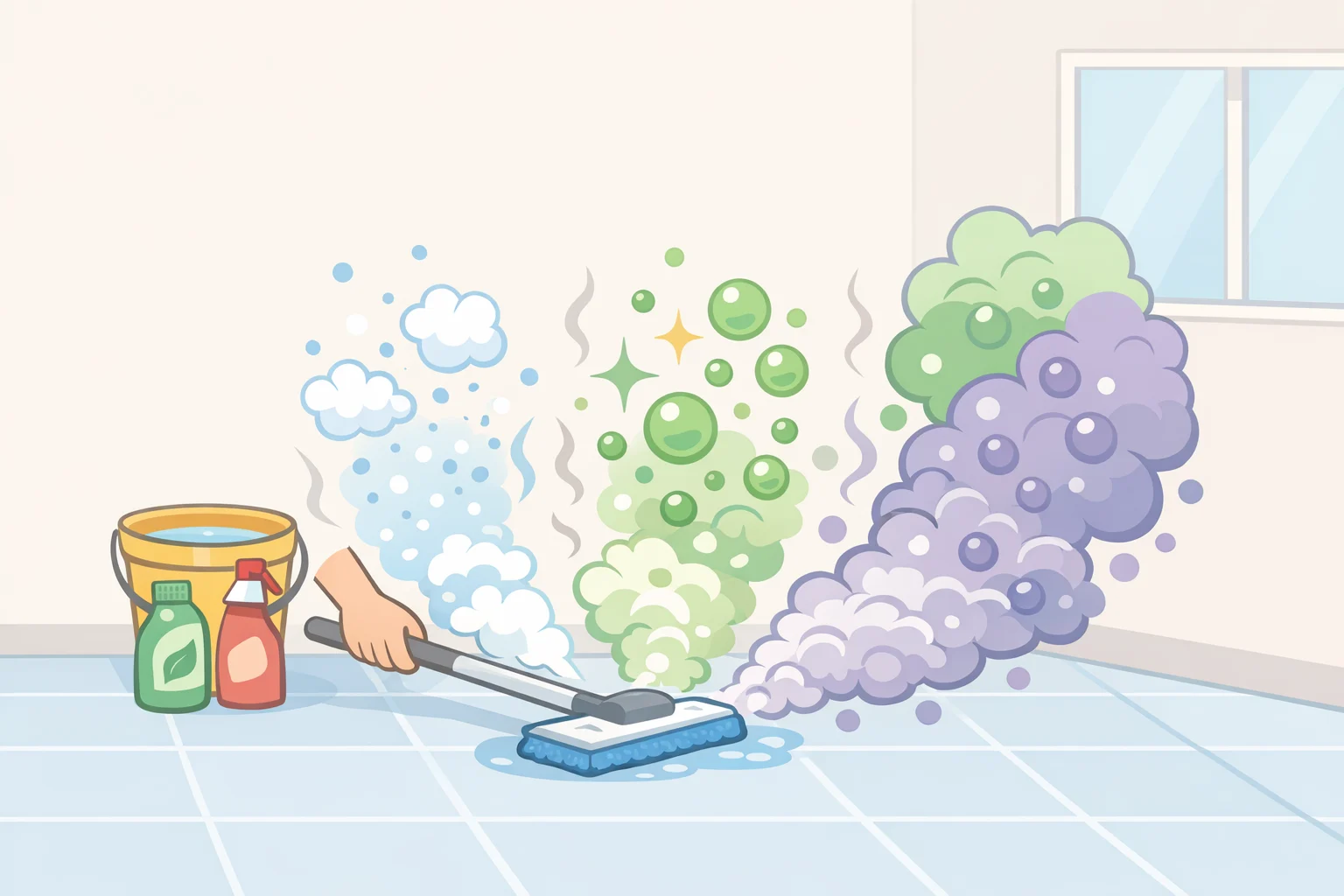
The tension at the center of this topic is straightforward. The act of cleaning, specifically mopping floors with commercial products, can temporarily worsen indoor air quality by releasing fine particles and VOCs into the space being cleaned.
A 2026 chamber study measuring emissions from eight commercial floor cleaners found that fine particle concentrations below 300 nanometers increased with every product tested (Indoor Air study, 2026). The lemon-scented cleaner generated particle emission rates roughly ten times higher than most other products, with VOC emissions of 5.2 mg/h, the highest among all cleaners evaluated. Bleach-based products triggered nanoparticle formation during mopping, with particle emission rates around 10¹¹ particles per hour (Indoor Air study, 2026).
Two additional findings from the same study matter for anyone hiring a cleaning service. Using a higher product concentration amplified both particle and VOC output, meaning more product doesn't clean better, it just pollutes more. The chamber setting means real-home exposures may differ, but the direction of the effect aligns with what the EPA observes more broadly: cleaning supplies are among the household products that routinely release VOCs directly into indoor air (EPA, Indoor Air Quality, updated May 2026).
The practical implication is direct. HEPA vacuuming, steam cleaning, damp microfiber dusting, and fragrance-free or low-VOC solutions carry different emission profiles than solvent-based or heavily fragranced liquid cleaners. That distinction matters most in closed-up homes where air exchange is low and any spike in airborne particles or VOCs lingers.
Filtration and HVAC: where the measurable particulate gains are
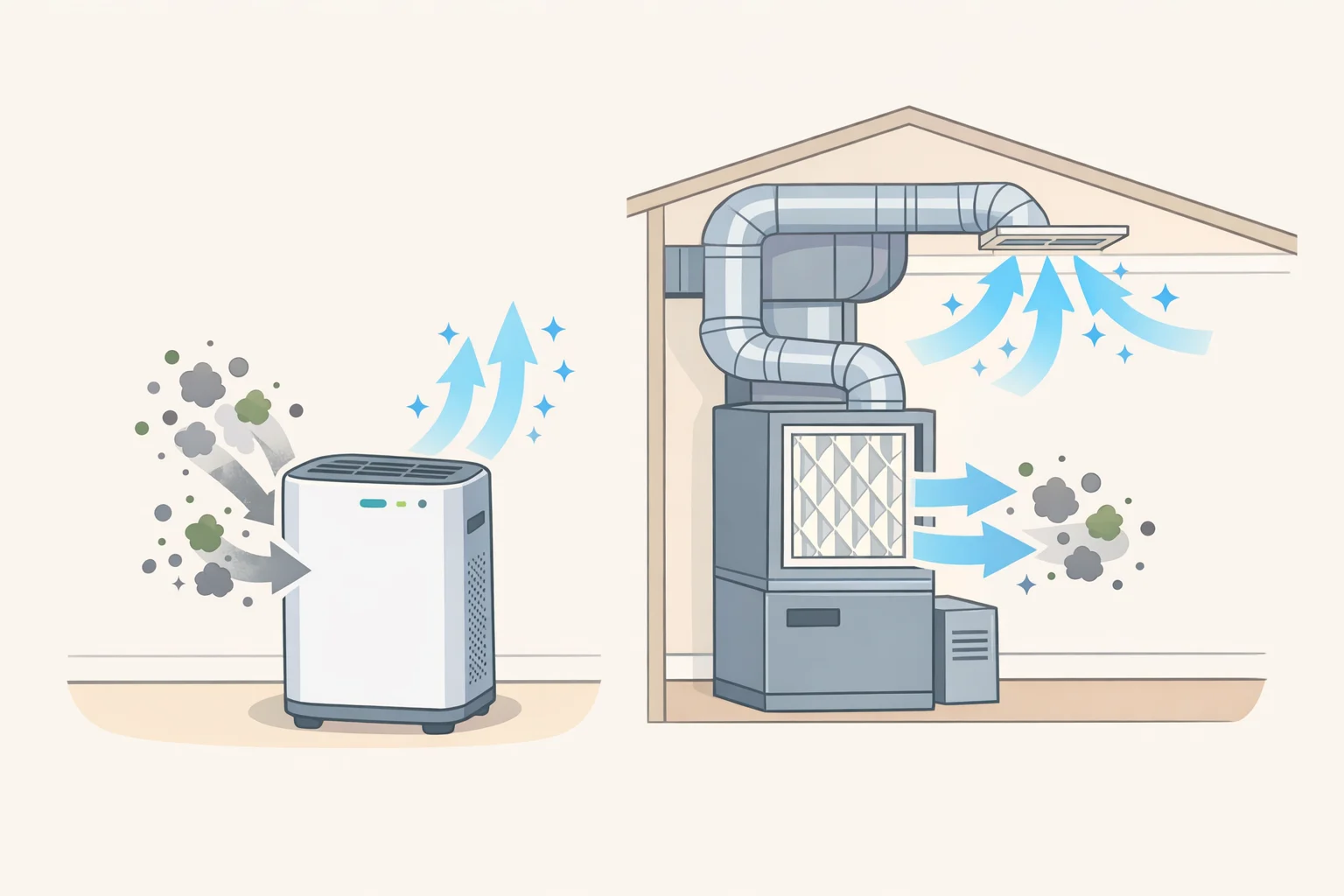
Cleaning reduces what's on surfaces and in fabric reservoirs. Filtration handles what's already airborne. HVAC maintenance determines whether the air being circulated is making things better or worse. For Rowlett homeowners running AC from May through October, the last two are often bigger IAQ determinants than cleaning alone.
A CDC-backed study measuring portable air cleaner performance across 29 homes found that HEPA-filtered units reduced PM2.5 concentrations by 78.8% in the room where the unit was placed, and 57.9% in adjacent rooms, over 24-hour measurement periods (CDC-supported study, 2024). When a central air handler was running simultaneously, PM reductions were statistically significant around the clock in primary rooms. That's specifically for particulates; HEPA filtration doesn't address VOCs or resolve moisture-driven mold, which require different interventions entirely.
The EPA recommends having air-conditioning units cleaned and serviced before heat season begins, treating it as an IAQ action rather than just a comfort issue (EPA, Extreme Heat and Indoor Air Quality, June 2024). A home running a neglected AC system through summer is circulating air through dirty coils and degraded filters, an HVAC problem that compounds whatever allergens a cleaning service addressed on surfaces.
How professional cleaning for indoor air quality in Rowlett TX actually helps, and when to look elsewhere
The research supports a specific, conditional version of the headline claim. Cleaning can improve IAQ, but the conditions matter as much as the cleaning itself. A useful way to think about it: clean first for allergen reservoirs, run filtration for airborne particles, manage moisture for mold, and test for structural hazards that housekeeping can't reach.
When professional cleaning is likely to help IAQ:
- The service uses HEPA-filtered vacuums rather than standard equipment
- Products are fragrance-free or low-VOC, used at correct dilution
- The scope includes upholstery, mattresses, baseboards, and fabric surfaces, not just open floors and counters
- Bedrooms are treated as a priority, not an afterthought
- The service is coordinated with HVAC servicing and filtration, not positioned as a standalone IAQ fix
When professional cleaning won't solve the problem:
- There's an active moisture issue, leak, or visible mold; cleaning removes the residue, but mold returns without resolving the water source
- Radon, CO, or other structural air hazards are present; these require testing and remediation, not housekeeping
- The service relies on heavily fragranced or concentrated liquid cleaners; in a home with low air exchange, this can temporarily worsen air quality before it improves
Three questions to ask any cleaning service before booking for IAQ purposes: Do they use HEPA-filtered vacuums? What is their fragrance and product dilution policy? Do they treat upholstered surfaces and mattresses, or only hard surfaces? A service that can't answer those questions clearly probably isn't the right fit for IAQ goals.
The research anchoring those questions is consistent. Total bedroom allergen control improved outcomes for dust mite–sensitive patients across 35 trials; partial control did not (PubMed meta-analysis, June 2024). HEPA-filtered air cleaners cut PM2.5 by nearly 79% in primary rooms under real home conditions, a stronger particulate intervention than cleaning alone (CDC-supported study, 2024). The EPA is explicit that HVAC servicing before heat season is an IAQ step, not just a maintenance item, and that mold requires moisture control first, with water-damaged areas dried within 24 to 48 hours to prevent establishment (EPA, Extreme Heat and Indoor Air Quality, June 2024; EPA, Care for Your Air).
Get those three components right, thorough surface and reservoir cleaning with low-emission products, active filtration, and a serviced HVAC system, and the air quality benefit is real. Lean on any one of them alone and you're probably leaving most of the gain on the table.