How to Keep a Dog-Friendly Home Clean and Fresh: 2 Key Habits
If the house smells like dog no matter how often you clean, the problem is almost certainly not the cleaning. Two sources account for most of it: whatever the dog tracks in from outside, and what's happening in the dog's mouth. A post-walk wipe-down and a consistent dental routine address both. Neither takes more than two minutes. Neither requires a perfect schedule.
By the end of this guide, you'll have a practical system for how to keep a dog-friendly home clean and fresh one built around veterinary evidence rather than scented sprays that mask the problem for twenty minutes.
Before starting either habit, take stock of where things stand. If the dog already has persistent bad breath, visible tartar, bleeding gums, or difficulty eating, check with your vet before beginning a home dental routine. The right starting point depends on how much buildup is already present.
What you need to start tonight: A clean towel or fragrance-free grooming wipes. A soft-bristle toothbrush. Dog-safe toothpaste. That's it.
If you only do two things: Wipe paws at the door after every walk. Brush teeth before bed, or give a VOHC-accepted dental chew daily. Keep up annual vet exams twice yearly for seniors and small breeds. Everything else in this guide builds on that floor.
Habit 1: The post-walk reset stop mud and allergens before they reach the couch
Video of the Day
Every walk deposits pollen, grass, mold, and dust on paws, lower legs, belly, and face. Once the dog clears the entryway and onto the furniture, that transfer is done. This habit takes under two minutes and prevents the mess from spreading.
Step 1: Wipe paws, lower legs, belly, and face before the dog moves past the door
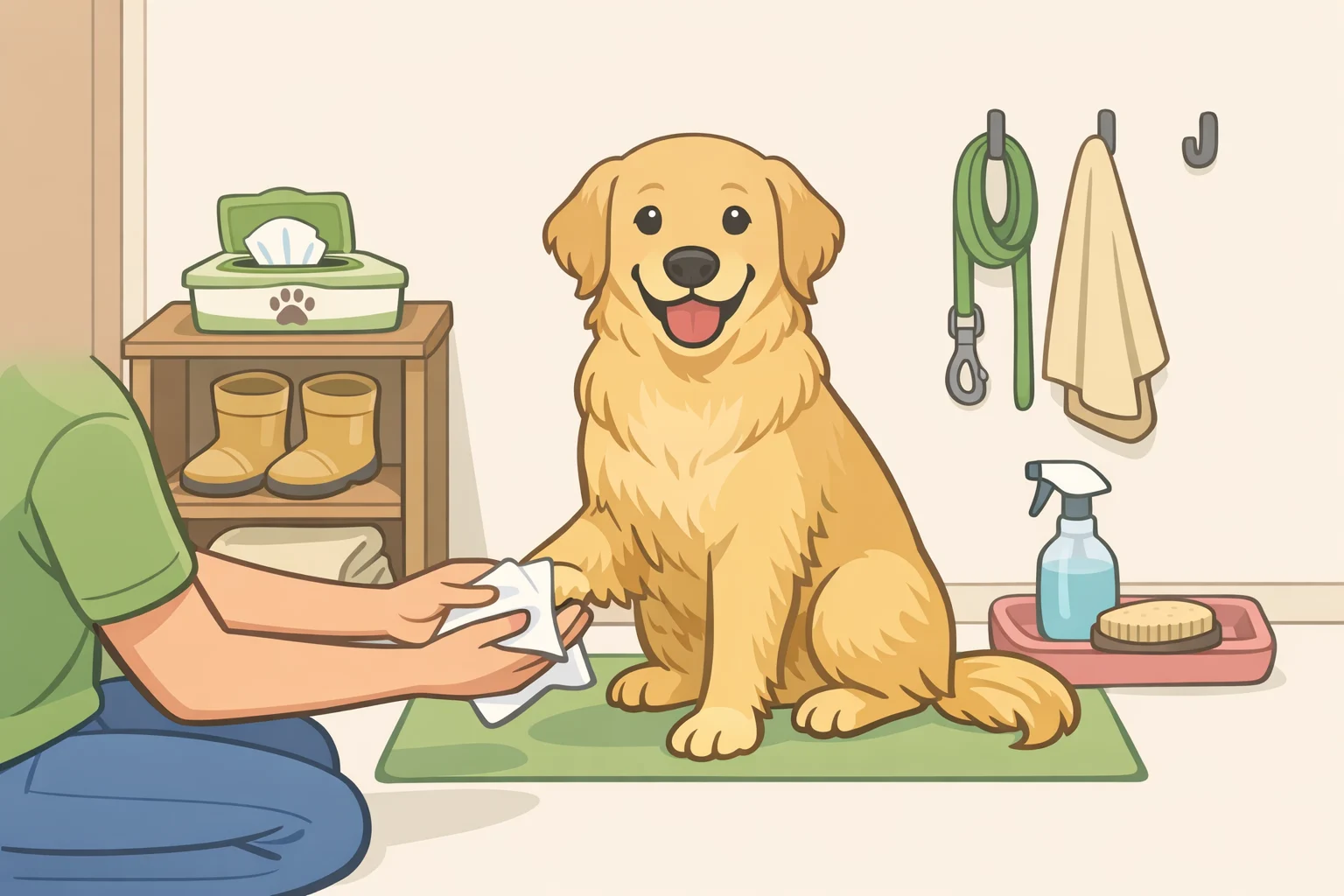
AAHA specifically recommends wiping a dog's paws, skin, and coat with a wet cloth or fragrance-free grooming wipes after walks to reduce the environmental allergens dust, grass, pollen, weeds, and mold that dogs carry in from outside. The window for this is narrow. A quick pass over the surfaces with the most ground contact is all it takes; this is not a bath.
A plain damp cloth works fine for most days. Commercial fragrance-free grooming wipes are useful when you want convenience or when conditions are muddy. Either way, keep the cloth or wipes at the door rather than in a cabinet. The habit sticks when the tool is already in hand.
One practical note: avoid scented or alcohol-based wipes. They can irritate sensitive skin, and the fragrance adds nothing useful. For dogs with diagnosed environmental allergies or persistent skin symptoms, AAHA's guidance also mentions an air purifier as a reasonable supplemental step for allergen-sensitive households but it doesn't substitute for catching allergens at the door before they spread.
Step 2: If your dog has known sensitivities, add year-round flea prevention
AAHA identifies flea allergy dermatitis as a leading cause of allergic reactions in dogs and a single bite is enough to trigger a reaction in a sensitive dog, not a full infestation. A dog that itches constantly distributes far more dander, coat residue, and outdoor allergens through a home than a comfortable one. If this is relevant to your dog, talk to your vet about year-round prevention options.
Video of the Day
Habit 2: The home dental routine how to reduce dog odor in the house at the source
Bad breath is usually the first sign of dental disease, according to Cornell University College of Veterinary Medicine. It's not a quirk or a food issue it's bacterial plaque producing odor as it accumulates on the teeth. Left unchecked, that plaque begins mineralizing into tartar within 24 hours, per Cornell, and the progression from there leads to gingivitis, bone loss, and in advanced cases, bacteria entering the bloodstream.
Dental disease is a common source of the odor people notice first in a dog-owning household. Addressing it directly rather than masking it is what actually changes the smell of the home over time.
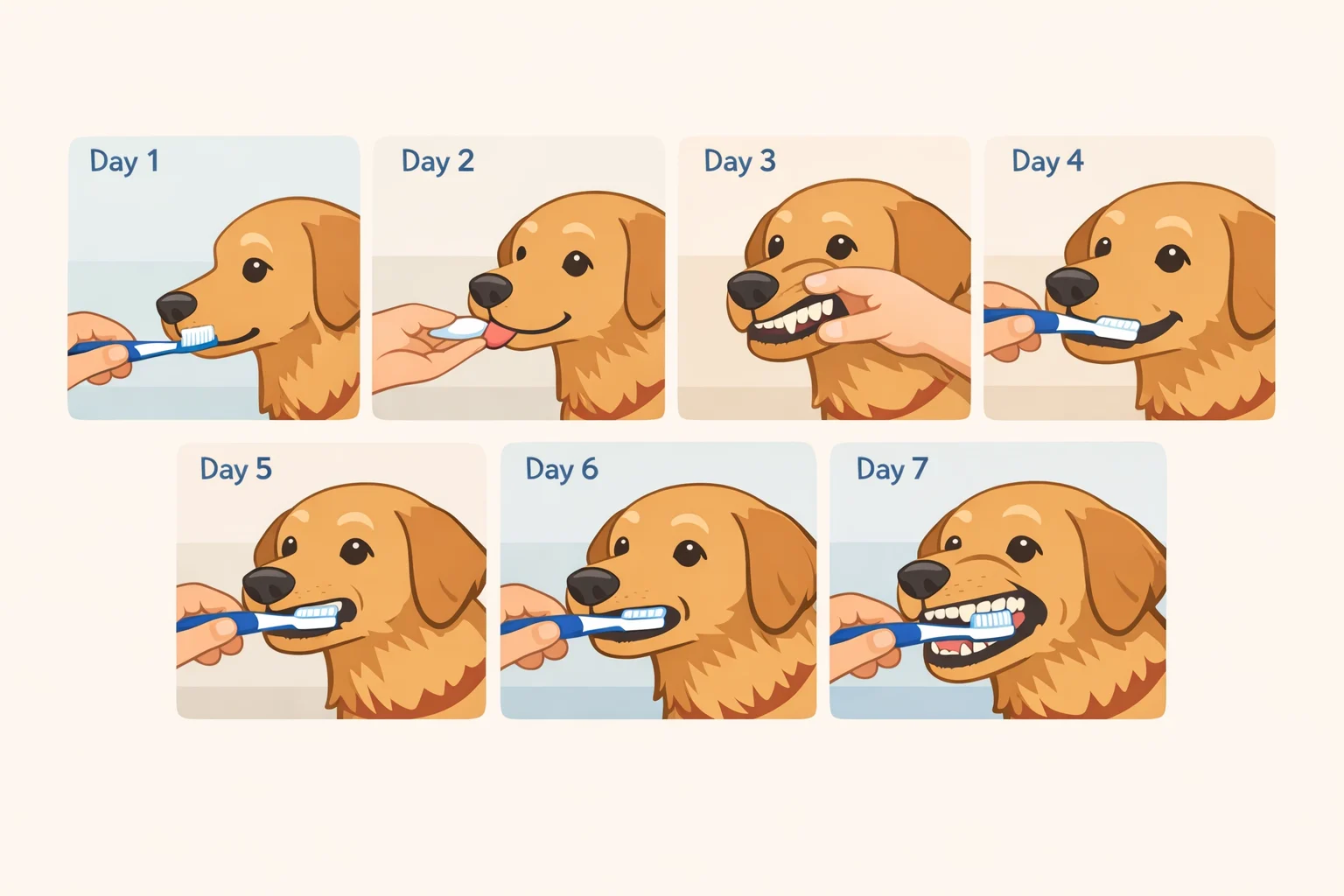
Step 1: Introduce the toothbrush gradually over the first week
Brushing is the most effective home method for preventing dental disease, Cornell states. Use a soft-bristle, flat-head toothbrush ADA-compliant soft-bristle toothbrushes are listed as accepted tools by the VOHC and toothpaste formulated for dogs, not people. Human toothpaste is not safe for dogs.
Don't start with a full session. The goal in week one is acceptance, not thoroughness:
- Day 1: Let the dog sniff the brush and toothpaste. Nothing more.
- Days 2–3: Rub a finger along the outside of the teeth.
- Days 4–5: Introduce the brush with short contact.
- Day 7: Most dogs will accept a brief pass at this point.
AAHA's dental guidelines describe this kind of incremental approach gradually introducing brushing, tooth wiping, and daily plaque control as the foundation for habits that actually persist. Once the dog is comfortable, focus on the outer surfaces of the upper back teeth and canines, where plaque tends to accumulate. A consistent short session beats a thorough one done twice a month.
Store the brush and toothpaste where feeding happens or near the bathroom sink. Attaching the habit to an existing routine evening feeding, before bed makes it easier to maintain.
Step 2: Know the fallback options, and choose one to use consistently
Daily brushing is the target. Every-other-day brushing is still effective: a study of 125 client-owned dogs published in PMC found that brushing every other day was effective at reducing dental deposits in dogs that hadn't received a professional cleaning. Use that as a practical fallback, not a reason to skip most sessions.
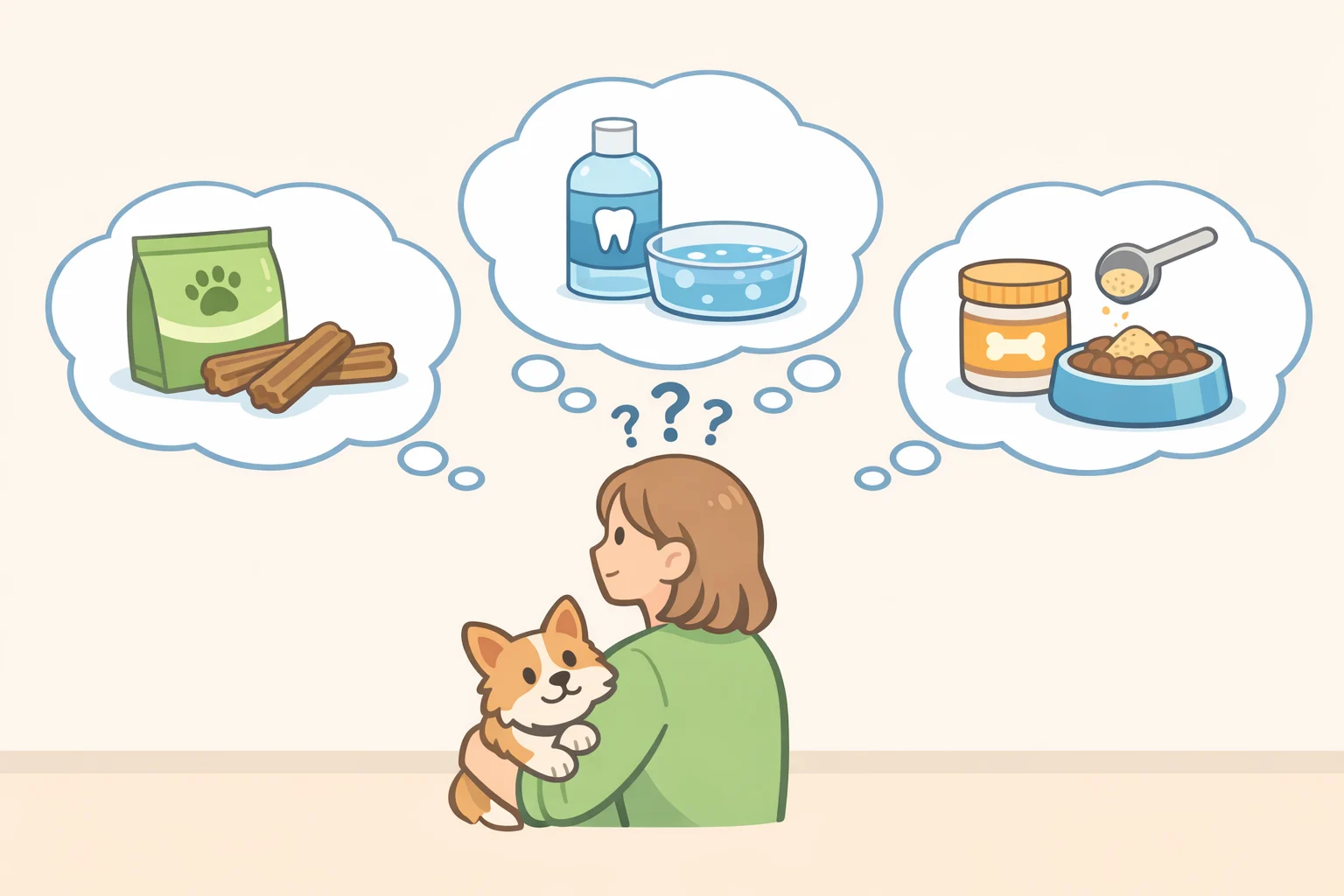
When brushing won't happen, reach for a VOHC-accepted backup. The Veterinary Oral Health Council evaluates products against controlled study data before granting acceptance; Cornell directs owners to the VOHC list as the standard reference for home dental products. Accepted options span dental chews, water additives, toothpastes, and food-topping powders.
Choosing a format a short comparison:
- Dental chews work through mechanical action and require no effort beyond handing one over daily. The same PMC study found that giving a dental chew once daily was effective at reducing deposits. The VOHC list includes options like Canine Greenies (five sizes), Pedigree Dentastix Advanced, and SwedenCare ProDen PlaqueOff Soft Chews, among others.
- Water additives require measuring a dose into the water bowl each day. The PMC study found that weekly brushing combined with a daily water additive was the only tested regimen that both reduced deposits and improved periodontal health in unscaled dogs worth noting if brushing frequency is low.
- Food-topping powders like ProDen PlaqueOff Powder (VOHC-accepted for plaque and tartar control) work for dogs that won't tolerate anything near their mouths.
One format used consistently every day is worth more than three formats used sporadically.
Two things to watch with chews: The VOHC list reminds owners to match chew size to the dog's weight range an undersized chew delivers minimal mechanical benefit; one that's too large may be a poor fit or unsafe. Check the package. Hardness matters too. Cornell warns that bones, antlers, hooves, and certain hard toys can wear down or fracture teeth, and some pose gastrointestinal obstruction risks. If it doesn't flex or give slightly under pressure, it may be too hard for regular use.
A note on toy and small breeds: Chihuahuas, Yorkies, Dachshunds, and similar dogs face the highest risk of early-onset periodontal disease, AAHA's dental guidelines state. Start a home routine with these dogs as early as possible. Ask your vet whether a professional dental evaluation before age one makes sense.
When home care isn't enough: the limits of dog dental care at home
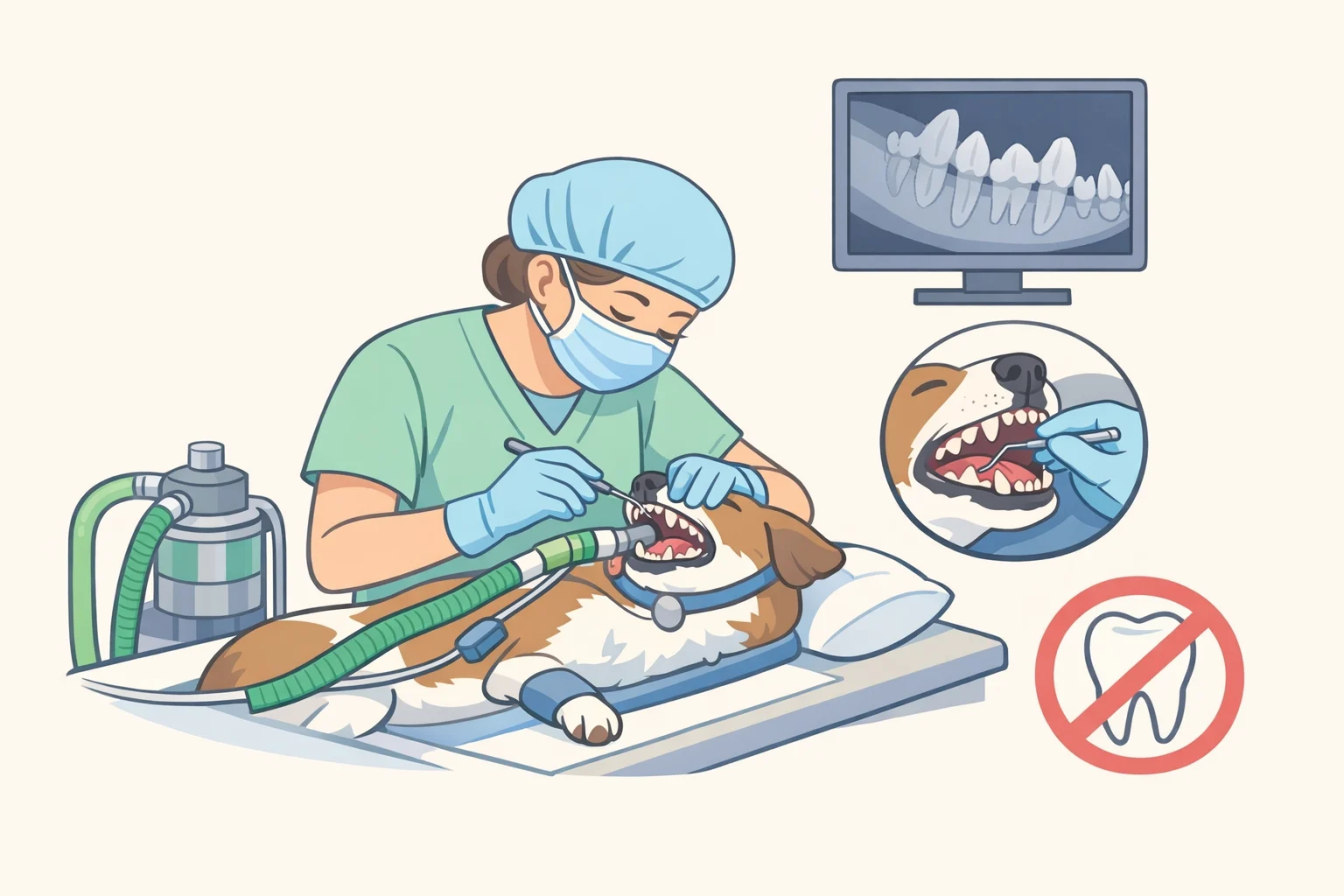
Home routines manage plaque the soft bacterial film that accumulates within hours of a meal. What they can't do is remove tartar once it has hardened, or evaluate what's happening below the gum line.
Once plaque hardens into tartar, only professional scaling removes it, according to Cornell. A complete oral exam with dental radiographs is only possible under anesthesia. AAHA states clearly that non-anesthetic dentistry is inappropriate and potentially harmful it cannot address subgingival disease, cannot produce full-mouth radiographs, and cannot manage pain properly. A tooth that looks clean on the surface can have significant bone loss underneath.
For most healthy young adult dogs, at least annual wellness visits are standard, per AAHA's life stage guidelines. Seniors often need twice-yearly visits. AAHA recommends small and medium breeds receive their first anesthetized dental evaluation including full-mouth radiographs by one year of age, given their elevated periodontal risk.
Call the vet rather than brush more if you notice any of these. Cornell identifies them as signals of disease that has progressed beyond home management:
- Persistent bad breath that doesn't improve after establishing a routine
- Difficulty eating or a noticeable drop in appetite
- Bleeding from the mouth
- Unusual or increased drooling
- Swelling on the jaw or face
- Nasal discharge, including bloody discharge
None of these improve with better brushing technique. They are signs of active disease.
Where to go from here
Two habits. A wipe-down at the door after every walk, covering paws, lower legs, belly, and face with a fragrance-free cloth. A dental routine built around brushing, backed up by a VOHC-accepted chew or water additive on the days when brushing doesn't happen. Both AAHA and Cornell support both practices directly.
A routine done six days out of seven outperforms a perfect protocol abandoned after two weeks. The PMC study of 125 dogs makes that case clearly: every-other-day brushing and daily chews both reduced deposits in dogs that hadn't had a professional cleaning to start.
The goal isn't a spotless house. It's preventing odor and mess from spreading in the first place catching them at the door and in the mouth before they become the ambient condition of every room.
Start tonight: put the wipes by the door, let the dog sniff the toothbrush, and check the VOHC accepted products list for a backup format that fits your dog's size and your schedule.