Firecracker crackers recipe: baked vs. no-bake methods explained
A box of saltines and a cup of seasoned oil. That's the whole shopping list for one of the most reliable party snacks in the Southern kitchen tradition. This firecracker crackers recipe guide covers both approaches baked and no-bake so you finish with the cracker you actually wanted, not a soggy accident or a scorched batch.
The method you choose determines the cracker you get. Bake them and you get flaky, golden, deeply seasoned saltine firecracker crackers with real crunch. Skip the oven and you get a richer, oil-saturated cracker with more give. That's not a flaw in either version; it's the defining difference between them. Everything else follows from that choice.
Also called Alabama Fire Crackers and Comeback Crackers, these seasoned saltines have been a fixture at Southern parties and holiday gatherings for generations, per both America's Test Kitchen and Mississippi Vegan. The second name explains the appeal plainly enough.
The no-bake Alabama version takes about 15 minutes of active work followed by a 9-hour passive rest, per Allrecipes. America's Test Kitchen developed a baked version that runs roughly 30 minutes of active work plus an hour of resting and cooling.
The fastest path to a good result
Video of the Day
If you want to skip the comparison and just make something that works:
Best choice for most readers: The baked version, using the ATK ranch method. It gives you the most texture control and the clearest result, and it uses ingredients most kitchens already have.
Best make-ahead plan: Marinate the crackers overnight, then bake the morning of the event. The flavor penetrates more deeply with a longer rest, and baking takes under 30 minutes.
Best beginner seasoning path: America's Test Kitchen's ranch version. One packet, a few pantry spices, and you're done.
If you want the no-bake version, set it up the night before and leave it alone. The long passive rest is what does the work.
Video of the Day
Choose your version before you mix anything
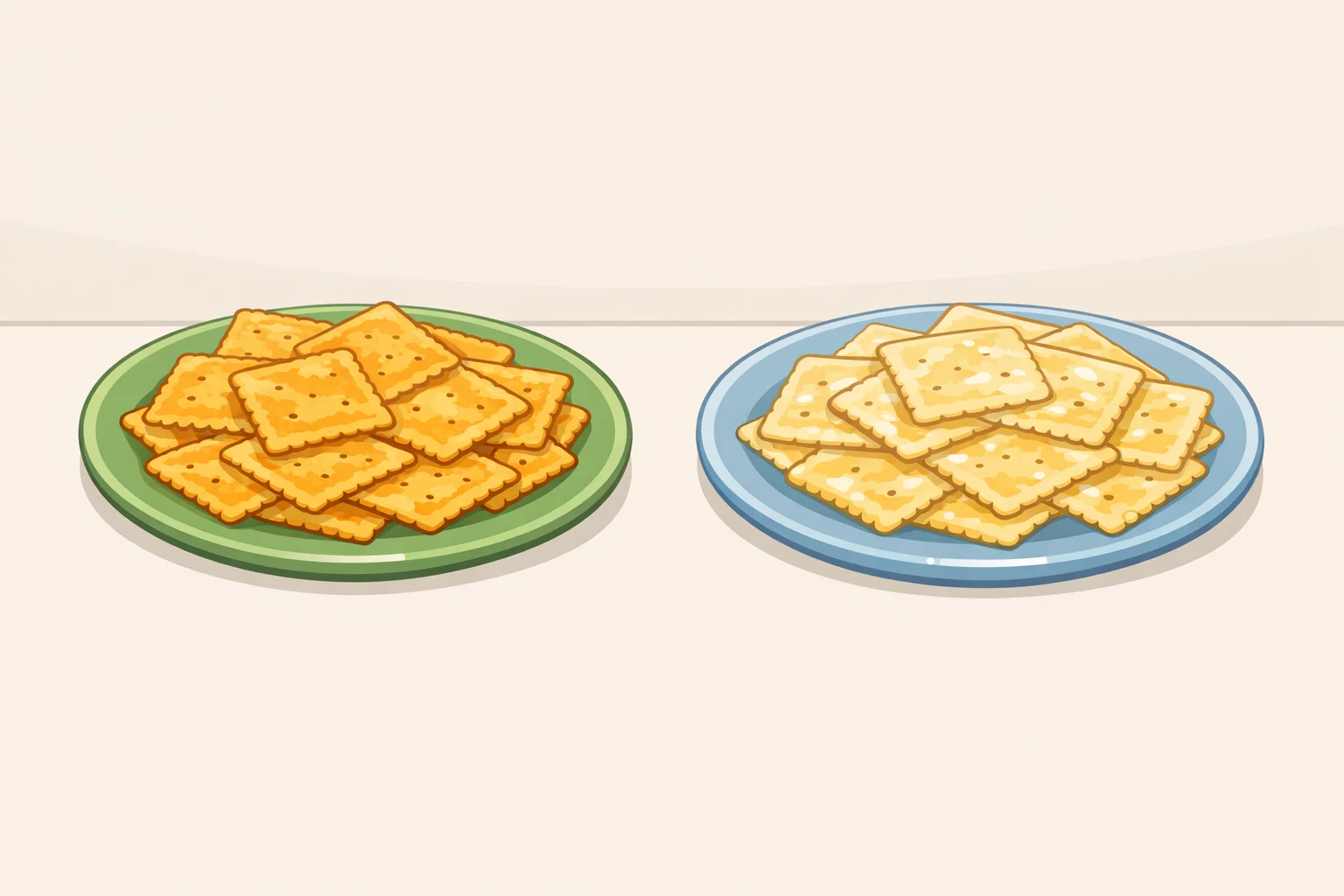
The two methods produce notably different crackers, so settle this before you open a bag.
Baked firecracker crackers use marination to load flavor into the cracker, then use a low oven to drive the moisture back out. America's Test Kitchen describes the result as golden, deeply flavorful crackers with a flaky texture. The baking step is what separates these from an oily cracker.
No-bake Alabama style never goes near the oven. The cracker absorbs the seasoned oil and stays that way richer, softer, with more give. Allrecipes pairs these specifically with chili, where a yielding cracker is actually useful. Don't make this version expecting crunch.
Quick decision framework:
| I want.. | Make this version |
|---|---|
| Maximum crunch and shelf life | Baked (ATK or vegan) |
| No oven, party-ready by morning | No-bake Alabama |
| No ranch packet, from scratch | Baked vegan |
| Fastest possible turnaround | Baked (1-hour marinate minimum) |
Oil quantity matters for texture and is worth understanding before you shop. The baked versions use a tighter ratio: America's Test Kitchen uses ¾ cup vegetable oil for 8 ounces of crackers; Mississippi Vegan uses 1 cup total (¾ cup neutral oil plus ¼ cup cold-pressed olive oil) for that same 8-ounce batch. The no-bake Alabama version from Allrecipes uses 1⅔ cups of oil for a larger 16.5-ounce batch of multigrain saltines, so the ratio per ounce of crackers is comparable, not wildly higher. The difference is that without baking, none of that oil gets driven back out. The crackers stay saturated by design.
How to make firecracker crackers: the core method
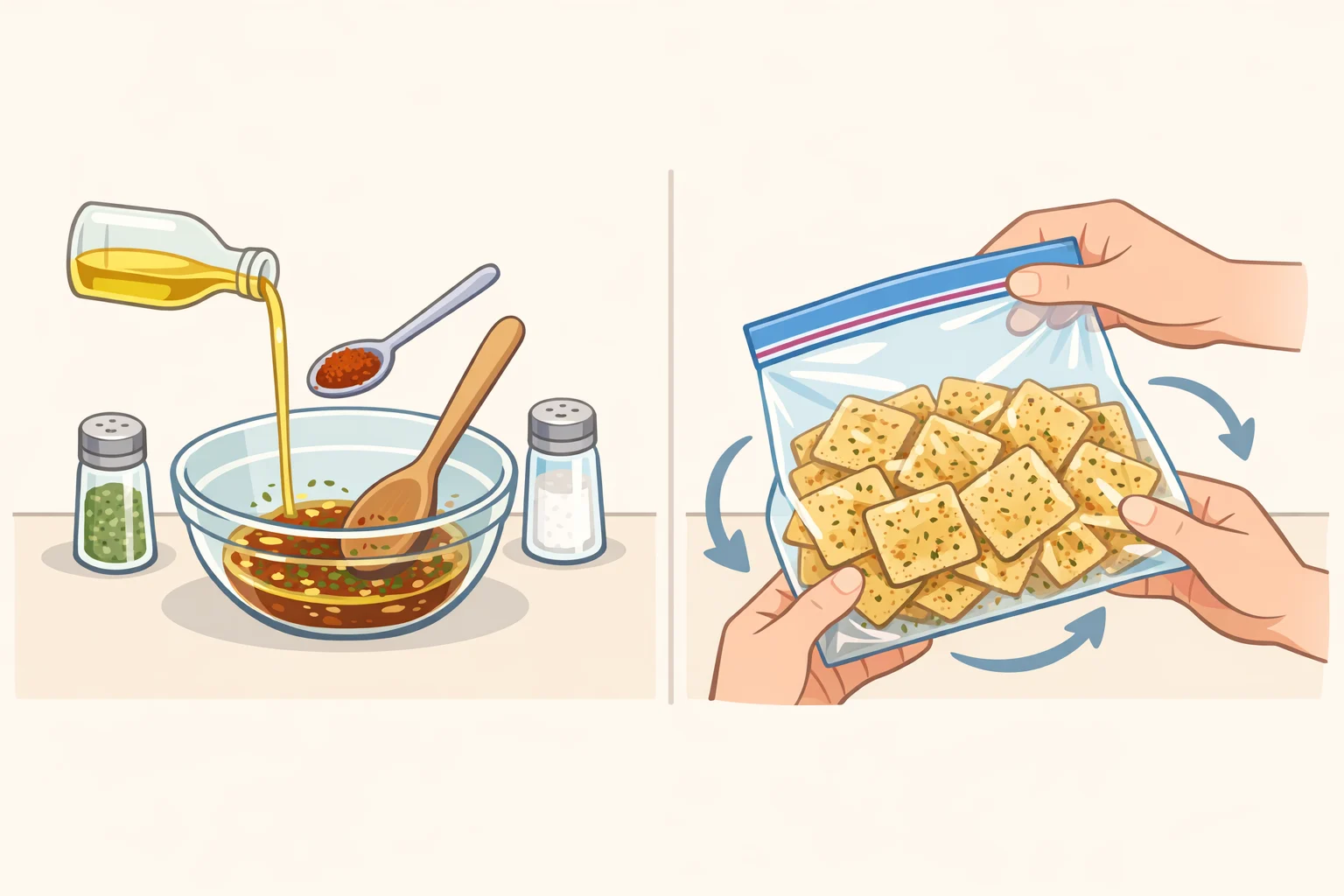
This base technique applies to all three versions. Branching points for baked vs. no-bake are called out at each step.
Choose your seasoning path before starting. The three options are covered in the next section. Have that decision made before you open anything.
What you need:
- 2 sleeves standard saltine crackers (approximately 8 ounces / 72 crackers), per America's Test Kitchen; the no-bake Alabama version uses a 16.5-ounce package of multigrain saltines, per Allrecipes
- A 1- or 2-gallon resealable zipper-lock bag, or a lidded container large enough to hold crackers without crushing them
- For baked versions: 2 rimmed baking sheets lined with parchment, and an oven preheated to 250°F
Step 1: Mix the seasoned oil in the bag first.
Combine your oil and all dry seasonings in the bag, seal it, and knead with your hands until the mixture is uniform. No dry clumps, no oil pooling separately. America's Test Kitchen is explicit about this sequence: mix oil and seasoning before the crackers go in, so the coating is already even when it hits them.
Before adding the crackers, taste the marinade. Spoon a small amount onto one saltine and try it. This is the moment to adjust heat level; once the full batch is in the bag, you're committed. Mississippi Vegan recommends building the marinade in stages: combine the oil with half the paprika and mustard powder first, taste, then decide whether to add the rest.
Step 2: Add crackers and coat gently.
Open the bag, slide in the saltines, reseal, and turn slowly several times. Rough movement breaks crackers; the goal is coverage, not speed. Hold the bag flat while turning rather than shaking it end over end. Mississippi Vegan includes an optional step of hand-rubbing individual crackers for more thorough coverage worth the extra few minutes if you want even seasoning on every surface.
Step 3: Marinate.
This is where baked and no-bake diverge most significantly.
- Baked versions: Marinate at least 1 hour, turning the bag occasionally. Up to 24 hours allows more time for flavor penetration, per America's Test Kitchen. Mississippi Vegan agrees that overnight is worth it when you're not in a rush.
- No-bake Alabama: Let the bag sit about 1 hour, turn it again, then repeat several times. After that, leave it undisturbed for 8 hours to overnight before serving, per Allrecipes. That long final rest does the work that baking would otherwise handle.
If you're in a hurry and using the baked method, Mississippi Vegan notes you can hand-rub each cracker immediately after coating and go straight to the oven, skipping marination entirely. The coating will be slightly less uniform, but it works.
Step 4 (baked versions only): Bake at 250°F.
Spread crackers in a single layer across two parchment-lined baking sheets with no overlapping. Overlapping traps steam and prevents crisping. The low temperature is deliberate: it toasts the crackers gently without scorching the seasonings, per Mississippi Vegan.
- America's Test Kitchen: bake 20–25 minutes on upper-middle and lower-middle racks simultaneously, until light golden brown and slightly puffed.
- Mississippi Vegan: bake 15 minutes on one side, flip, then bake another 10 minutes for maximum crispness.
Don't try to speed this up with higher heat.
Step 5 (baked versions only): Cool on the sheet for at least 10 minutes.
Crackers continue crisping as they cool, per America's Test Kitchen. Moving them too early risks soft spots and breakage. They're ready when they feel dry and firm to the touch.
Seasoning paths: ranch packet, Alabama style, and from scratch
Pick one before Step 1. The method above stays the same regardless.
Classic baked ranch uses vegetable oil, one 1-ounce ranch dressing mix packet, red pepper flakes, dried dill, and granulated garlic. America's Test Kitchen developed this using Hidden Valley Original Ranch and found that 3 teaspoons of red pepper flakes delivers moderate heat, with the recipe accommodating anywhere from 2 to 4 teaspoons. Good on an appetizer tray, with a cheese board, or alongside soups. This is the straightforward entry point: clean technique, well-tested, no surprises.
Alabama no-bake uses ranch mix, garlic powder, onion powder, black pepper, and 3 tablespoons of red pepper flakes for a 16.5-ounce batch, per Allrecipes. The longer passive rest and higher oil volume produce a cracker that's richer and softer than the baked version. Use it alongside chili, where that extra give is an asset rather than a compromise.
From-scratch vegan skips the ranch packet entirely. Mississippi Vegan builds the savory base with nutritional yeast, garlic powder, and onion powder which together provide savoriness plus smoked paprika, mustard powder, a small amount of sugar, black pepper, and sea salt, with 2 tablespoons of red pepper flakes for heat. It's the most adjustable of the three: swap hot smoked paprika for sweet, reduce the pepper flakes, and the profile shifts noticeably without touching anything else.
Across all versions, red pepper flakes are the primary heat driver. Start conservative. You cannot remove heat once the oil is mixed, but adjusting the next batch takes about ten seconds.
Storage and shelf life
America's Test Kitchen recommends consuming baked firecracker crackers within one week, stored in an airtight container at room temperature. Mississippi Vegan suggests tightly sealed crackers may stay fresh and crisp for several weeks a claim that conflicts with ATK's more conservative guidance. Treat one week as the working limit for baked versions, where crispness is the point.
Airtight storage matters regardless. Humidity undoes the texture work faster than time does.
The recipe scales cleanly. America's Test Kitchen notes it doubles without any method changes, and the passive marination time stays the same whether you're making one batch or two. One Allrecipes contributor puts it plainly: "Always a hit at any party or holiday." Make more than you think you need.
Bake them if texture matters most; go no-bake if the oven isn't an option. Either way, build in the resting time. That's where the flavor actually develops.