How to Keep Your House Cool Naturally in Summer: The 9 a.m. Rule
The 9 a.m. rule is simple: open your windows overnight to flush out heat, then close them, along with your shades, before outdoor air warms past the indoor temperature. In many climates, that crossover happens around 9 a.m. on a hot summer day. Miss it, and your home spends the rest of the day playing catch-up. This guide covers how to keep your house cool naturally in summer using that timing principle, how to shade effectively, how to read your specific conditions, and when the method stops being enough.
The rule works because of one underlying principle, not one magic hour. The EPA puts it plainly: when outdoor air is cooler than indoor air, open the windows; when outdoor air is hotter, close them (US EPA, updated September 2025). Think of 9 a.m. as a rule of thumb, not a fixed deadline. The temperature crossover is the actual trigger, and it shifts based on your climate, your home's insulation, and how much the overnight low actually drops where you live.
That caveat matters, but it doesn't diminish the method. Simulations modeled on the 2021 Pacific Northwest heat wave, when Portland reached 116°F, found that pairing nighttime ventilation with daytime shading kept apartment temperatures out of the danger zone across all three days without any air conditioning (University of Oregon via OregonNews, 2022). The same approach cut air conditioning load by up to 80 percent. Those results came from a region with cool overnight air and well-ventilated apartments. Results in humid climates or poorly insulated homes will differ.
How to cool a house naturally: why the 9 a.m. rule works
Video of the Day
Ventilation and shading work as a system because each strategy targets a different part of the day. Together they cover the full heat cycle.
Open windows do their best work at night and in the early morning, when outdoor air is coolest and the temperature gap between inside and outside is largest. University of Oregon researchers found that window opening made the biggest difference during nighttime and early-morning hours; shades, by contrast, delivered the most benefit during the late afternoon when direct sun hit windows (OregonNews, 2022). Neither strategy alone provides the full effect. The sequencing drives the results.
Hot nights create a second problem: your body doesn't get a chance to recover. As emergency physician Jennifer Ward told PBS NewsHour earlier this month, when overnight temperatures don't drop below 75°F, you start to see sharp increases in heat illness, heat stroke, and mortality. "Your body needs a reprieve," she said. "You don't get that overnight, we start the next day at a deficit." Taking advantage of cooler night air through open windows is one of the few tools available to people without air conditioning.
Video of the Day
Step 1: Open overnight and into the early morning
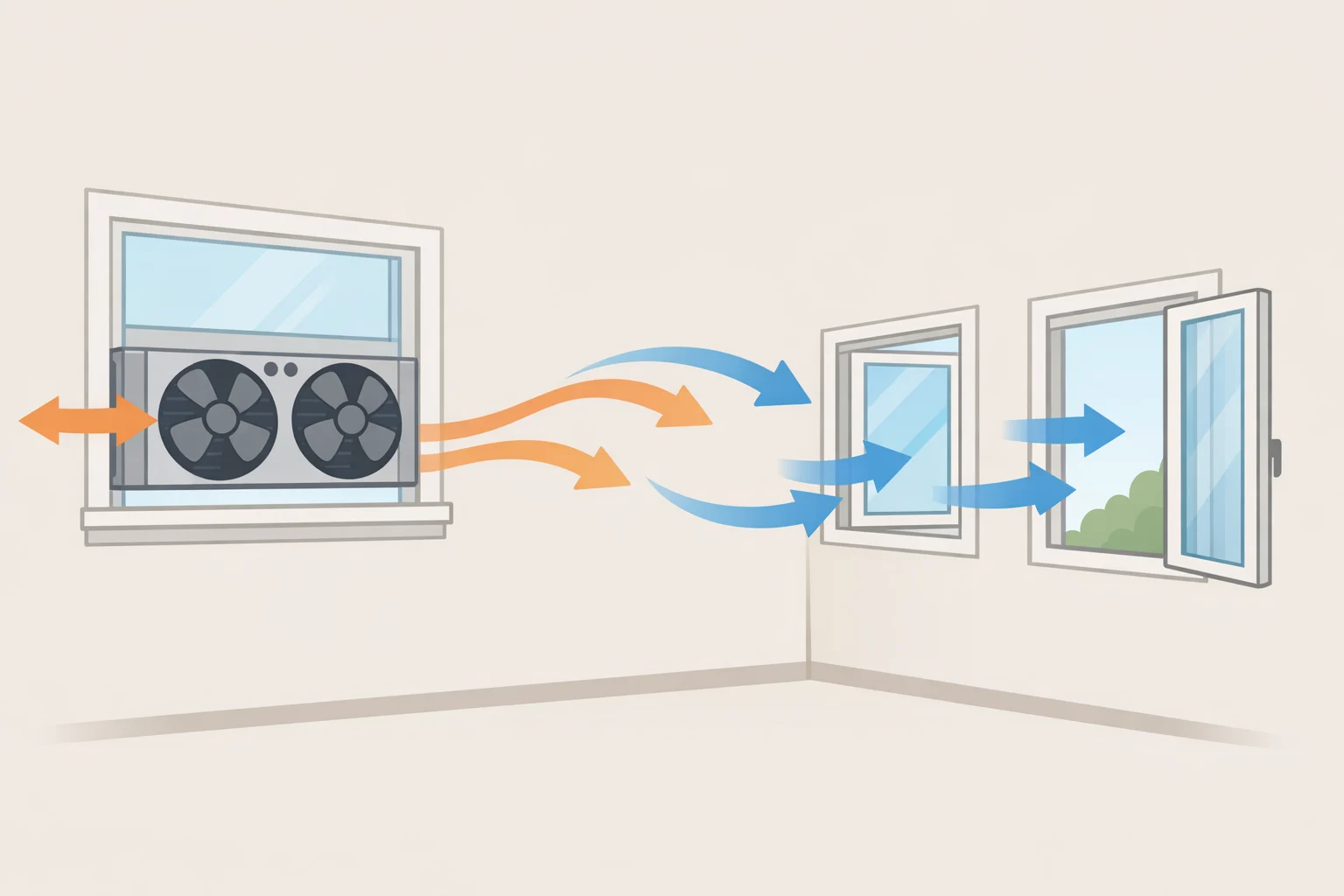
Begin ventilating when outdoor air cools below indoor air temperature, usually by evening, sometimes later depending on your climate. Keep windows open through the night and into the early morning. Use fans to accelerate airflow: position one fan in a window blowing outward to exhaust hot air, and open windows on the opposite side of the home to draw in cooler air. Adding a fan to the overnight ventilation routine amplified the cooling benefit beyond windows alone in the Oregon research (OregonNews, 2022).
By early morning, the air indoors should feel noticeably cooler and fresher. If indoor and outdoor temperatures are similar, overnight ventilation is providing less benefit. Adjust expectations accordingly.
Step 2: Close windows and draw shades before heat builds
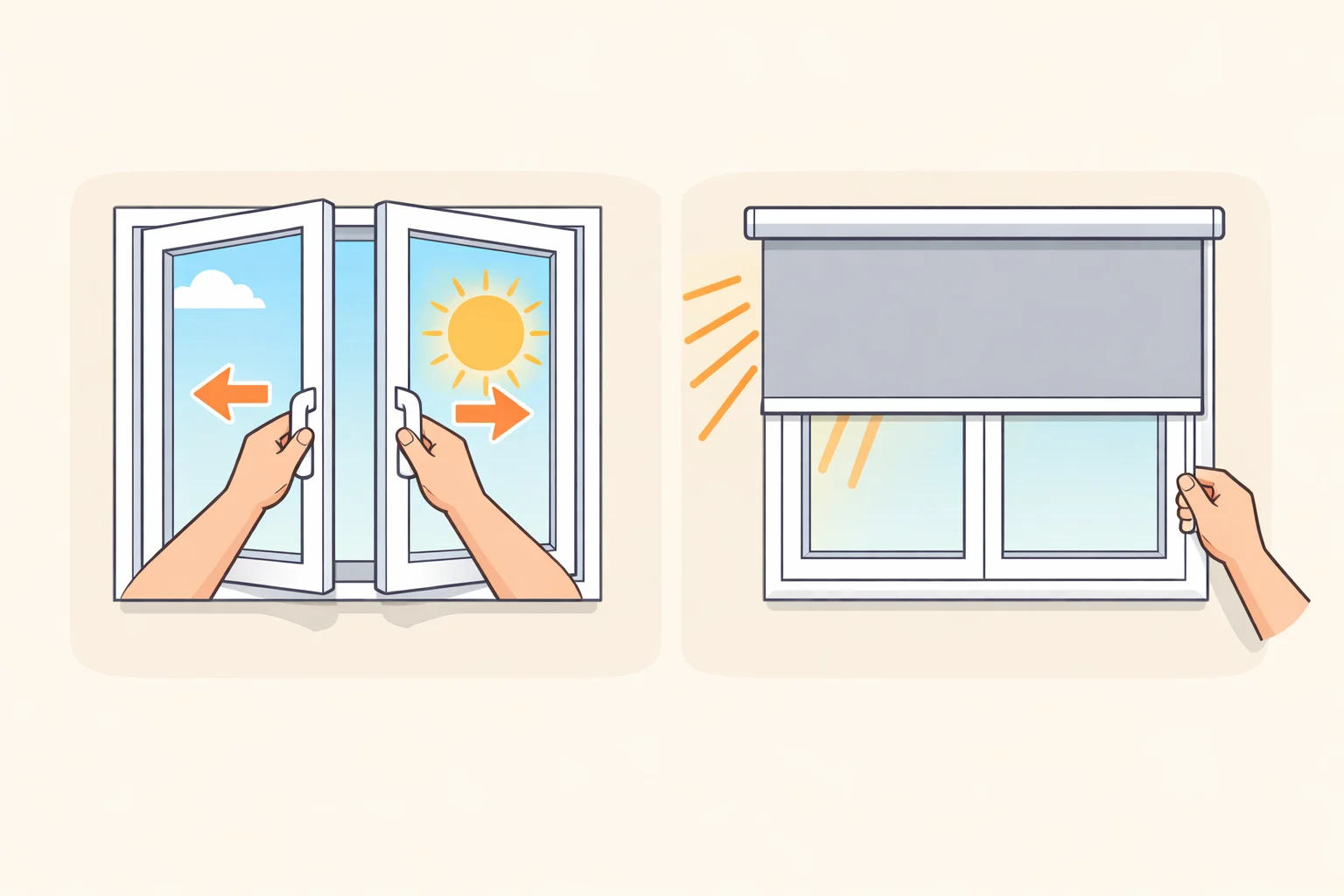
Once outdoor air starts matching or exceeding indoor temperature, close windows and draw shades on sun-facing windows. The EPA's guidance is direct: cover windows that receive morning and afternoon sun to limit indoor temperature rise, and prioritize exterior options such as awnings or louvers over interior shades where possible, because exterior shading blocks heat before it enters the glass (US EPA, updated September 2025). Standard interior pull-down shades still help, especially if their edges are sealed with side tracks, which matters for renters who can't install exterior hardware.
Skip the oven and stove during peak afternoon hours. The CDC recommends using the stove and oven less during hot days to maintain a cooler temperature indoors (CDC, 2024), precisely because cooking adds an internal heat source when the home is already working to hold cool air in.
Finding your personal cutoff time: Don't set an alarm and ignore what you're actually measuring. Check a simple indoor/outdoor thermometer each morning. Open windows when outdoor temperature drops below indoor; close them as soon as they match or the sun starts hitting your primary windows. If your home is poorly insulated or faces east-southeast, the crossover may happen by 8 a.m. or earlier.
Common real-world constraints:
- Single-sided apartments or no cross-ventilation: You can still ventilate, but airflow will be slower. A fan in the window blowing outward creates negative pressure that draws air in through any other opening.
- Security concerns with open windows overnight: Window locks that allow partial opening let air circulate while limiting access. Ground-floor windows are a reasonable exception; prioritize upper-floor or street-facing windows you can leave open safely.
- Poorly insulated homes: These warm up faster after you close up, so the routine may deliver smaller gains and requires closer temperature monitoring throughout the morning.
Where to apply it: room orientation and timing
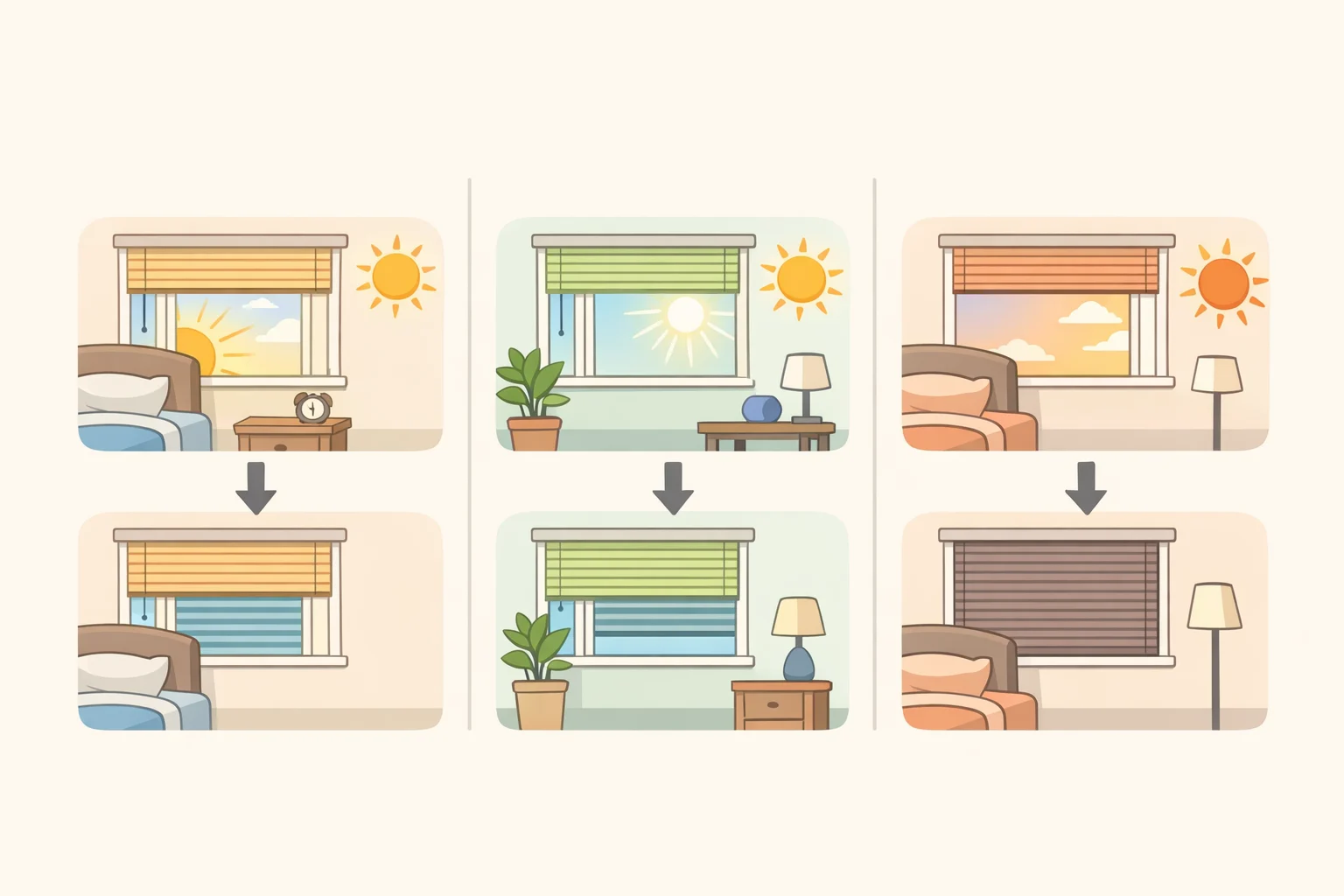
The principle stays the same across a home; the timing shifts by room.
- East-facing bedrooms: Morning sun hits these windows first. Close blinds earlier, before 8 a.m. if conditions are already warm. Open them fully at night to flush heat from sleeping areas.
- West-facing living rooms: These stay relatively cool through the morning. The critical window is late afternoon, when direct sun drives heat in fast. Shades matter most here from around 2 p.m. onward.
- Upstairs rooms: Heat rises and accumulates, so upper floors warm faster and cool slower. If you can only ventilate one area of the house overnight, prioritize upstairs rooms. Expect to close them up earlier than ground-floor rooms.
- South-facing windows: These receive sun through the longest arc of the day. Draw shades early and keep them down until late afternoon.
- Single-sided apartments: One outward-facing fan and whatever cooler window you can open on the same wall. It's slower than cross-ventilation, but it works. Keep interior doors open to let air move through the space.
How to keep your home cool in a heat wave: when natural cooling stops being enough
Passive cooling is conditional. Some situations reduce its effectiveness; others make relying on it a safety risk.
Modify the approach when:
- Your climate doesn't cool off much overnight. The Oregon simulations were built on Pacific Northwest conditions with pronounced overnight temperature drops. In humid climates, where nighttime temperatures may not fall far enough below daytime highs, the temperature gap driving the method is smaller. Ventilate when you can, but expect more modest results. In humid places, skip evaporative coolers entirely; they add humidity and make it harder for the body to cool down. As PBS NewsHour reported earlier this month, experts recommend a standard fan in those conditions instead.
- Your home has insulation gaps. Poorly insulated homes warm faster after you close up. The method still helps, but the gains are smaller and the window for closing may be tighter.
Stop relying on it for safety when:
- Indoor temperatures reach the mid-90s°F or above. Fans stop preventing heat-related illness at that point; they just move hot air around. The EPA is explicit: don't use electric fans for cooling when room temperature is in the mid-90s or higher (US EPA, updated September 2025). The CDC makes the same point: while fans provide some comfort, when temperatures are really hot they won't prevent heat-related illness (CDC, 2024). When it's that hot, the priority shifts to finding a cooled space, a library, a mall, or a community cooling center, and spending several hours there.
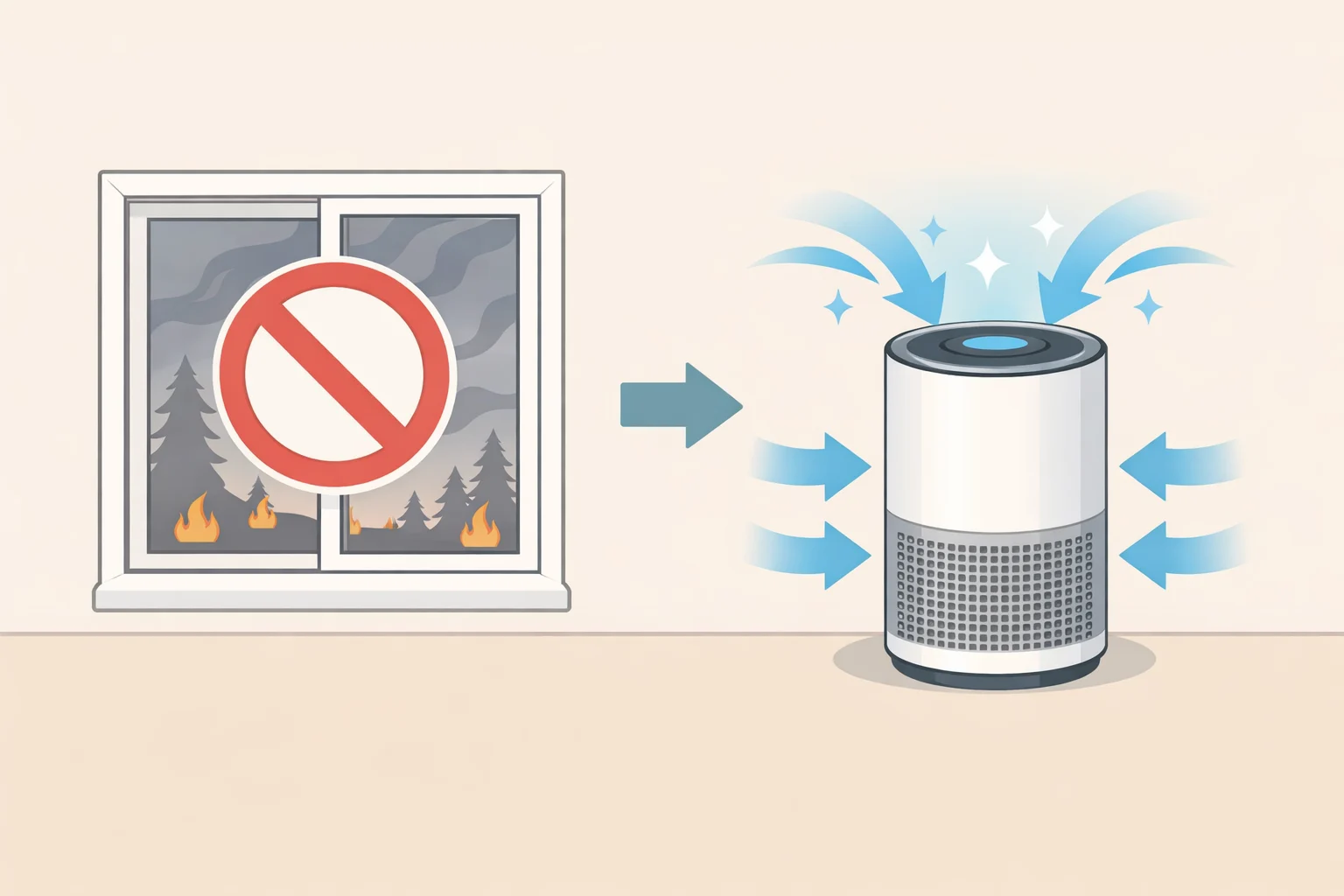
- Wildfire smoke is present. Opening windows during a smoke event trades one health risk for another. With windows closed and no air cleaner running, indoor fine-particle concentrations typically sit at 55 to 60 percent of outdoor levels, which is significantly better than opening the house to smoke (US EPA, updated October 2025). When smoke is present, keep windows closed and shift to mechanical filtration: an HVAC filter rated MERV 13 or higher run continuously, a portable air cleaner sized to the room (tobacco-smoke CADR at least two-thirds the room's square footage), or a DIY air cleaner using a box fan and furnace filter. Check your local air quality index before opening any windows on summer mornings. When both heat and smoke are forecast, filtration takes priority over ventilation.
How to tell when the method isn't enough: Enter your zip code into the CDC HeatRisk Dashboard for a 24-hour heat risk forecast, and cross-reference with your local air quality index. Treat passive cooling as backup rather than your main plan when either is elevated. For a heat-index gauge, PBS NewsHour points to NOAA's heat index chart: at 96°F and 45% humidity, prolonged exposure falls into the danger category, a threshold most passive strategies cannot reliably offset.
For households without air conditioning who can't reach a cooled space, LIHEAP (the Low Income Home Energy Assistance Program) may help cover the cost of a window unit, depending on where you live, according to the National Council on Aging as reported by PBS NewsHour. Local nonprofits and civic organizations are worth contacting as well.
Start before the first heat wave
The routine works best as a daily summer habit, not an emergency response. Starting now, while conditions are mild enough to learn the timing, means the approach is already calibrated when a heat wave actually arrives.
One thing to carry into that first hot stretch: the temperature crossover is the trigger, not the clock. Check the thermometer each morning. Close up when outdoor and indoor temperatures match, even if it's 7:45 a.m. The research base is strongest for climates with real overnight cooling, and the Oregon simulations showed combined shading and ventilation kept apartments safe through a three-day extreme heat event without mechanical cooling (OregonNews, 2022). Humid regions and poorly insulated homes will see smaller gains, which is worth knowing before you need to rely on it.
When heat or smoke tips into a genuine health emergency, passive cooling is a support strategy, not a solution. Know where your nearest cooling center is before you need it.