How to Freshen Up Your Mattress: Match the Method to the Mess
Vacuum first, then match the cleaner to the problem. That's the whole framework for how to freshen up your mattress: baking soda for mild surface odor, diluted hydrogen peroxide for yellow sweat stains, enzyme cleaner for urine, blood, and other biological messes. Everything else in this guide is an explanation of why that order matters and how to execute each step without making things worse.
Most people reach for baking soda because it's the default advice. It's not wrong, exactly. But baking soda can't reverse yellow staining, doesn't disinfect, and according to textile expert Stern, only masks odors temporarily rather than eliminating them (Tom's Guide reported earlier this year). The gap between what it can do and what people are actually trying to fix is where most cleaning efforts go sideways.
Yellow stains are a useful illustration. They're caused by sweat and body oils that accumulate over time and oxidize, leaving a yellow or rust-colored discoloration on the mattress surface, as Sleep Foundation explains. A surface powder treatment isn't designed to reverse that chemistry. Knowing how to deodorize a mattress is one problem; knowing how to clean a mattress with hydrogen peroxide is a different one. Both are covered below.
What each method can (and cannot) do
Video of the Day
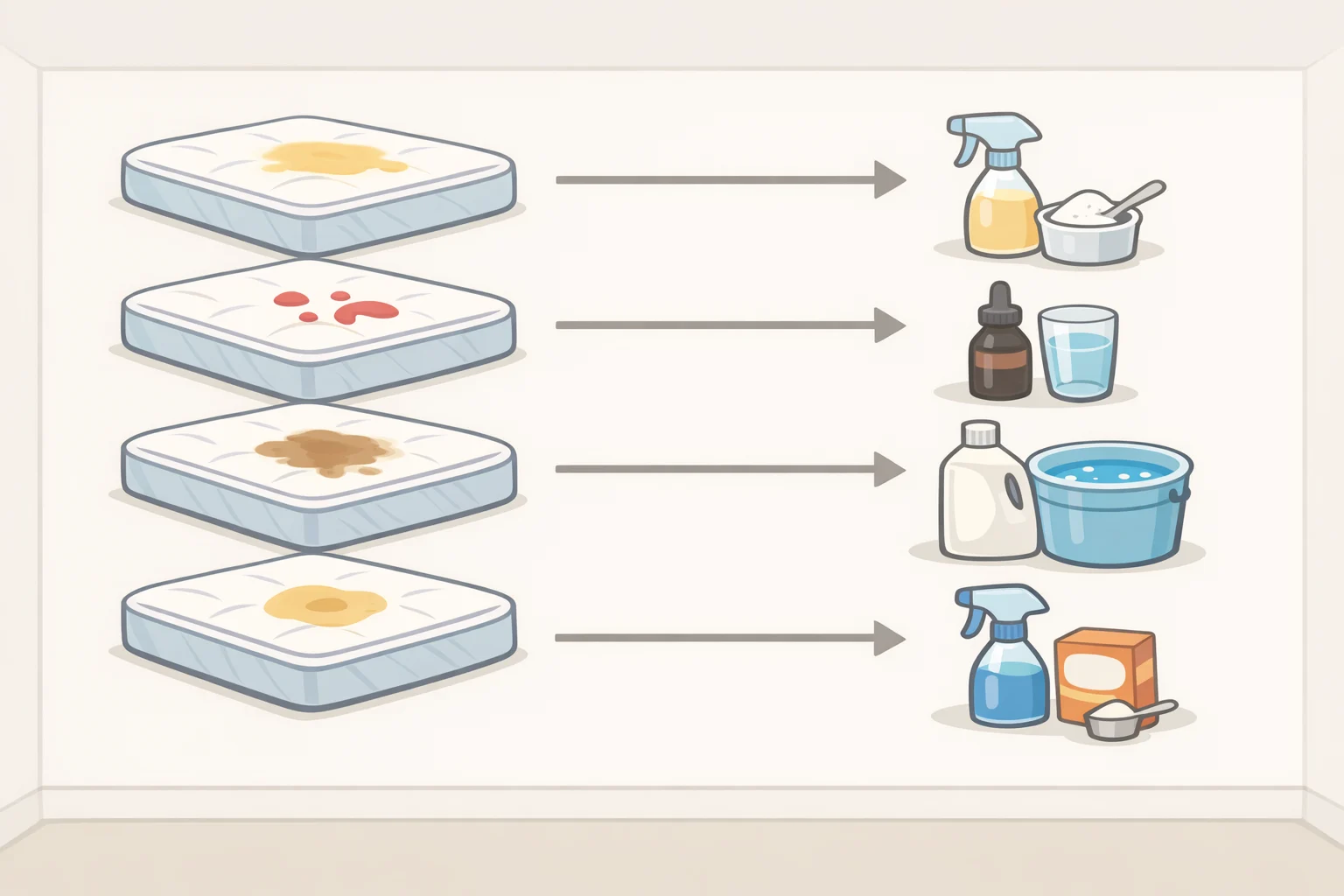
Baking soda is an odor absorber, not a disinfectant. A thin, even sprinkle left for 15 to 30 minutes can help neutralize mild surface smells on a mattress with no active stains and no moisture present. That's its best use case, and both Sleep Foundation and Consumer Reports endorse it in that limited role.
Where it falls short: Stern says it doesn't eliminate odors and allergens, it may only mask them temporarily (Tom's Guide). Heavy applications leave residue that's genuinely difficult to vacuum out, and that residue can trigger allergies or discomfort. Stern adds a specific caution for memory foam: baking soda is highly absorbent and may pull moisture from the foam itself, which could cause clumping or degradation over time. If you have memory foam or latex, skip baking soda entirely for anything beyond the lightest surface use.
Diluted hydrogen peroxide (3%, mixed 1:1 with cool water) has mild bleaching and disinfecting properties that make it a useful targeted treatment for yellow sweat staining and body-oil odors, according to Stern (Tom's Guide). Unlike baking soda, it targets the stain directly rather than the surrounding surface. It is not a whole-mattress treatment. Hydrogen peroxide can also lighten some fabrics, so a spot test in an inconspicuous area before full use is non-negotiable (Sleep Foundation).
Enzyme cleaner is specifically formulated to break down organic compounds. For blood, sweat, urine, and other biological stains, Sleep Foundation says a commercial enzyme cleaner is typically the best option. Stern notes that unlike baking soda, enzyme cleaners don't damage memory foam or latex (Tom's Guide).
Quick decision guide:
| Problem | Best tool |
|---|---|
| Light surface odor, no stains | Baking soda (light application, 15-30 min) |
| Yellow discoloration / sweat stains | Diluted hydrogen peroxide + dish soap |
| Urine, blood, heavy sweat buildup | Enzyme cleaner |
| Dirt, non-biological stains | Dish soap + water solution |
One note on application: Sleep Foundation's general mattress-cleaning guidance advises applying solution to a cloth rather than directly to the mattress. Its yellow-stain guide supports spraying directly onto stains. The safer approach when in doubt is to apply the solution to a clean cloth first, then blot. If the care instructions for your mattress specifically advise against direct spraying, follow that.
A separate caution about removable covers: even if a cover has a zipper and looks removable, check the manufacturer's instructions first. Removing a cover without confirming it's safe to do so can risk voiding the warranty (Sleep Foundation).
Video of the Day
How to freshen up your mattress: routine refresh (no active stains)
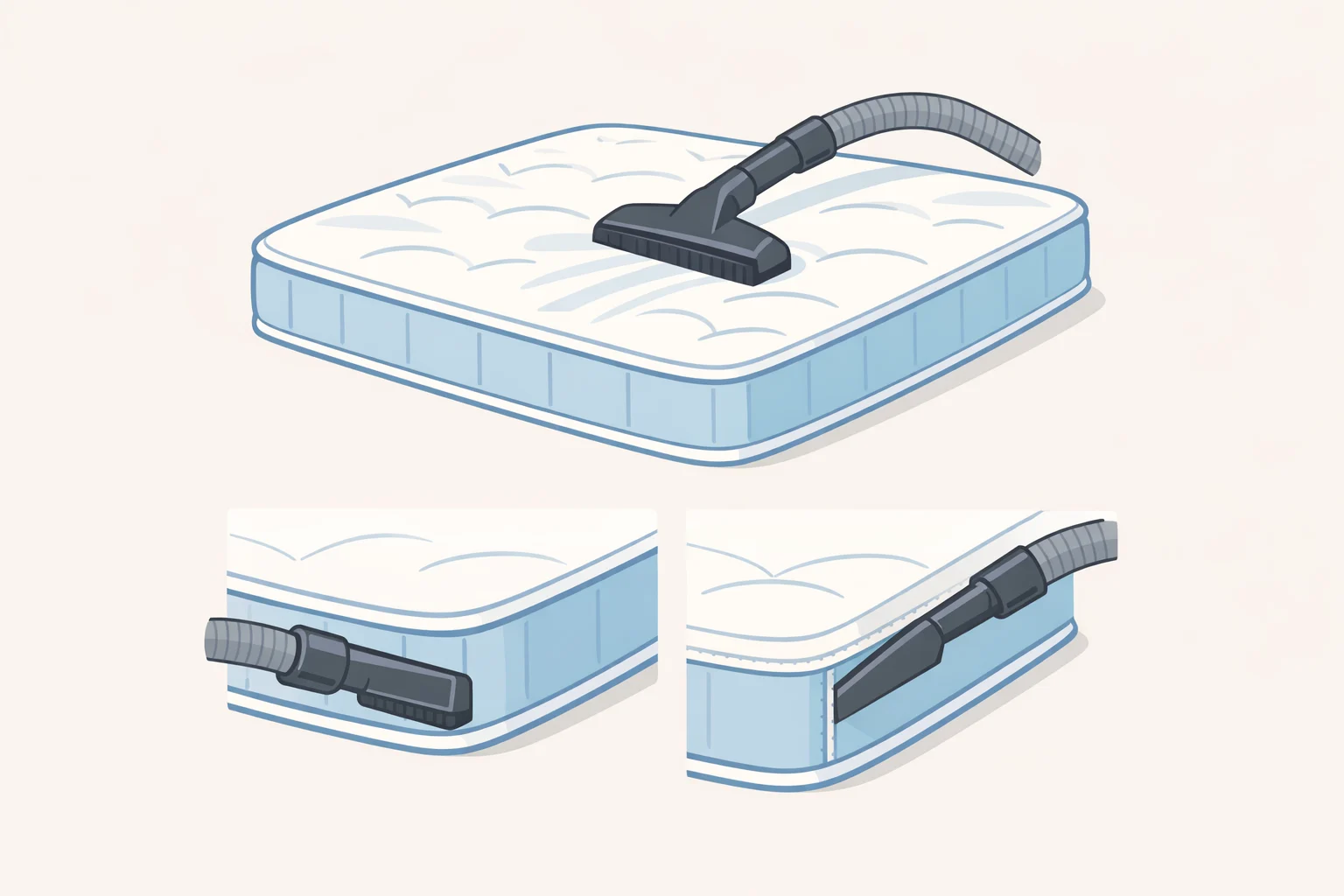
This is the process for a mattress that needs a refresh, not a deep clean. Plan to start in the morning; drying time alone can take several hours.
What you'll need: Vacuum with upholstery attachment and crevice tool, baking soda (optional), clean cloths.
Step 1: Strip the bed and wash all bedding. Sheets go straight into the wash. Both Sleep Foundation and Consumer Reports recommend washing roughly once a week to reduce how much sweat and body oil reaches the mattress surface in the first place (Sleep Foundation; Consumer Reports).
Step 2: Vacuum the entire mattress surface, sides, and seams. Use the upholstery attachment across the full top surface, then switch to the crevice tool for sides and seams. That's where dust mites, dead skin, and debris collect. As Holevich puts it directly: "You can't clean a mattress without a vacuum cleaner" (Tom's Guide). No liquid treatment substitutes for this step. Consumer Reports' testing found a regular household vacuum with the right attachments works fine, so no specialized equipment is required (Consumer Reports).
Step 3 (optional): Apply a light baking soda treatment for surface odors. If the mattress has a mild smell but no visible staining, a thin, even sprinkle left for 15 to 30 minutes can help. Many guides, including Sleep Foundation's, suggest leaving baking soda for several hours or more. This article favors a shorter dwell time because longer applications push the powder deeper into mattress material, making it harder to fully remove and increasing the residue risk Stern describes. When time is up, wipe off as much as possible with a dry cloth before vacuuming. Running fine powder directly through a vacuum can damage some models (Consumer Reports).
Step 4: Open windows and allow the mattress to fully air out. Increase airflow before replacing bedding. Sleep Foundation recommends keeping windows open and the mattress uncovered during this time (Sleep Foundation). Stern recommends sunlight exposure when accessible, noting it can help reduce odor-causing bacteria (Tom's Guide). The drying benefit is the more reliable outcome.
Do this routine at minimum twice a year, or four times annually if sleeping without a mattress encasement (Consumer Reports).
Treating stains and odors
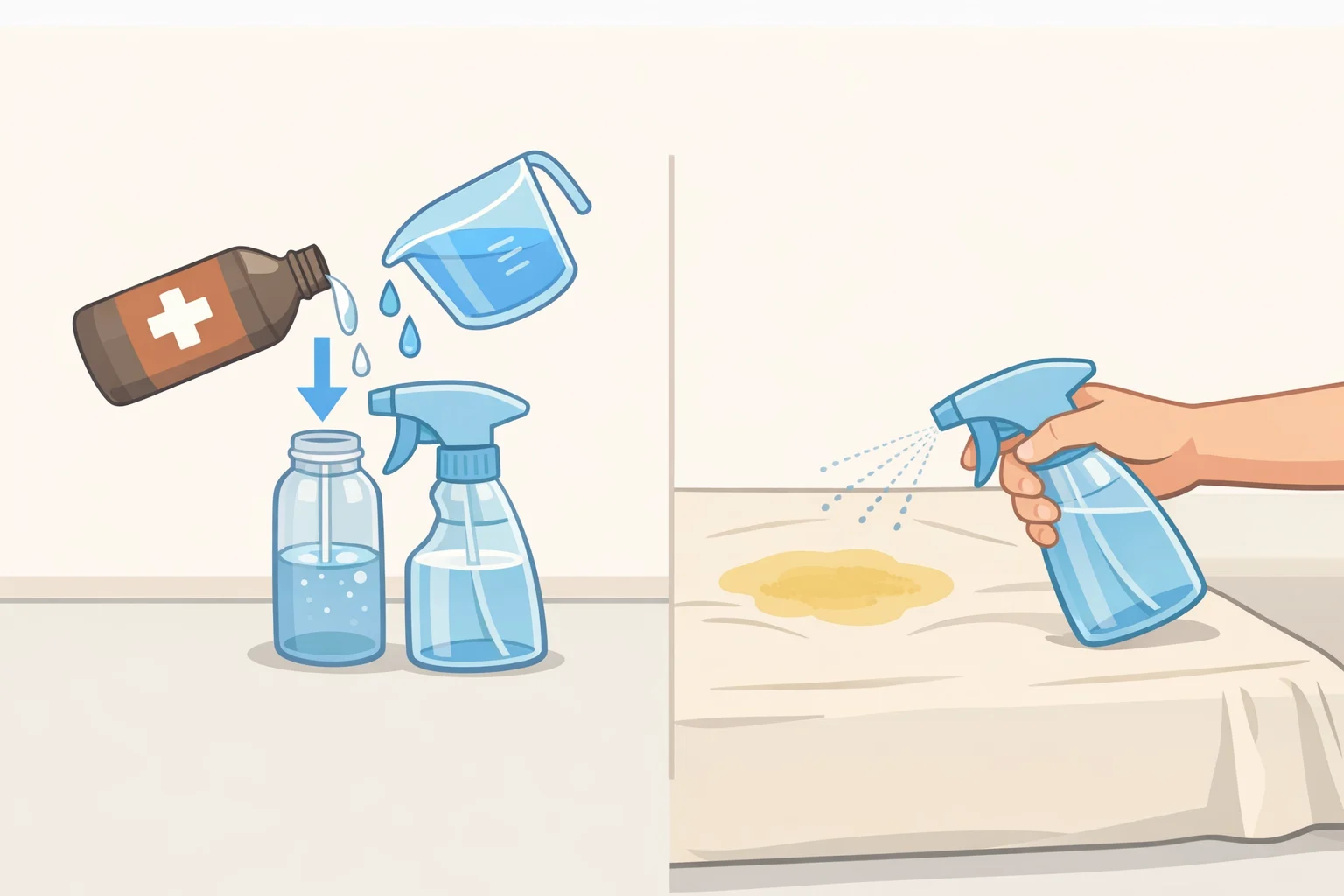
Active stains need targeted treatment. The approach depends on whether the stain is fresh or set in.
Fresh stains: Act immediately. Blot up as much liquid as possible with a clean dry cloth before applying anything, pressing firmly rather than rubbing. Rubbing drives the stain deeper. Consumer Reports advises treating a fresh mattress stain the same way you'd treat a carpet stain: blot, don't scrub (Consumer Reports). A fresh stain can often be blotted out entirely; a set-in one usually takes multiple rounds (Sleep Foundation).
Set-in yellow stains or sweat odors:
Step 1: Vacuum the area first. Clear debris before any liquid is applied.
Step 2: Mix the hydrogen peroxide solution. Combine 8 oz of 3% hydrogen peroxide, 8 oz of cool water, and 2 to 3 drops of clear dish soap in a spray bottle. Wear gloves. Do not mix with other cleaning products. Spot-test on an inconspicuous area before applying to the visible stain (Sleep Foundation).
Step 3: Apply to the stained area. Spray directly onto the stain, or apply to a cloth first if your mattress care instructions advise against direct spraying. The mattress should feel damp, not wet. Over-wetting is the most common mistake: excess moisture trapped inside the mattress creates mold risk (Sleep Foundation).
Step 4: Wait five minutes, then blot with a clean cloth. Work from the outside edge of the stain toward the center.
Step 5: Allow to fully dry before replacing bedding. Never make a damp bed. For persistent yellowing, repeat as needed, but let the mattress dry completely between rounds (Sleep Foundation).
For urine, blood, or heavy biological stains, switch to enzyme cleaner. Apply according to the product label, which typically involves spraying, waiting, and blotting. Sleep Foundation says enzyme cleaners are generally the best option for biological stain removal (Sleep Foundation), and Stern notes they're specifically formulated to eliminate sweat, urine, and body oils without damaging foam or latex (Tom's Guide). Follow with the same full-drying step.
Preventing the problem: keeping a freshened mattress that way
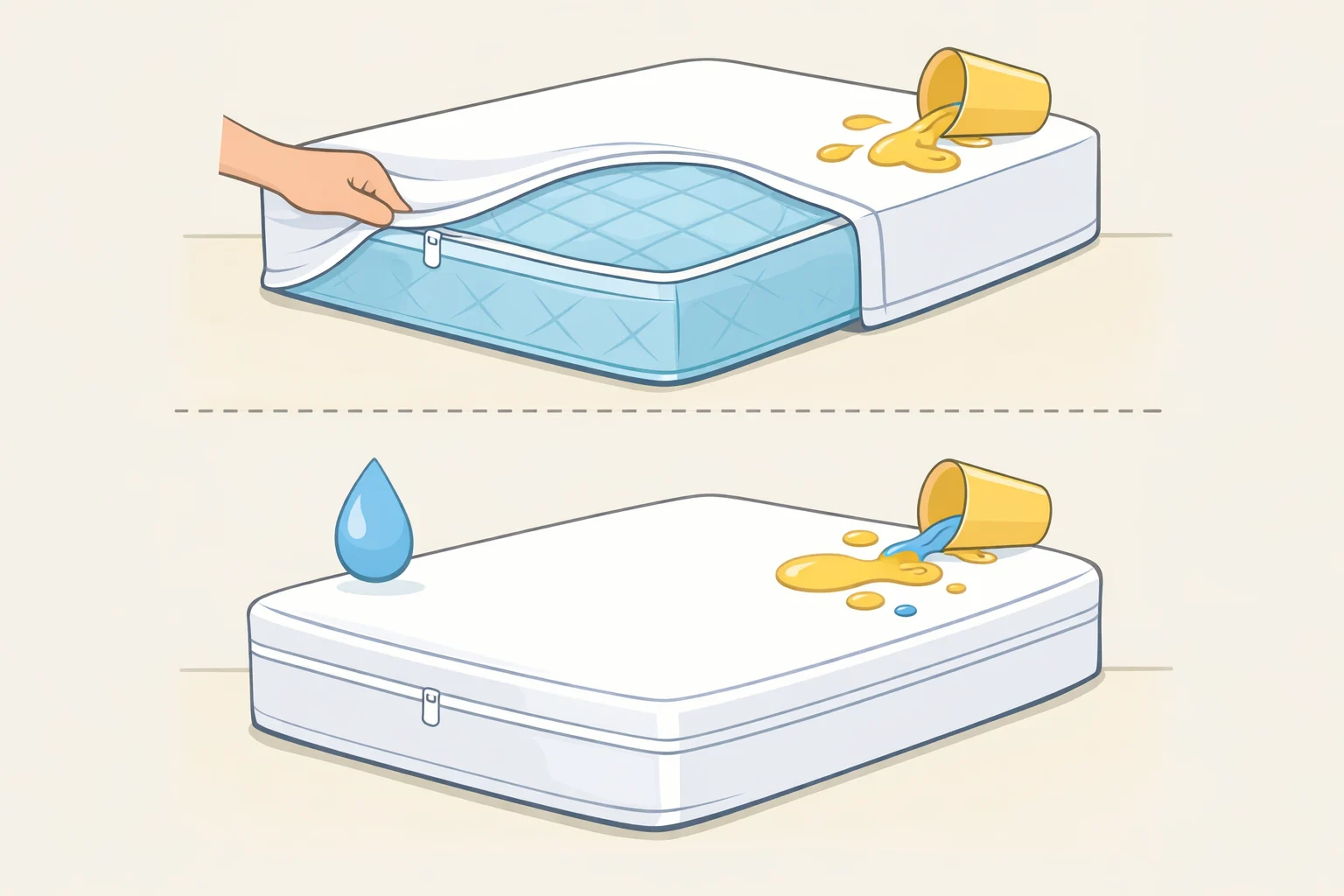
Cleaning a mattress twice a year is manageable. Cleaning one that's been unprotected for years is considerably less so.
Use a waterproof mattress encasement. A basic mattress protector creates a barrier against sweat and body oils; a waterproof encasement blocks liquids entirely. Consumer Reports calls having one "important to keeping your mattress from being ruined by stains and spills" (Consumer Reports). For a queen bed, a quality encasement runs around $55, according to Consumer Reports. That's a reasonable trade against the time a heavily stained unprotected mattress requires.
Wash sheets weekly. The less oil and sweat accumulates in the fabric lying directly on the mattress, the less migrates through over time (Sleep Foundation; Consumer Reports).
Two smaller habits worth adopting: keep food and drinks out of bed, and if you sleep hot, try lighter bedding or a cooler bedroom temperature. Both sweat volume and bedroom humidity influence how quickly yellow staining develops (Sleep Foundation).
Check the mattress surface every time you change the sheets. A fresh stain takes minutes to treat. A set-in one may need multiple rounds and still not fully lift.
Freshening a mattress is less about finding one miracle product than using the least aggressive fix that matches the problem. Vacuum first, treat stains narrowly, let the mattress dry all the way. A good encasement and weekly sheet washing will keep the job from needing to be done again anytime soon.