IKEA Effect Psychology: Why We Overvalue Things We Build
The satisfaction of holding a finished craft project isn't just pride. It's a predictable cognitive bias, one that's been measured and replicated across more than five dozen studies. IKEA effect psychology describes the tendency to assign disproportionately high value to things you helped create, even when those things are objectively inferior to comparable alternatives. The distortion shapes how makers feel about their work, how they price it, and how confidently they expect others to share their assessment.
The numbers are striking. Builders were willing to pay 63% more for furniture they had assembled themselves than for identical pre-built pieces, according to the original research by Michael Norton, Daniel Mochon, and Dan Ariely. A 2025 meta-analysis drawing on 55 studies and more than 5,400 participants confirmed the pattern holds across a wide range of products, returning a standardized effect size of d = 0.57, per the meta-analysis. That's a real, moderate, consistent distortion.
The most practically useful finding, though, isn't the size of the gap. It's what switches it on.
IKEA effect psychology: what it is and what it isn't
Video of the Day
At its core, the IKEA effect is a valuation bias, not a sentimental quirk. It doesn't require that someone loves making things or feels especially attached to the finished object. Norton and colleagues concluded that constructing even a standardized piece of furniture through solitary, arduous effort is sufficient to cause people to overvalue their often poorly constructed results. The bias appears equally in experienced makers and complete beginners; the research found that expertise neither generates the effect nor prevents it.
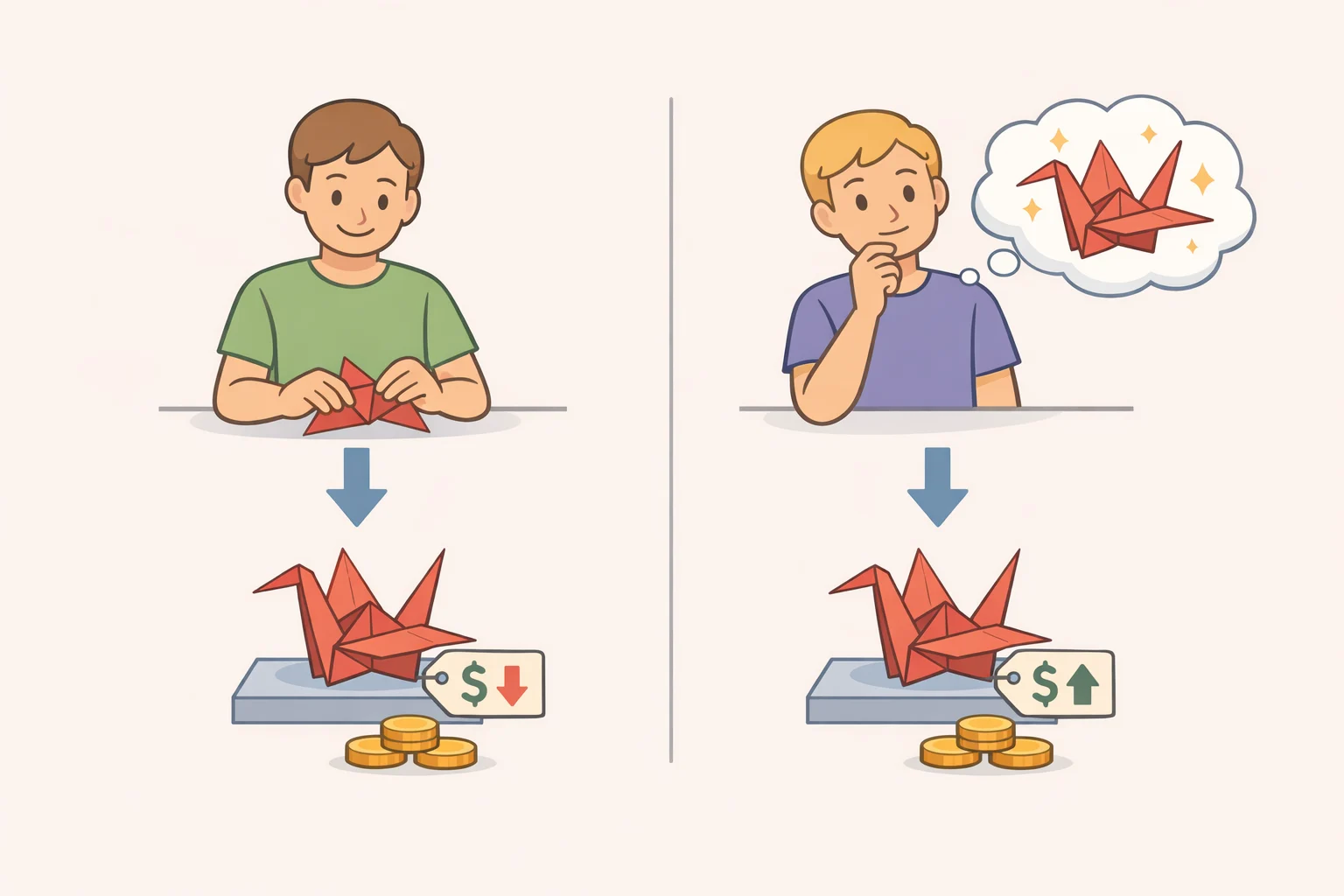
The origami experiments made the maker-observer gap vivid. Participants who folded cranes and frogs rated their amateurish results as nearly equivalent in value to expert-made pieces, and expected outside observers to agree. They were wrong. Non-builders viewed the same objects as "nearly worthless crumpled paper" and were willing to pay significantly more only for the expert versions, as documented in both the original study and a 2022 analysis in PMC.
Think of it like the difference between how a home cook tastes their own chili and how a guest at the table does. The cook's effort is baked into every bite. The guest just tastes the chili.
The bias isn't a flaw unique to sentimental people. It's a reliable cognitive pattern that shapes how makers perceive quality, value, and fairness, and it operates whether or not they know it's there.
Video of the Day
Why we value things we make ourselves: the completion requirement
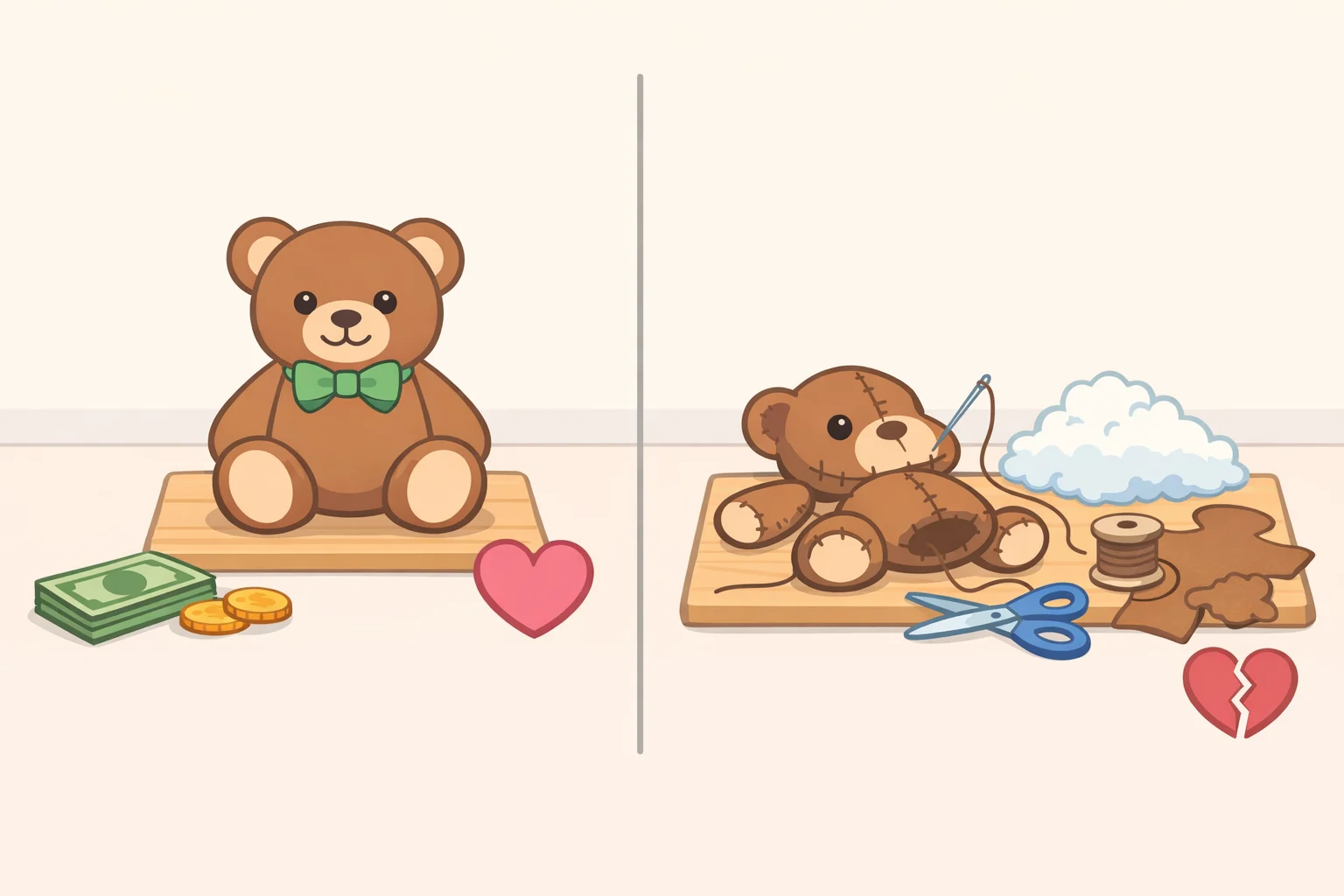
Here's where the research gets most useful for makers. The IKEA effect is not simply a function of time invested or difficulty overcome. Norton and colleagues found that "labor leads to love only when labor results in successful completion of tasks; when participants built and then destroyed their creations, or failed to complete them, the IKEA effect dissipated," per the Harvard DASH archive of their paper. Builders who completed their objects were willing to pay more than those who only partially finished the same item, according to the same research.
Effort alone doesn't produce the effect. Effort that arrives somewhere does.
An abandoned knitting project generates neither the attachment nor the sense of competence that a completed sweater does. The warm feeling crafters know is specifically the reward of closure, the moment a thing exists that didn't exist before, and you caused it. That's what trips the bias. It also explains why the pile of unfinished work in most makers' closets carries so little of the emotional weight of the pieces that made it across the finish line.
Why this happens: ownership, competence, and identity
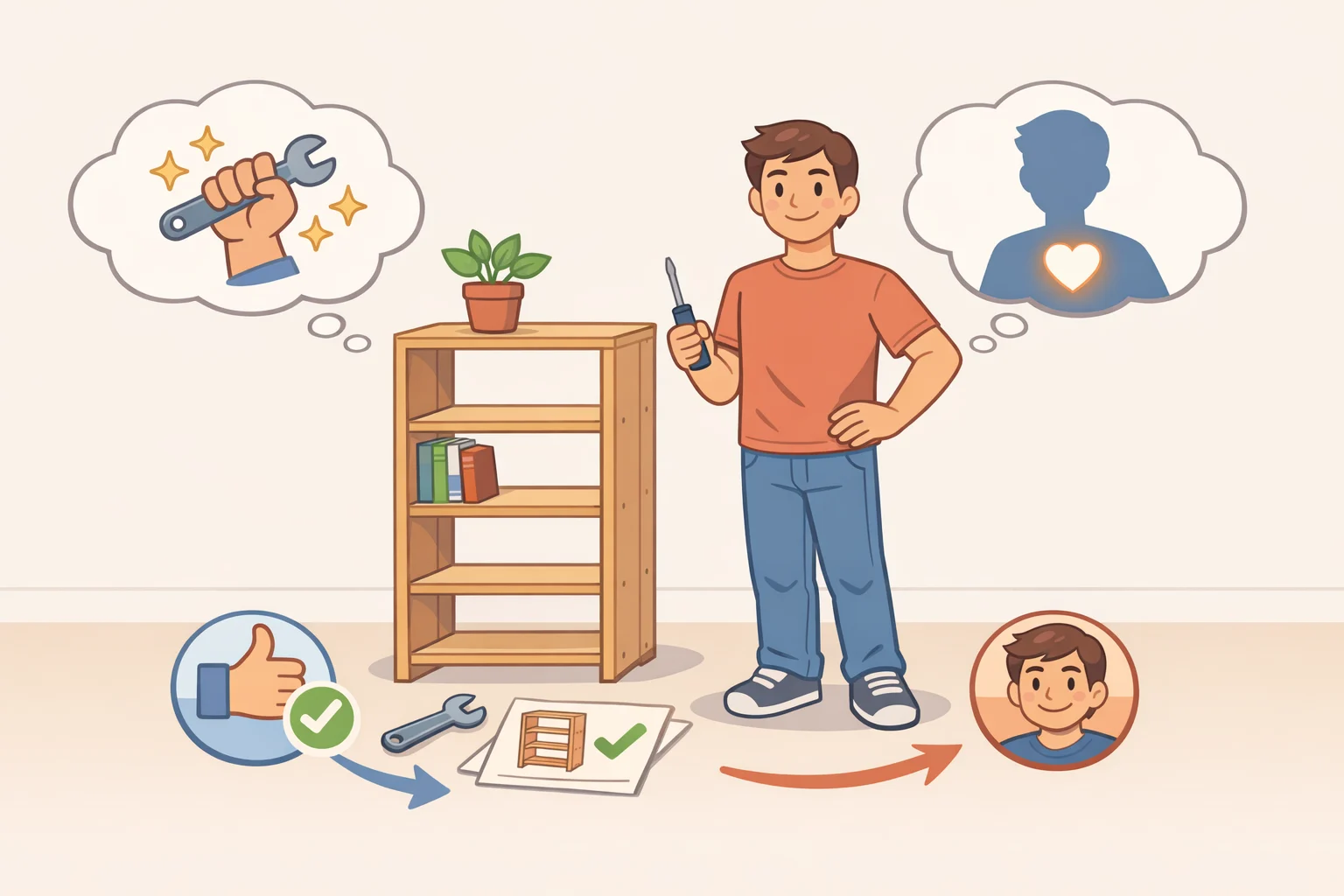
Norton and colleagues proposed effectance as one key driver: a basic human need to produce intended outcomes in one's environment. Their research found that "the increase in liking that occurs due to effort coupled with the positive feelings of effectance that accompany successful completion of tasks is an important driver of the increase in willingness to pay," as reported via Wikipedia's summary of their work. When someone completes a build, the sense of having caused something to exist triggers a competence response that inflates how much they value the result.
Competence isn't the only force at work. The 2025 meta-analysis found the effect extends well beyond willingness to pay: self-assembly also strengthens liking, sense of ownership, and even how participants understand themselves, according to the meta-analysis. What people make can become bound to how they see themselves, not just what they think the object is worth.
The researchers also noted explicitly that using "simple IKEA boxes and Lego sets that did not permit customization" did not prevent the effect from appearing, per the original study. The 2025 meta-analysis confirmed this: effects held up across products regardless of whether they allowed for customization, per the same meta-analysis. Personal expression amplifies the bias, but it isn't required to produce it.
Multiple mechanisms are probably operating at once: ownership, competence, enjoyment, possibly cognitive dissonance. Researchers haven't resolved the relative weight of each. What they add up to is this: the finished object becomes evidence of capability. That's a different kind of value than market price, and it's why the attachment runs so deep.
Where the bias bites: what makers need to know
The same distortion that makes finishing a project feel so satisfying creates a specific blind spot when the work is meant to be evaluated, sold, or compared against outside alternatives.
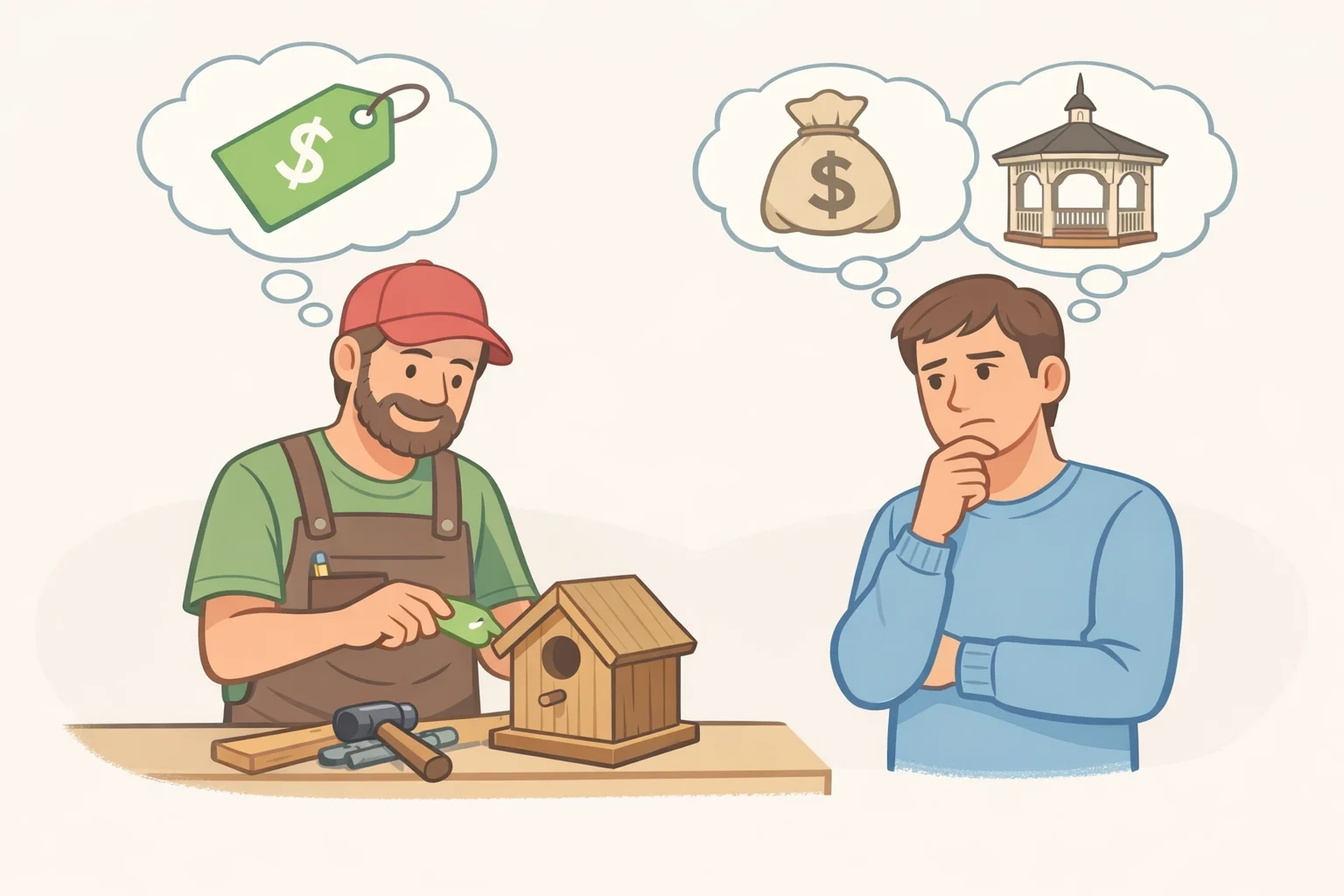
Norton and colleagues warned that the bias can lead people to overvalue their own creations when offering them for sale, as reported via Wikipedia. The problem is structural: the maker's price reflects the effort, the struggle, and the satisfaction of completion. Buyers have none of that experience and aren't paying for it. The origami experiments made this clean: makers expected observers to validate their assessments, and observers declined. The makers weren't being irrational. They just had information that outside evaluators didn't have and couldn't access.
The 2025 meta-analysis offers some calibration. An effect size of d = 0.57, consistent across 55 studies, confirms this is a real and persistent distortion, not a rare edge case, but also not so total that deliberate reflection can't correct for it, per the meta-analysis. The bias is correctable once you know what you're correcting for.
The IKEA effect is worth trusting as a source of motivation and attachment. It's worth scrutinizing when the question shifts to: what would someone else actually pay for this, or is this piece as strong as it looks to me? Those two questions require different mental postures. The bias answers the first with the second, reliably and without announcing itself.
What to take from the science
The research on IKEA effect psychology points to a useful paradox. The satisfaction of making something by hand is real, measurable, and tied to a specific condition: the work has to be finished. Effort without a completed object produces none of the effect. Destroying a completed creation substantially reduces both willingness to pay and psychological ownership, according to a replication study summarized via Wikipedia. The reward of making things is specifically the reward of finishing them.
That's also where the bias earns its name. The attachment is genuine and, for the maker, well-founded. For everyone else in the room, it's invisible. Knowing when it's serving you, as a source of motivation, satisfaction, and identity, and when it's misleading you, as a guide to quality or pricing, is the most practically useful thing the research offers.
For deeper reading: Norton, Mochon, and Ariely's original paper is archived at Harvard DASH. The 2025 meta-analysis is available through the Journal of Marketing Research.