How to Clean with Baking Soda Around the House: What Works and What to Avoid
Knowing how to clean with baking soda around the house starts with one question: is baking soda right for this surface at all?
Sodium bicarbonate is an alkaline, non-toxic powder that scrubs grime, lifts certain stains, and absorbs odors, according to Southern Living. It costs almost nothing. But Robin Murphy, founder of Maid Brigade, draws a clear line: baking soda works on countertops, sinks, and tubs, and its abrasive texture can damage more delicate materials, The Spruce reported last year. Most baking soda guides skip the second half of that sentence entirely.
This guide covers both halves. By the end, you'll know how to sort any surface into the safe or risky category, apply baking soda correctly where it belongs, and reach for something better when it doesn't.
Before you start, confirm you have:
- Plain baking soda, not baking powder different compound, different chemistry
- Water, a small bowl for mixing paste, and a soft cloth or non-scratch sponge
- A moment to check your surface material using the framework below
How to know whether baking soda is safe for your surface
Video of the Day
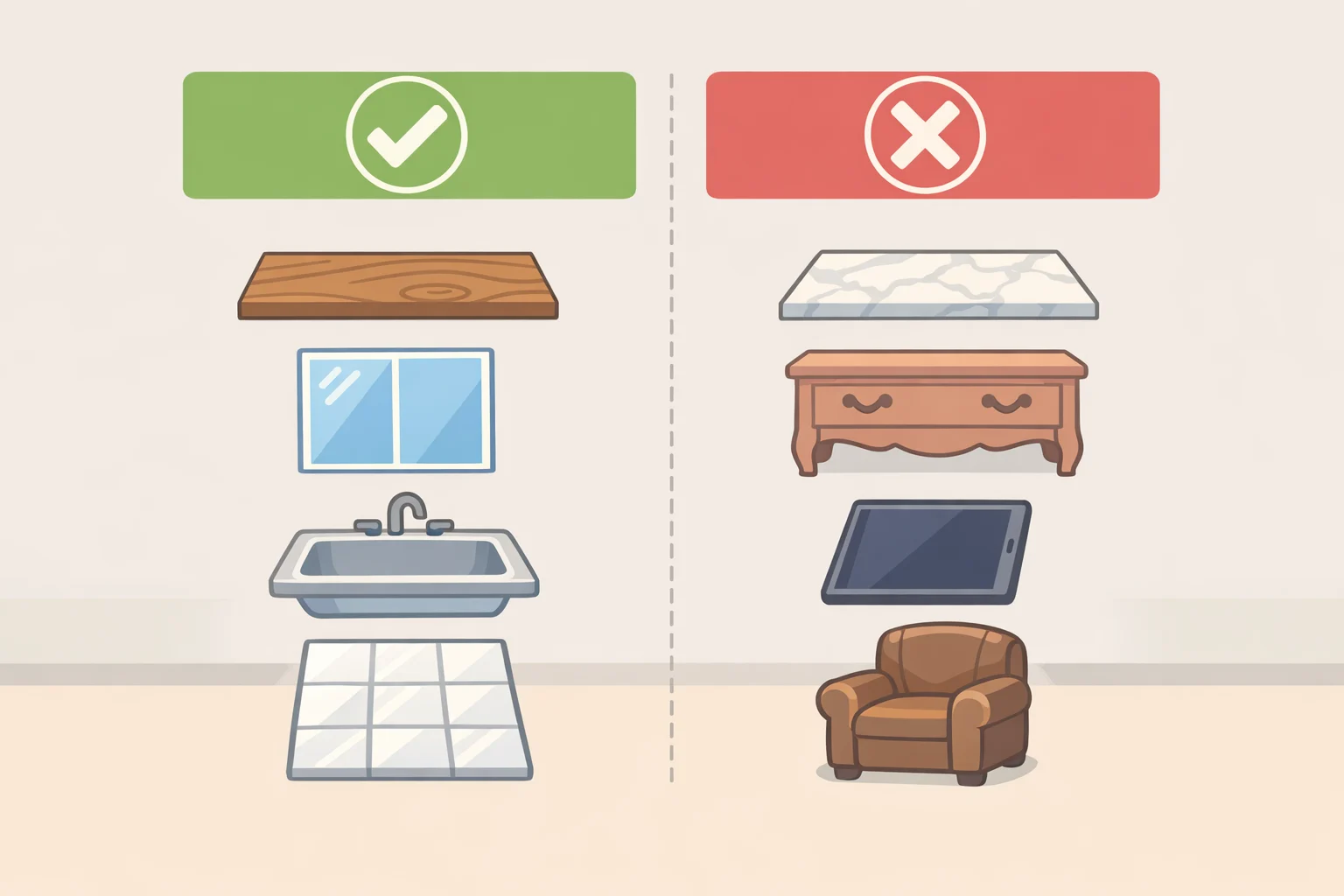
Most cleaning mistakes happen because people apply a product by habit rather than by material. Baking soda tends to work on surfaces that are hard, sealed or glazed, and chemically inert. Problems appear on surfaces that are soft, porous, polished, coated, or reactive to alkali.
Run through these four checks before you open the box:
1. Is it glass, stone, aluminum, or wood with a finished coating? Stop. Baking soda's abrasive texture can scratch and dull these materials, and on aluminum it triggers a chemical reaction that causes discoloration. Marble can develop a foggy appearance that doesn't reverse; wood finishes can be scratched and stripped, per Southern Living and The Spruce. The full breakdown is in the exclusion section below.
2. Is it leather, a delicate fabric, or jewelry? Stop. Baking soda strips the natural oils that keep leather supple, leading to cracking over time. Its alkaline pH can break down protein-based fibers like wool, causing them to lose softness and strength, according to Martha Stewart. On gold, silver, and precious stones, the abrasiveness can scratch surfaces and remove protective finishes, The Spruce notes.
3. Is it a screen or electronic device? Stop. The powder can scratch display coatings and may find its way into device openings, creating problems well beyond the surface, The Spruce warns.
4. None of the above? Check manufacturer documentation to confirm the material, then test a small, inconspicuous area first. Angela Brown, CEO of Savvy Cleaner, recommends this as standard practice for any surface, not just borderline cases, Southern Living reports. If you can't identify the material, that's your answer: don't use baking soda.
Telling similar surfaces apart
A few mix-ups that matter. For stainless steel versus aluminum, check the base of the cookware or the original packaging baking soda is documented as harmful to aluminum, so when the label isn't clear, verify with manufacturer documentation before proceeding. For natural stone countertops versus laminate, polished stone finishes are particularly susceptible to scratching, Martha Stewart notes; if you can't confirm the countertop material, a dish soap and water solution is safe for both. Fiberglass tubs scratch easily and baking soda is too abrasive for them, Southern Living confirms. When the material isn't obvious, check installer paperwork or manufacturer specs before reaching for the box.
Safety note: Never combine baking soda with chlorine bleach, ammonia, or alcohol. These combinations can produce dangerous chemical reactions, per Martha Stewart. Baking soda mixed with vinegar is non-toxic but, as Dr. Pamela Turner, an indoor environment specialist at the University of Georgia, notes, the cleaning effectiveness of that combination is not much stronger than plain water once the fizzing stops, The Spruce reported in 2024. There is one practical exception, covered below.
Video of the Day
How to clean with baking soda around the house without damaging surfaces
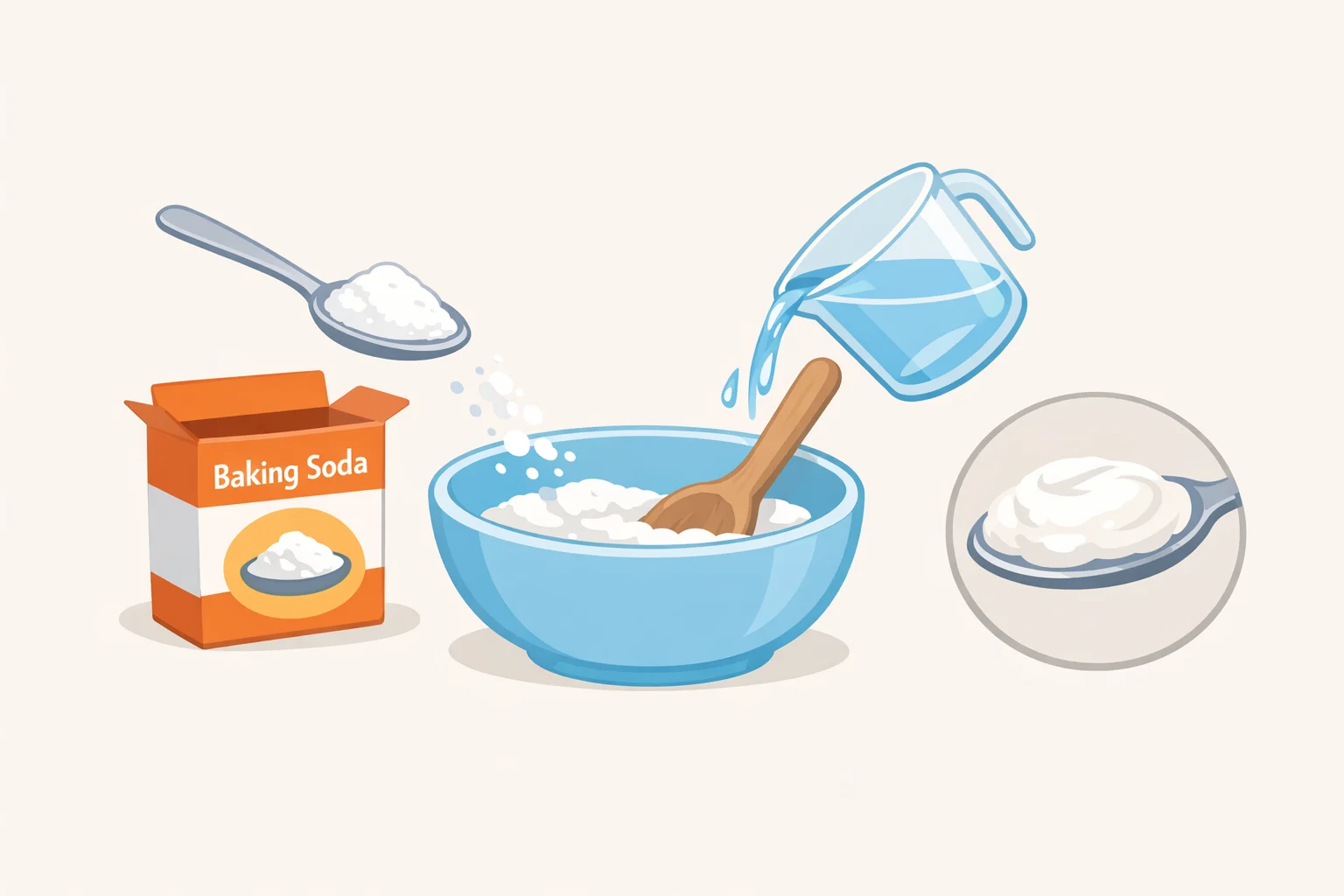
Once you've confirmed the surface is safe, baking soda does three things reliably: scrubs durable surfaces as a mild abrasive, deodorizes through odor absorption, and loosens drain buildup through fizzing action. Grouping by function rather than by room makes these methods easier to adapt to your own space.
The core preparation, baking soda paste: Mix two parts baking soda with two parts water to form a thick paste. This ratio gives you enough body to apply and scrub without the powder scattering, per The Spruce. Apply with a damp cloth or non-scratch sponge, use light circular pressure, let sit 5-10 minutes on stubborn stains, then rinse thoroughly. Incomplete rinsing leaves a chalky residue, a consistent warning from professionals cited by Martha Stewart and Southern Living. Rinsing isn't optional.
Scrubbing durable sealed surfaces
-
Porcelain and ceramic sinks. Apply paste, scrub with a damp sponge, rinse thoroughly. For stubborn soap scum, let the paste sit five minutes before scrubbing. If staining remains after one pass, switch to a surface-specific cleaner rather than scrubbing harder.
-
Stainless steel pots and pans. Sprinkle dry baking soda into a damp pot, scrub with a non-scratch pad, rinse well. Confirm the material is stainless steel first aluminum cookware reacts chemically with baking soda and can discolor, Southern Living notes.
-
Ceramic tile and grout. Work paste into grout lines with an old toothbrush, let sit five minutes, rinse with warm water. Ceramic and sealed porcelain tile are durable enough for this. If discoloration in grout persists, move to a grout-specific cleaner rather than repeating.
-
Porcelain bathtubs. Sprinkle baking soda onto a damp sponge and scrub; rinse completely. Fiberglass is not safe for baking soda, so verify the tub material using manufacturer documentation before starting.
-
Refrigerator and microwave interiors. Mix one cup of baking soda with two cups of water, wipe down interior surfaces with a dampened soft cloth, as The Spruce recommends. For baked-on splatter in the microwave, apply paste, wait five minutes, wipe clean. Skip the glass door entirely.
Pressure matters. Baking soda's abrasion scales with force. Use the minimum needed to lift grime. The same amount of powder that cleans a porcelain sink under gentle strokes can scratch it under aggressive ones.
Deodorizing without scrubbing
-
Carpet odor removal. Sprinkle dry baking soda over carpet, let it sit at least 15 minutes (longer for strong odors), then vacuum thoroughly. Dry application only; no water needed, The Spruce confirms. Vacuum completely so powder doesn't settle into the fibers.
-
Fabric stain pre-treatment on hardy materials. Work a paste of baking soda and water into a fresh stain on cotton or durable synthetics before laundering. Baking soda can lift some stains, but ink and dye-based stains need specialized removers, Martha Stewart notes. Regular use may gradually fade vibrant colors, and the powder can leave residue in fabric fibers if not fully rinsed, Martha Stewart adds. Use sparingly, rinse well, and skip entirely on silk, wool, cashmere, velvet, satin, lace, and chiffon.
Loosening drain buildup: the one case where vinegar belongs
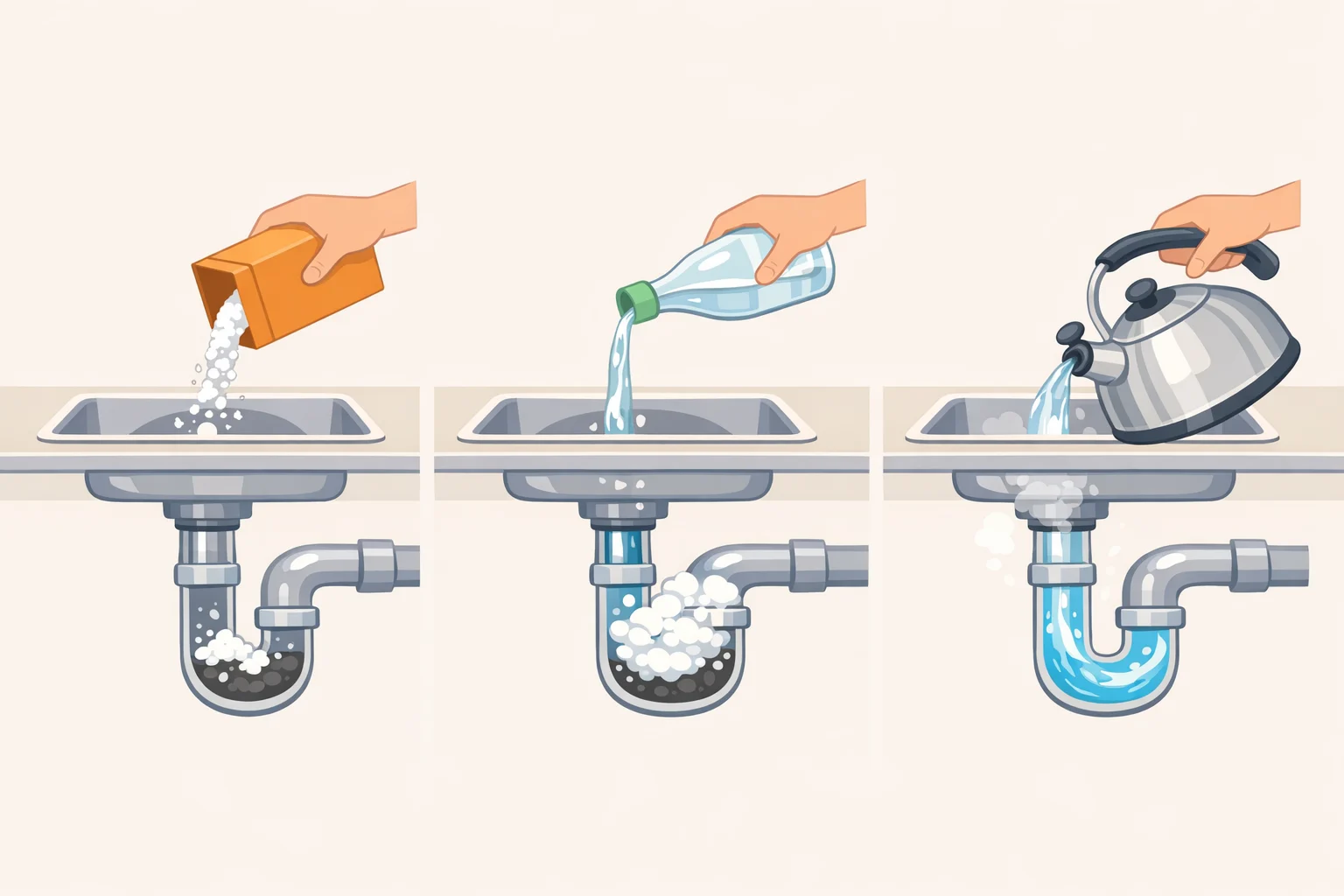
- Slow kitchen or bathroom drain. Pour half a cup of baking soda down the drain, follow immediately with one cup of white vinegar, let the foaming work for 15 minutes, then flush with hot water. The foaming action helps loosen clogs and stuck-on grime in pipes the specific task where this pairing earns its reputation, according to The Spruce. Keep this combination for drains; on flat surfaces, there's nothing for the foam to act against.
Where baking soda goes wrong, and what to use instead
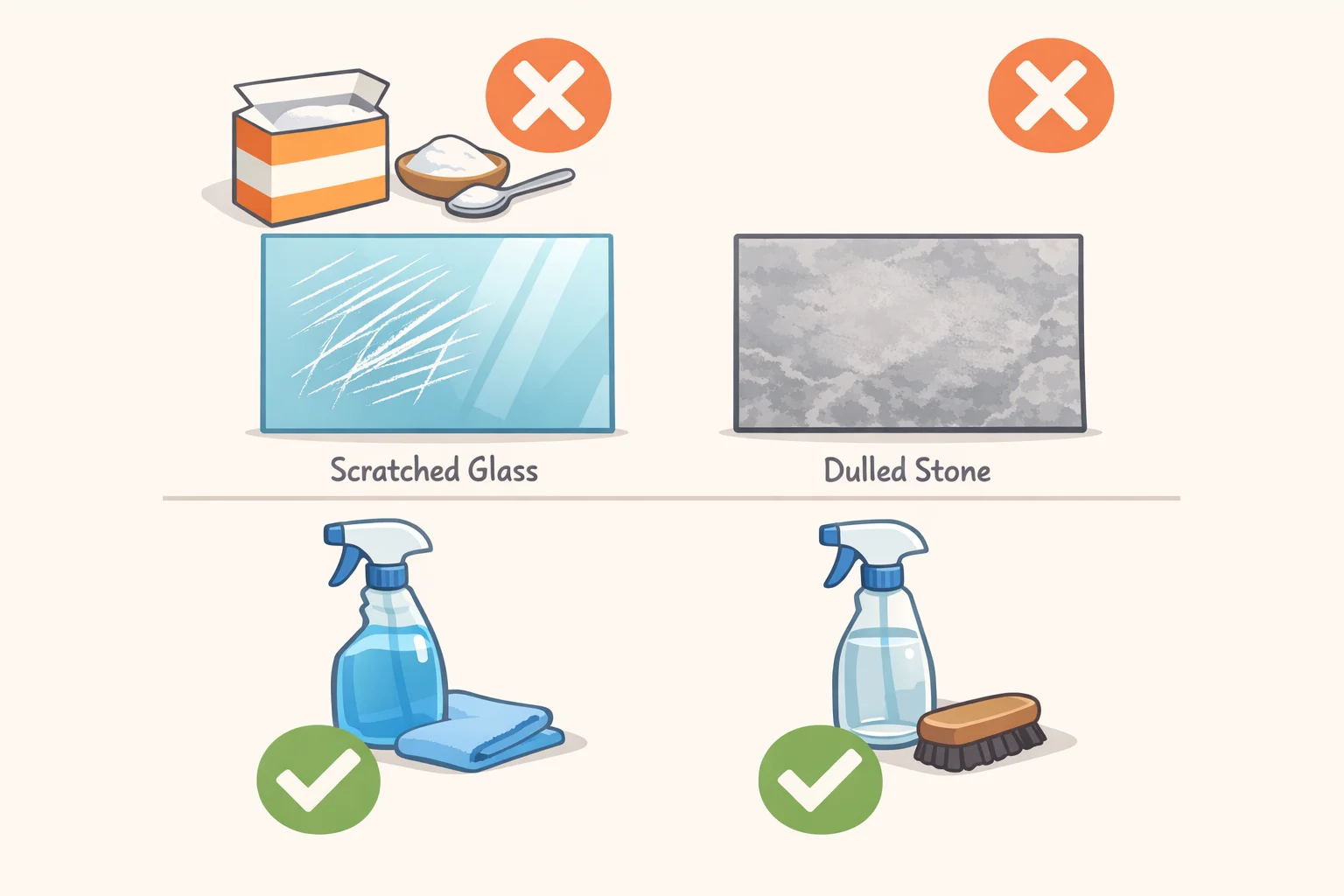
Several items on this list cause damage that starts invisible and becomes permanent. That's what makes them worth reading carefully.
Surfaces it scratches:
- Glass, windows, mirrors, glassware, glass stovetops. Baking soda's abrasive texture can scratch glass, and while initial damage may be hard to see, scratches deepen over time and trap dirt in the grooves, Southern Living reports. Tinted windows and anti-glare coatings are especially vulnerable. For mirrors: a microfiber cloth with a vinegar-water solution. For screens: a product-specific cleaner.
- Natural stone: marble, granite, travertine. Baking soda can scratch polished stone finishes and cause dullness or discoloration. Marble is particularly susceptible to a foggy appearance that doesn't reverse, per Southern Living and The Spruce. Use a pH-neutral stone cleaner or diluted dish soap instead.
- Fiberglass tubs and painted surfaces. Fiberglass scratches easily, and baking soda can chip paint and create uneven surface textures, Southern Living warns. Use a mild, non-abrasive cleaner made for the specific finish.
Materials it can discolor or strip:
- Aluminum cookware, appliances, and utensils. Baking soda reacts with aluminum in the presence of moisture, producing discoloration through aluminum hydroxide formation. This applies to cookware, kitchen appliances, utensils, and grill exteriors, per Martha Stewart and Southern Living.
- Wood surfaces with a finished or polished coating. Baking soda can scratch and strip the protective sealants on wood floors, furniture, and cutting boards, The Spruce notes. Use a dedicated hardwood cleaner formulated for the finish type.
- Leather. Baking soda draws out the natural oils that keep leather supple, leading to drying and cracking in furniture, jackets, shoes, and bags, according to Southern Living. Use a leather-specific conditioner and cleaner.
- Waxed furniture. The abrasive powder can scratch wax finishes and leave surfaces looking dull, Martha Stewart cautions.
Items that need specialty cleaners:
- Electronic screens and devices. The powder scratches display coatings and can infiltrate device openings, creating problems well beyond the surface, The Spruce warns. Use a screen-safe cleaning solution and microfiber cloth.
- Silver and copper. Baking soda may scratch antique silver's protective surface, and it can react with copper to accelerate tarnishing, resulting in uneven discoloration that's difficult to reverse, Southern Living reports. Use cleaners made specifically for those metals.
- Gold jewelry and precious stones. Baking soda's abrasiveness can scratch gold, remove protective finishes, and damage precious stones and pearls, per The Spruce and Martha Stewart. Use jewelry-safe cleaning solutions or consult a specialist.
- Delicate fabrics: silk, wool, satin, cashmere, velvet, chiffon, lace. Baking soda's alkaline pH can break down protein-based fibers like wool, causing them to lose softness and strength, while the abrasive particles cause pilling and fraying in finer materials, Martha Stewart notes.
Finding alternatives for off-limits surfaces. The EPA's Safer Choice program, updated in 2024 for the first time since 2015, evaluates every ingredient in certified products against criteria for human and environmental safety, the EPA announced. When a stone cleaner, wood floor product, or leather conditioner is what you need, the Safer Choice label is a practical baseline for finding something formulated for that surface, rather than one marketed generically as "natural."
The check before you scrub
Baking soda cleaning tips are everywhere. What most of them skip is the condition that makes those tips work: the surface has to be durable, sealed, and non-reactive. Glass, stone, aluminum, finished wood, leather, delicate fabrics, electronics, and jewelry all fail that test. The damage tends to be gradual enough that you don't notice until it's permanent.
If you can't identify the surface material, don't use baking soda. Check the manufacturer documentation, test a hidden spot first, and reach for a surface-specific cleaner when the finish matters. That's the whole decision.