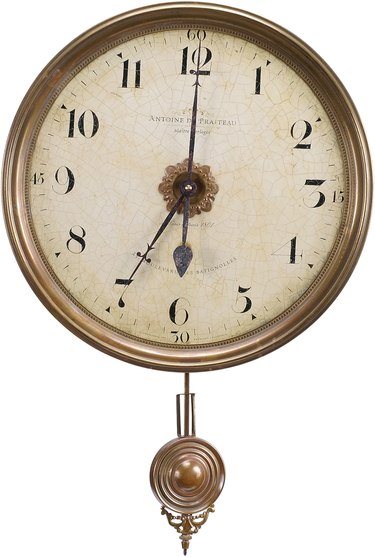
When a clock pendulum swings to and fro, you can truly watch time fly. The movement of the pendulum and the clock's ticking make a pleasant counterpoint to the pace of modern life -- until the pendulum stops swinging. Pendulum clocks stop for a variety of reasons, but can usually be restarted. Before you resort to a repair shop, see whether you can diagnose and fix the problem.
Pendulum Strike
Video of the Day

Pendulums must swing freely. If a clock pendulum touches anything during a swing, it stops. Often, a pendulum strikes the case after a clock is moved to a new location. Case strike is frequently the problem with grandfather clocks. When this occurs, the clock is probably not sitting level. Using a small piece of flat cardboard under the case to level the clock may solve the problem. Usually, leveling a grandfather clock is done from side to side, but try back to front if that doesn't work.
Video of the Day
Hands Stuck
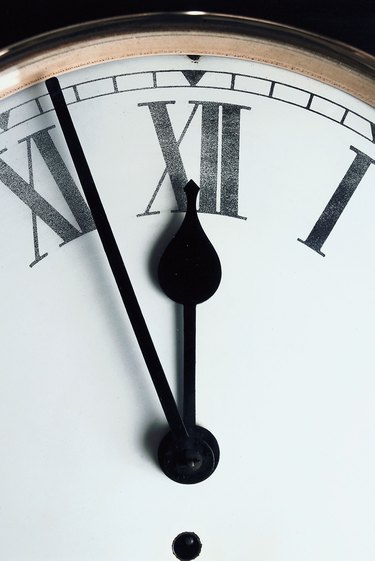
Move the pendulum back and forth with your fingers. If you don't hear a ticking sound, the clock's hands are probably stuck. Gently move the hands with a finger to see if they are touching the dial, the glass or each other. Bend the stuck hand slightly to clear the obstacle. If both hands are stuck, free the minute hand first, then the hour hand.
Tangled Chains
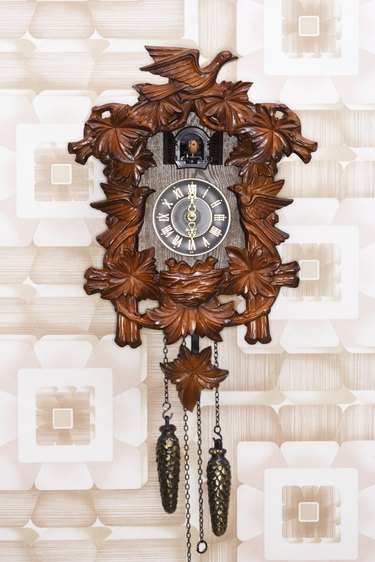
The weight or chain cable may be tangled. Check the weights to see that they are hanging straight, without any bunches in the chain. For clocks with multiple weights and chains, such as cuckoo clocks, inspect the chains and weights to make sure they are clear of each other. If a cuckoo clock chain has fallen off the sprocket, replace it.
Oil and Debris
Dried oil and debris can clog and stop the clock mechanism. Brushing the mechanical works with a soft brush, such as a paint brush, should dislodge any dust or dirt. If dried oil is visible, gently brush it away. Dabbing a few drops of clean oil on the area, then restarting the pendulum, should get the clock running again.
Movement
Sometimes the pendulum stops because the clock movement needs a good cleaning. In other cases, you may need to repair the clock or even replace a worn-out movement. Get an estimate for cleaning, repairs or a new mechanism before any work is done. Usually, the case is the most valuable part of a clock, with a few exceptions. Some clocks have rare mechanisms that have value in themselves, either because of their design or their manufacturer. Rare mechanical clocks with historical or antique provenance are usually cleaned and repaired. For newer or less valuable clocks, replacing a defective movement with a new one is often less expensive.