Things You'll Need
Drawing board (optional)
Tape (optional)
Washable markers
Paper
Paintbrush
Cup of water
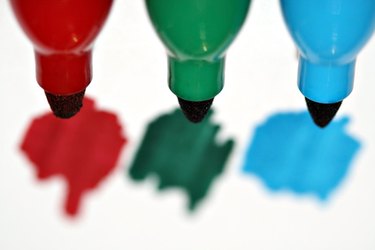
Washable markers are certainly convenient for kids, ensuring that furniture and walls stay marker-free. But washable markers can also be used to create wonderful pieces of art–even by adults. By using any brand of washable markers such as Crayola, a paintbrush and a little bit of water, the colors of the markers will blend evenly to give a "paint" feel to any artwork.
Step 1
Tape a piece of paper onto a drawing board or table. This will ensure that your paper will not move when you are drawing with the washable markers. You can also draw directly within a drawing tablet too, as it will keep your paper secure.
Video of the Day
Step 2
Draw the picture you envision, using as many colors as you'd like. Drawing simple lines from thick to small is okay too, if you are just wanting to learn how to blend at this point. Either way will work fine.
Step 3
Decide what areas of your drawing you want to blend. You can blend every color together evenly, so it's completely up to you.
Step 4
Dip your paint brush into the water and wring out any excess water. You don't want the paint brush to be sopping wet, so it just needs to be damp.
Step 5
Paint over the colors that you want to blend using quick upward motions with the tip of the paintbrush. You will notice as you do this that the marker color will begin to blend evenly and look more like watercolor paint. This is the effect you are looking for.
Step 6
Rinse your brush and repeat the step above when blending new and different colors together. If you are blending darker colors and then lighter colors, you will need to rinse--otherwise your lighter colors will become dark and unsightly.
Tip
When using a paintbrush and water, it is important to wring out the excess water. Too much water causes the colors to blotch and possibly bleed, and it can also leave your paper extremely wet.
Video of the Day