How to Get Rid of Fall Bugs in Your House: Identify & Remove
In many parts of the country, fall brings a familiar mix of shelter-seeking insects into kitchens and sunrooms: a cluster of orange beetles on the windowsill, a slow gray fly bumping against the glass, some oddly shaped bug nobody can quite name. Figuring out how to get rid of fall bugs in your house starts with a distinction most people skip entirely: is this thing breeding in your home, or just hiding out in it for winter?
Most of the species covered here are doing the latter. They're using your walls as a heated shelter, not a nursery, and don't reproduce indoors at all (CSU Extension). The exception is a pair of look-alike flies, bluebottle and black blow flies, that don't necessarily follow the same script once they're inside. One of them can keep reproducing indoors under the right conditions, which is exactly why identifying what's crawling across the sill matters more than reaching for a can of spray.
Asian lady beetles are the most visible of the bunch, and their swarms follow a specific weather cue: a cool stretch followed by a warm, sunny afternoon flips a switch in their brains that says "find shelter now," a push often amplified by soybean harvest activity across the Midwest (UMN Extension). Cluster flies work on a slower calendar tied to day length. CSU Extension reports that in Colorado they start gathering on sun-warmed walls as early as mid-August, with most of the actual building entry happening in September (CSU Extension), which makes late summer, not the day you spot the first bug, the window that actually matters.
This guide walks through quick identification, a short decision path for telling a harmless overwinterer from a fly problem worth a closer look, a sealing timeline, removal steps for each species, and the point at which it's worth calling a professional instead of continuing to DIY it.
Common fall pests in homes: a quick identification guide
Video of the Day
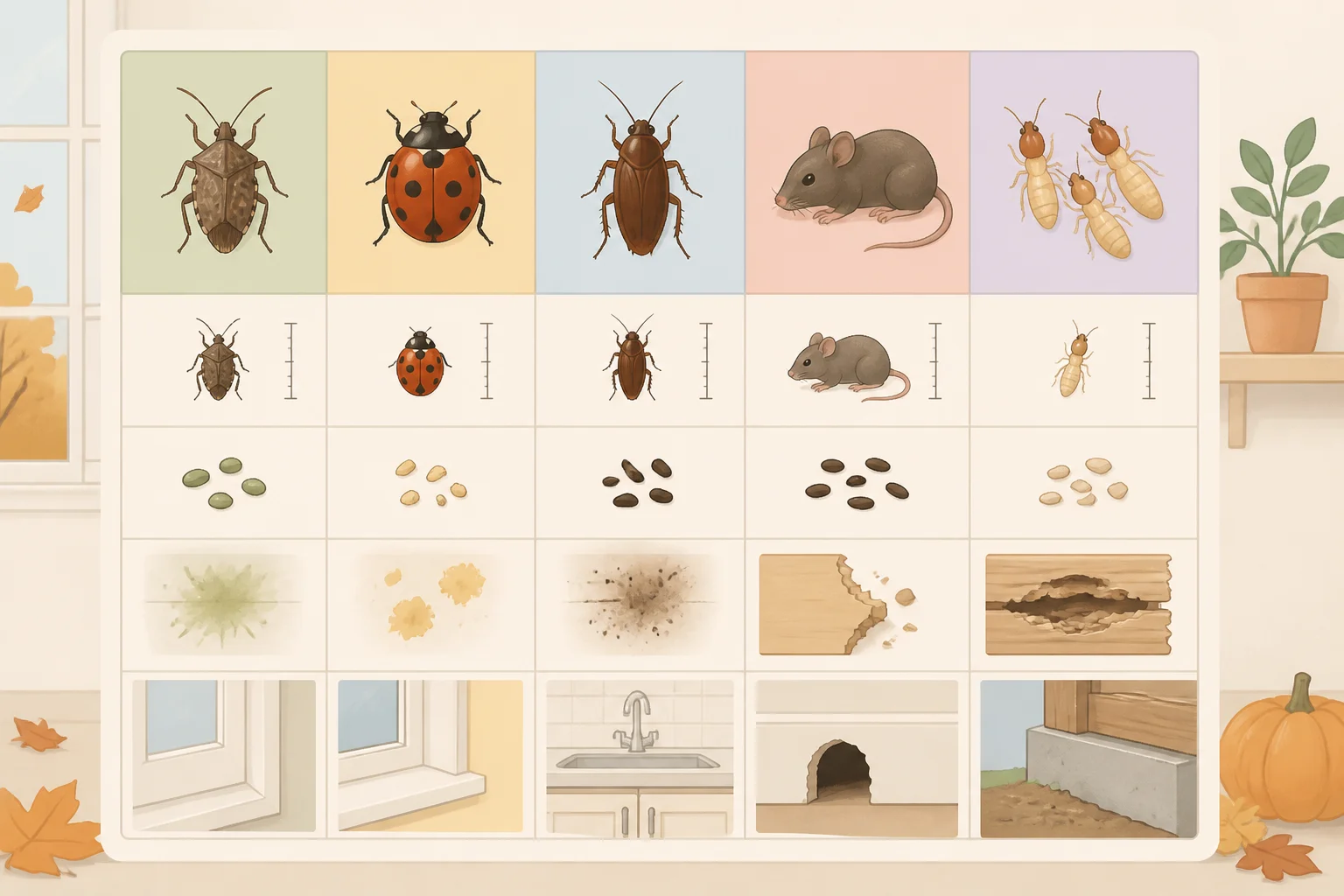
| Pest | Appearance | What it's doing in your house |
|---|---|---|
| Asian lady beetles | Orange to red, clustering on sun-warmed south- and west-facing walls and light siding | Overwintering only; can linger until spring (UMN Extension) |
| Western conifer seed bugs | Large (5/8 to 3/4 inch), oddly shaped, with noticeably thickened hind legs | Overwintering only; usually dead within a week or two without water (CSU Extension) |
| Cluster flies | Dull gray with golden hairs on the thorax | Overwintering only; often found dead or dying near windows (CSU Extension) |
| Elm seed bugs | Rusty red and black, about 1/3 inch, bitter-almond smell when disturbed | Overwintering only, in states where the species has been confirmed (CSU Extension) |
| Bluebottle and black blow flies | Metallic blue or dark, similar shape to cluster flies but without the golden thorax hairs | Shelter-seeking flies; bluebottles may reproduce indoors when warmth and food are available, while black blow-fly behavior is described inconsistently in the sources |
A stressed lady beetle releases a yellow "reflex bleeding" fluid that stains surfaces and smells sharp, which is the main reason squashing them backfires (UMN Extension). Conifer seed bugs are easy to confuse with assassin bugs, which can actually bite: assassin bugs have a protruding beak and thickened front legs, while conifer seed bugs have thickened hind legs instead (CSU Extension). If you're not sure which one is on your curtain, don't pick it up bare-handed.
Elm seed bugs are a newer arrival to this list. First detected in Idaho in 2012, the species has since turned up in Utah, Oregon, Washington, Colorado, New Mexico, Canada, and parts of Asia (CSU Extension). Like the other overwinterers, adults shelter in structures without reproducing indoors.
The bluebottle and black blow fly entry deserves more scrutiny than the other four, because the sources themselves don't fully agree on it. Both are scavengers that use homes for winter shelter the same way cluster flies do, developing on carrion, meat, and garbage rather than earthworms. The sources indicate that bluebottle flies may reproduce indoors when warmth and a food source are both available. Where the sources diverge is on the black blow fly specifically: one CSU resource groups it with bluebottles as capable of laying eggs indoors under the right conditions, while another states it enters full winter dormancy just like cluster flies (CSU Extension, "Flies in the Home"; CSU Extension, "Cluster Flies and other Winter Flies"). Given that conflict, treat any metallic or dark fly that keeps reappearing daily as worth checking, regardless of which of the two it turns out to be.
Video of the Day
What to do right now: a short decision path
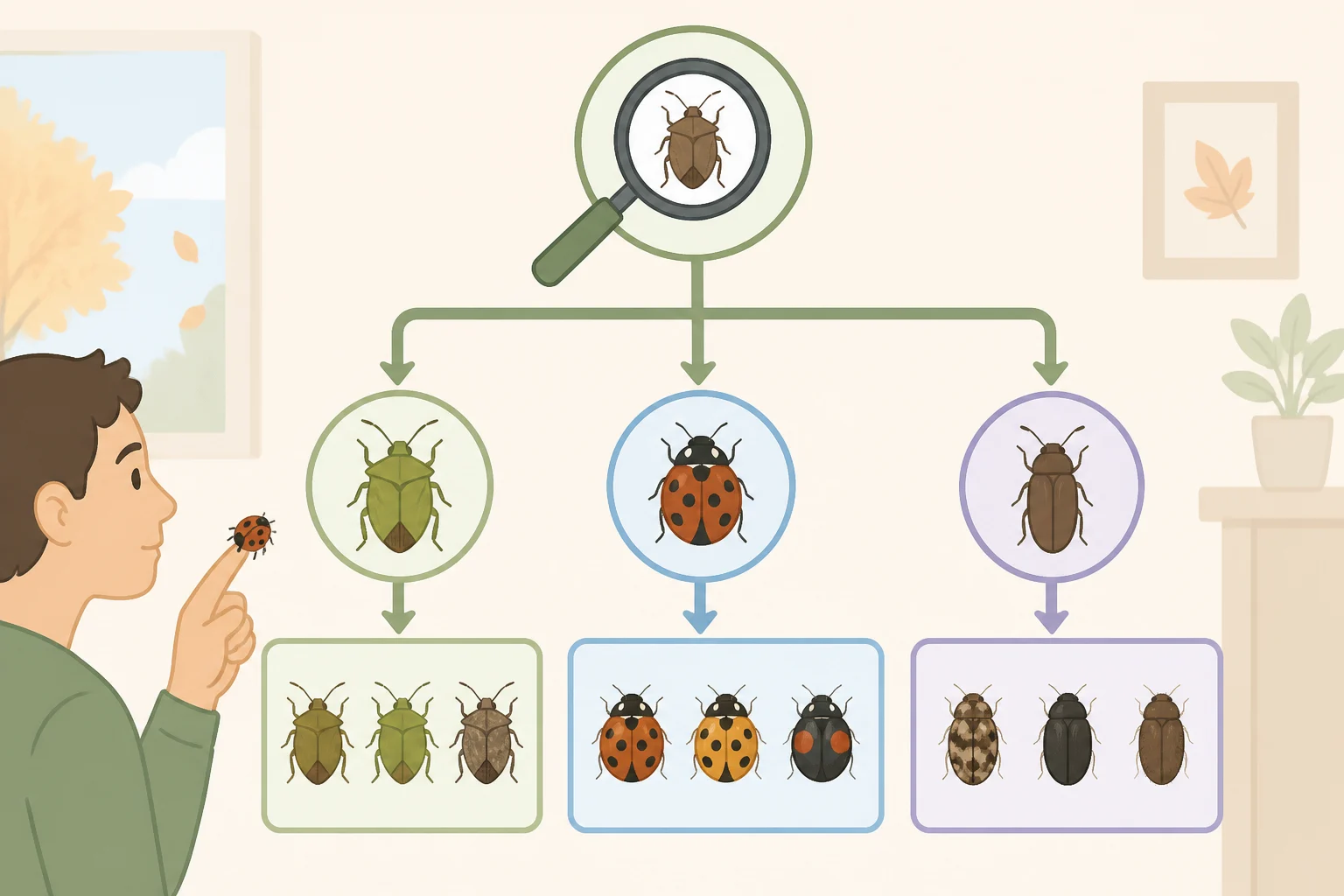
Sort what you're seeing into one of three buckets before doing anything else.
Tiny flies near fruit, houseplants, or drains. These aren't fall shelter-seekers at all, and they're not covered in depth here. Vinegar flies breed in overripe fruit, fungus gnats develop in damp houseplant soil, and drain or phorid flies feed on bacterial film built up inside plumbing (CSU Extension). Discard or refrigerate overripe fruit, let houseplant soil dry out between waterings, and physically scrub the organic buildup out of slow drains. Pouring hot water or lye down a drain doesn't reliably kill the larvae living in that buildup, so removing the source directly is the step that matters (CSU Extension).
Metallic blue or dark flies, with new ones showing up day after day. This pattern deserves more attention than the others, given the conflicting evidence on black blow fly dormancy. Bluebottle and black blow flies develop as scavengers on carrion, meat products, and garbage rather than on earthworms the way cluster flies do (CSU Extension). Check garbage cans, pet food and dishes, any meat or carrion that might be sitting in a bin, and drains or other moist organic matter for a source. If a thorough check turns up nothing and the flies keep multiplying, a licensed pest professional can help trace what's feeding them (NC State Extension).
Larger bugs or flies clustering near windows, walls, or light fixtures, with numbers holding steady or tapering off. This covers lady beetles, conifer seed bugs, cluster flies, and elm seed bugs, none of which reproduce indoors (UMN Extension; CSU Extension). That pattern is expected behavior for these four species and isn't cause for alarm beyond the annoyance itself. The sections below cover sealing them out for next year and clearing out the ones already in the house now.
There's a second situation that calls for a professional rather than more vacuuming: a wall-void cluster fly population heavy enough that sealing and vacuuming can't keep up. The desiccant dust treatment used for that scenario requires specialized application equipment typically limited to licensed operators (CSU Extension).
How to keep bugs out of your house in fall

Sealing is the step that actually prevents bugs from coming into your house, and timing matters more than people expect. CSU ties cluster fly entry to shortening day length and recommends Colorado homes be sealed by mid-August and no later than Labor Day (CSU Extension). Treat that as a regional benchmark tied to Colorado's climate, and adjust to your own area's late-summer pattern rather than treating it as a fixed national date.
Start with the sunny sides of the house. Cluster flies and lady beetles stage heavily on south- and west-facing upper-story walls before finding a way in (CSU Extension; UMN Extension). Caulk window trim, siding gaps, soffits, and utility-line penetrations. Replace worn door weatherstripping. Patch torn screens and add door sweeps where they're missing (UMN Extension; CSU Extension).
Light and warmth are additional draws for lady beetles toward entry points, so close curtains on sunny fall afternoons and switch off porch lights at night (UMN Extension).
Set two realistic expectations before starting. Conifer seed bugs are notoriously hard to fully exclude even with careful sealing, so a few getting through isn't a failed effort (CSU Extension). And sealing only blocks future entry; it won't evict insects that are already settled behind a wall. A few adults may still wander into living areas during a warm spell over winter no matter how well the exterior is sealed (CSU Extension).
One thing to skip: lawn insecticides aimed at cluster fly larvae in soil have never been shown to reduce the number of flies that show up indoors later, so that's money and effort better spent elsewhere (CSU Extension).
How to remove the fall bugs already inside
How to get rid of Asian lady beetles
Vacuum with a hose attachment, and slip a nylon stocking or mesh bag over the end so beetles get trapped for release outside instead of crushed in the canister. Never squash them directly. That's what triggers the staining, odor-causing reflex bleed in the first place (UMN Extension).
Conifer and elm seed bugs
Vacuum them up (a bagless model makes disposal easier) or swat and dispose of them outside one at a time. Skip indoor insecticide entirely. CSU advises against treating conifer seed bugs once they're inside: insecticides haven't actually been tested against the species, and swatting, vacuuming, or otherwise disposing of individual insects is the recommended response (CSU Extension; CSU Extension).
Cluster flies
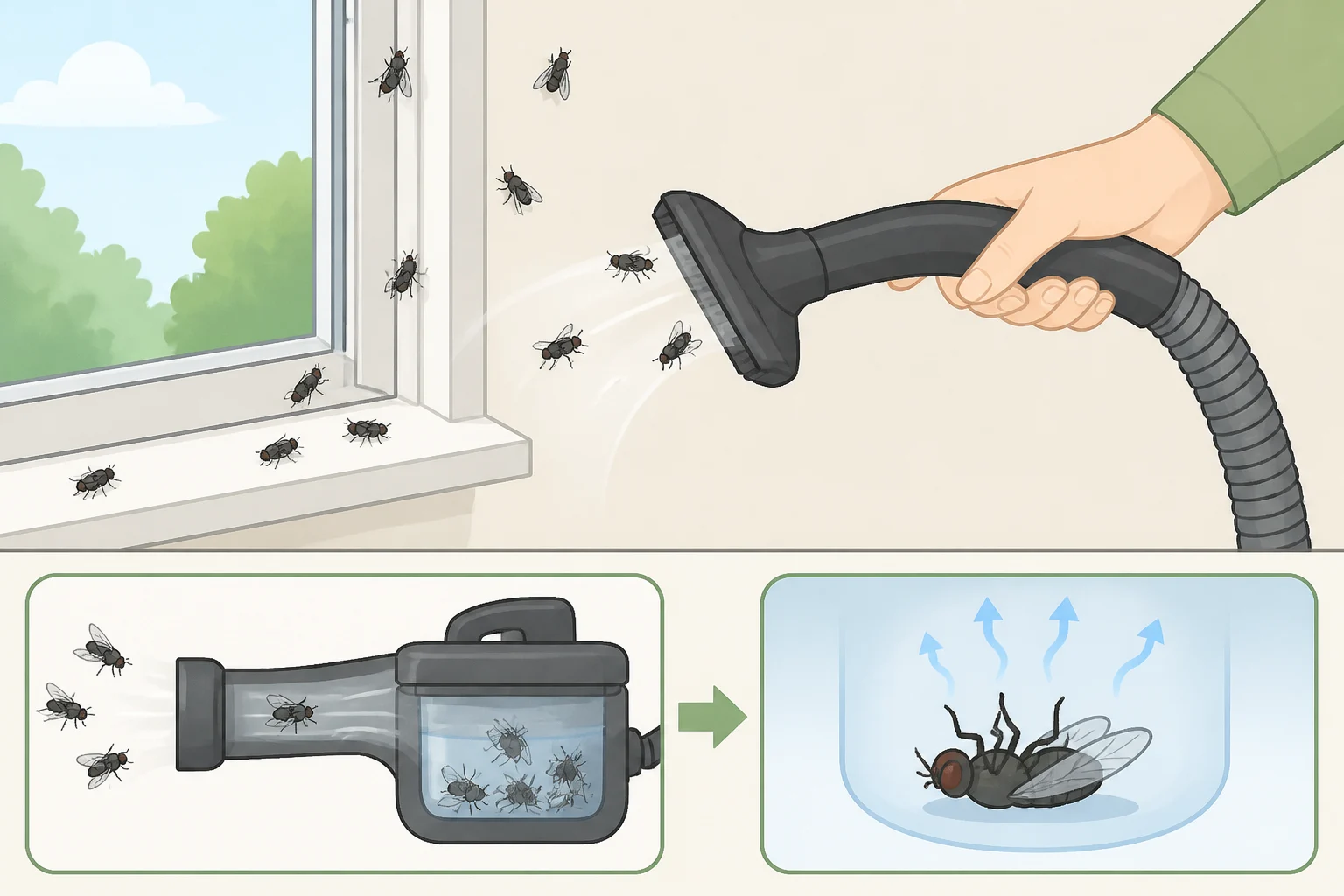
Vacuum visible flies around windows. Those that have wandered out from their sheltered spots behind walls typically die within a couple of weeks regardless of intervention, though many others stay dormant in those wall voids for months and don't emerge until spring (CSU Extension; CSU Extension). Ordinary food-lure traps and flypaper don't attract them, but UV light traps placed in large open areas like attics can intercept flies passing through. Treat that as a limited add-on, not a replacement for sealing (CSU Extension).
Bluebottle and black blow flies
Vacuum or swat accessible adults the same way as cluster flies. Because the evidence on black blow fly dormancy is mixed, don't extend the same reassurance here that applies to the other four pests. If numbers keep climbing day over day rather than tapering off, stop vacuuming, check garbage, pet food, and drains for a source, and bring in a professional if nothing turns up.
For anything that doesn't fit neatly into these five profiles, NC State Extension's basic pest framework still applies: identify the pest and its likely source, cut off its access to food, water, and shelter, try traps or physical removal before reaching for chemicals, and follow label directions exactly if a pesticide becomes necessary (NC State Extension).
Make the sealing check an annual habit
The real work happens before the first beetle lands on the siding, not after. Put the exterior caulk-and-seal check on the calendar every late summer instead of waiting for a cluster of bugs to remind you.
When the four overwintering species show up anyway, vacuuming and releasing them outside is the correct response, not a can of insecticide. Save the actual troubleshooting for the one group that doesn't follow the usual script: if bluebottle or black blow flies keep multiplying indoors instead of holding steady or tapering off, that's worth tracking down, not waving off as just another fall bug that'll disappear on its own.