How to clean a dishwasher filter (plus full machine care)
Gritty dishes and a faint off smell after the cycle ends are the two complaints that send most people looking up how to clean a dishwasher filter. The fix is usually simpler than it sounds. Whirlpool and KitchenAid explain the mechanism plainly: a clean filter keeps water flowing at full strength and stops food particles from recirculating through the wash, which is exactly what leaves grit on dishes that should have come out spotless.
A clogged filter isn't the only possible explanation for a dishwasher that smells or cleans poorly, but it's the cheapest and fastest thing to rule out before chasing a bigger problem elsewhere in the machine. This guide covers cleaning the filter itself, how that schedule differs from deep-cleaning the rest of the interior, and what to check if a clean filter doesn't solve the smell.
Why the filter clogs in the first place
Video of the Day
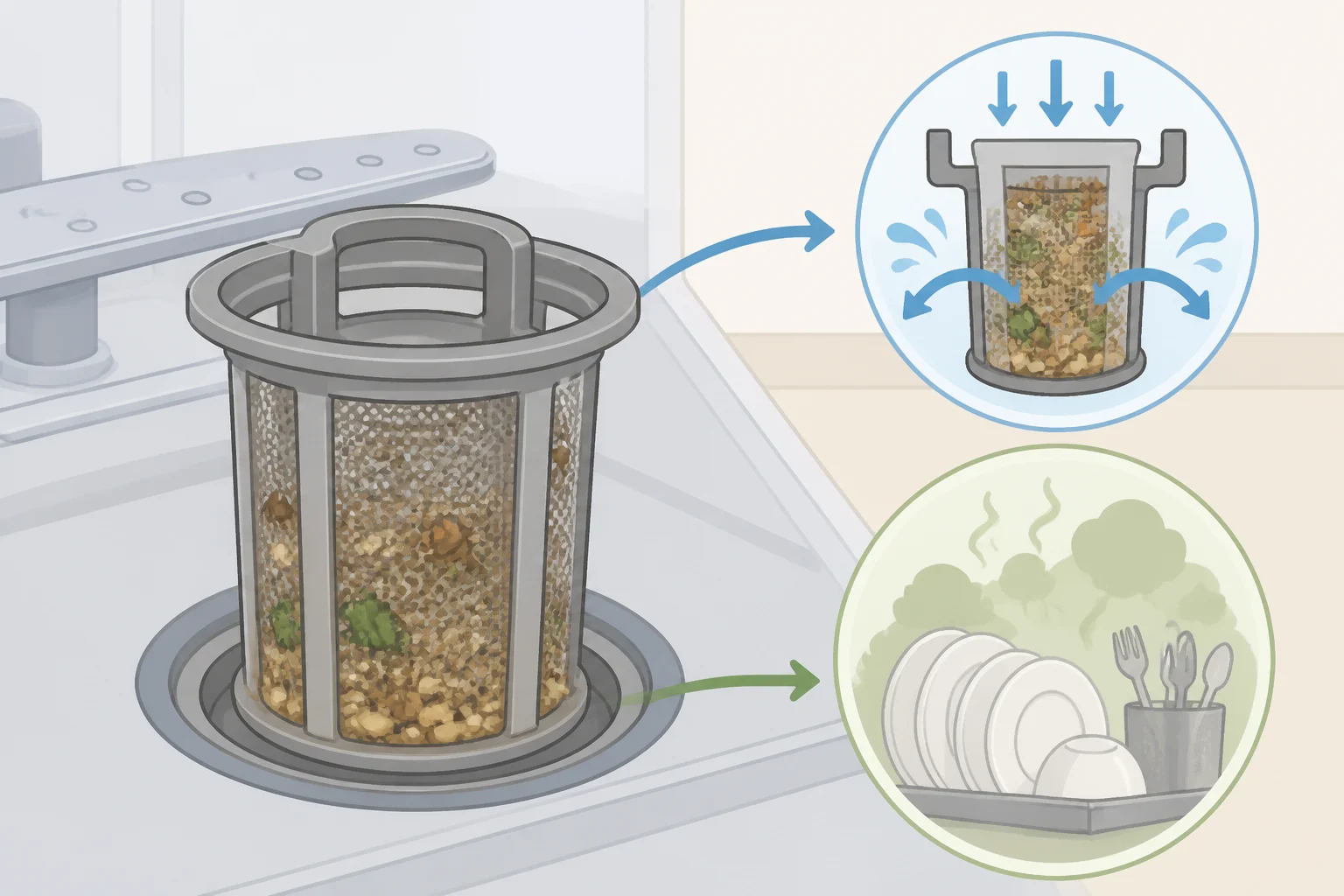
The mechanism is straightforward: food debris collects in a basket at the bottom of the tub so it doesn't wash back over clean dishes. Electrolux recommends checking the filter and sump after every cycle and cleaning it only when debris has actually built up, rather than treating it as a once-a-week chore regardless of how dirty it looks.
Odor tends to follow the same pattern as the grit. If a full load isn't ready, running a Rinse Only or Rinse and Hold cycle, without detergent, keeps dishes moist and stops smells from building up while more accumulate, according to Whirlpool and KitchenAid. Run that cycle every 24 hours until there's enough for a complete wash. Food sitting untouched in the filter basket for days behaves the same way: it's a far likelier source of a bad smell than food that gets cleared out on a reasonable schedule.
Prevention beats cleanup here. Scraping large food particles off plates before loading is enough, since the enzymes in modern detergent are built to work on food soil; rinsing dishes beforehand is an unnecessary extra step, per Whirlpool and KitchenAid.
Video of the Day
How to clean a dishwasher filter
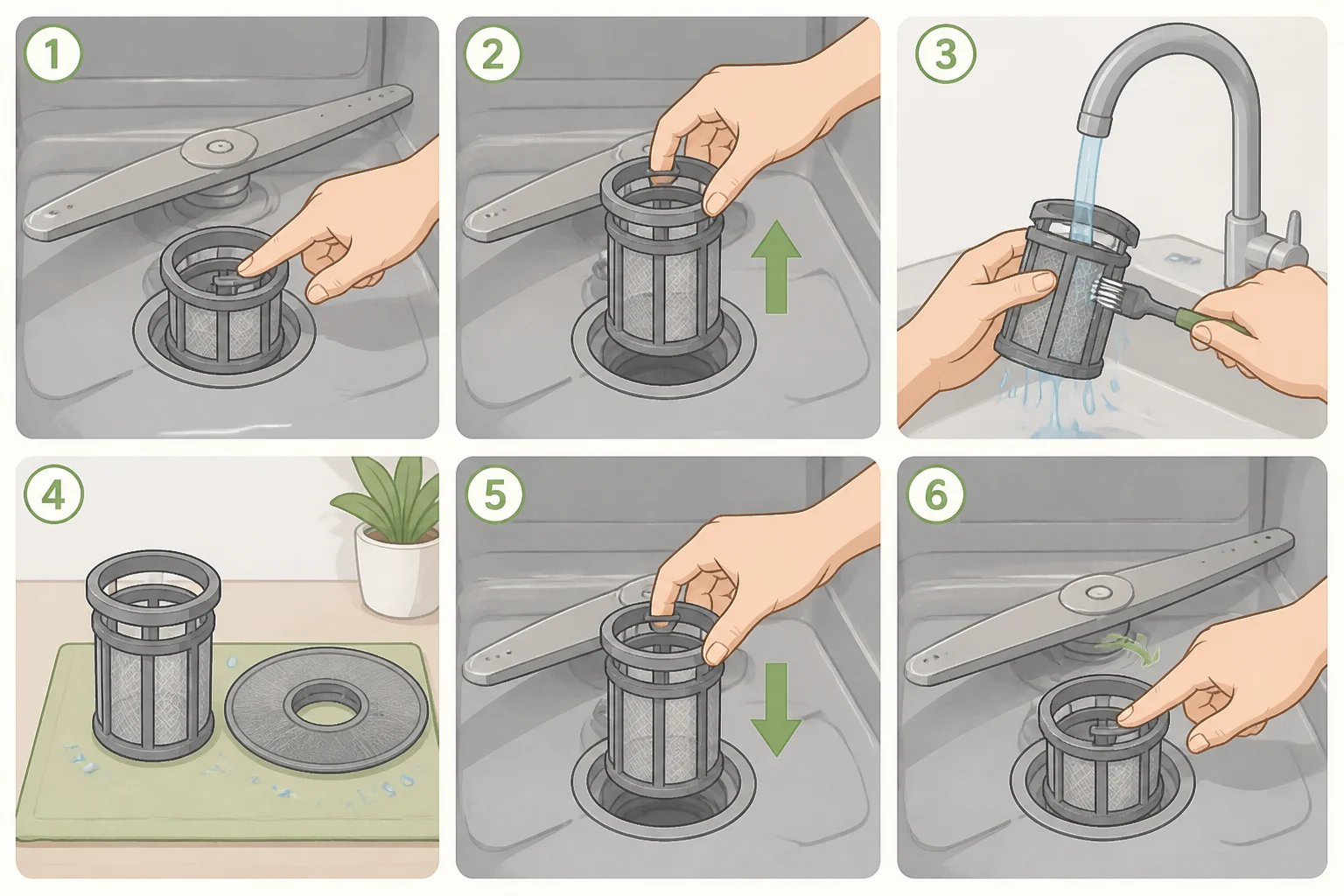
Filter design isn't standardized across brands, or even across model lines from the same manufacturer. Some filters twist free as a cylinder, some sit flat and integrated with the sump, and a few aren't meant to come out by hand at all. Pull up the owner's manual (a quick search usually turns one up even if the paper copy vanished years ago) before touching anything, since both the release mechanism and the recommended cleaning cadence vary by model.
With the manual confirmed, the process runs:
- Turn off or unplug the dishwasher before touching the filter. Electrolux flags this as a safety step before any filter or spray-arm maintenance.
- Release the filter following the manual's instructions for that model. It should come loose without much resistance; if it's fighting back, that's usually a sign the release mechanism works differently than assumed, so stop and recheck the manual instead of forcing it.
- Clear out trapped food and skip anything abrasive. Electrolux specifically warns against abrasive pads, sharp tools, strong chemicals, scourers, and solvents on the filter and other dishwasher surfaces. Held up to the light, the mesh should look clear of visible debris when finished.
- Reinstall the filter the way it came out, using the same lock or seating method. A properly seated filter sits flush with the tub floor, not tilted or raised on one side. If it won't settle the way it did before removal, stop and recheck the manual rather than forcing it into place.
- Reset the indicator if the model has one. On Whirlpool and KitchenAid dishwashers with a "Clean Filter" button, hold it for three seconds, then open and close the door. That clears the alert until the next scheduled clean.
How often to clean a dishwasher filter (and the rest of the machine)
Cleaning the filter and cleaning the dishwasher are two different jobs, and the manufacturers in this research don't fully agree on a schedule for either one.
For the filter itself, Electrolux recommends checking it after every use and cleaning only when debris is visible, rather than locking it to a fixed weekly ritual. That's a reasonable default for any brand: inspect it regularly, clean it the moment buildup shows up, and don't wait for a smell to announce the problem.
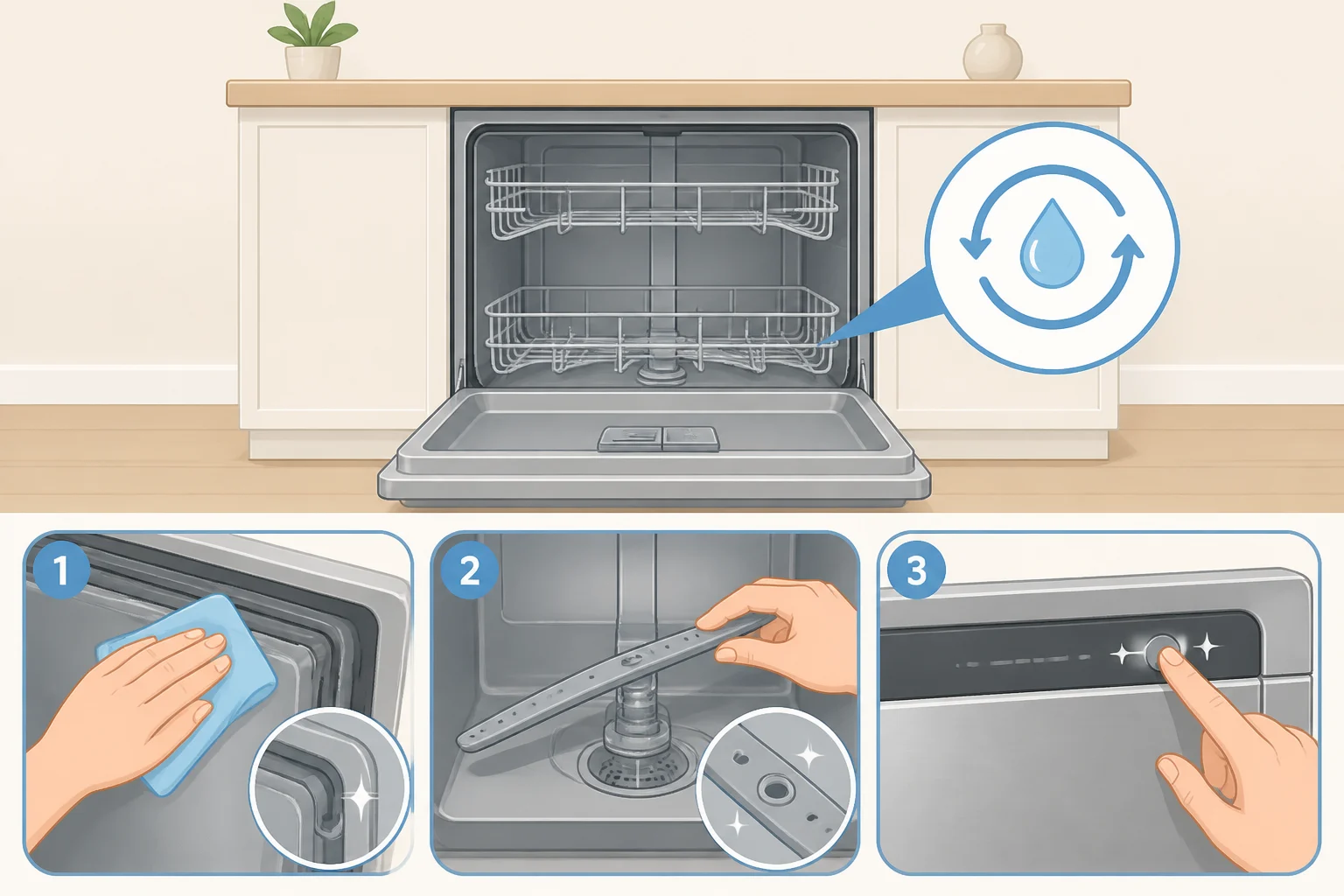
The rest of the interior runs on a longer clock. Electrolux recommends a long-duration programme twice a month on an empty machine, more often for anyone who mostly runs shorter cycles, since that habit lets grease and limescale build up faster than a longer, hotter programme would burn off. Models with a dedicated Machine Care programme should use that instead, run whenever its indicator comes on. Whirlpool and KitchenAid land on a simpler number: roughly every 30 days with a proper dishwasher cleaning product. Different units of measurement, same underlying idea: don't let months pass without one.
For that cycle, a dishwasher cleaner such as affresh, used according to the label, is the method Whirlpool recommends for preventing filming, spotting, and the odor that tends to accompany both. Whirlpool also lists a white-vinegar rinse as an occasional alternative: two cups in an upright measuring cup on the bottom rack, no detergent, run through a complete cycle with the dry setting off where that option exists. It's presented as a secondary option alongside the dedicated cleaner, not a swap for it.
Before running that cycle, Electrolux recommends cleaning the filters and spray arms first, then wiping the door gasket with a soft, damp cloth once the tub is empty, since a neglected gasket is a common source of mold and slow leaks. Spray arms need their own regular check too. Clogged holes are one of the more ordinary reasons a dishwasher stops cleaning well.
How to clean a smelly dishwasher if the filter wasn't the problem
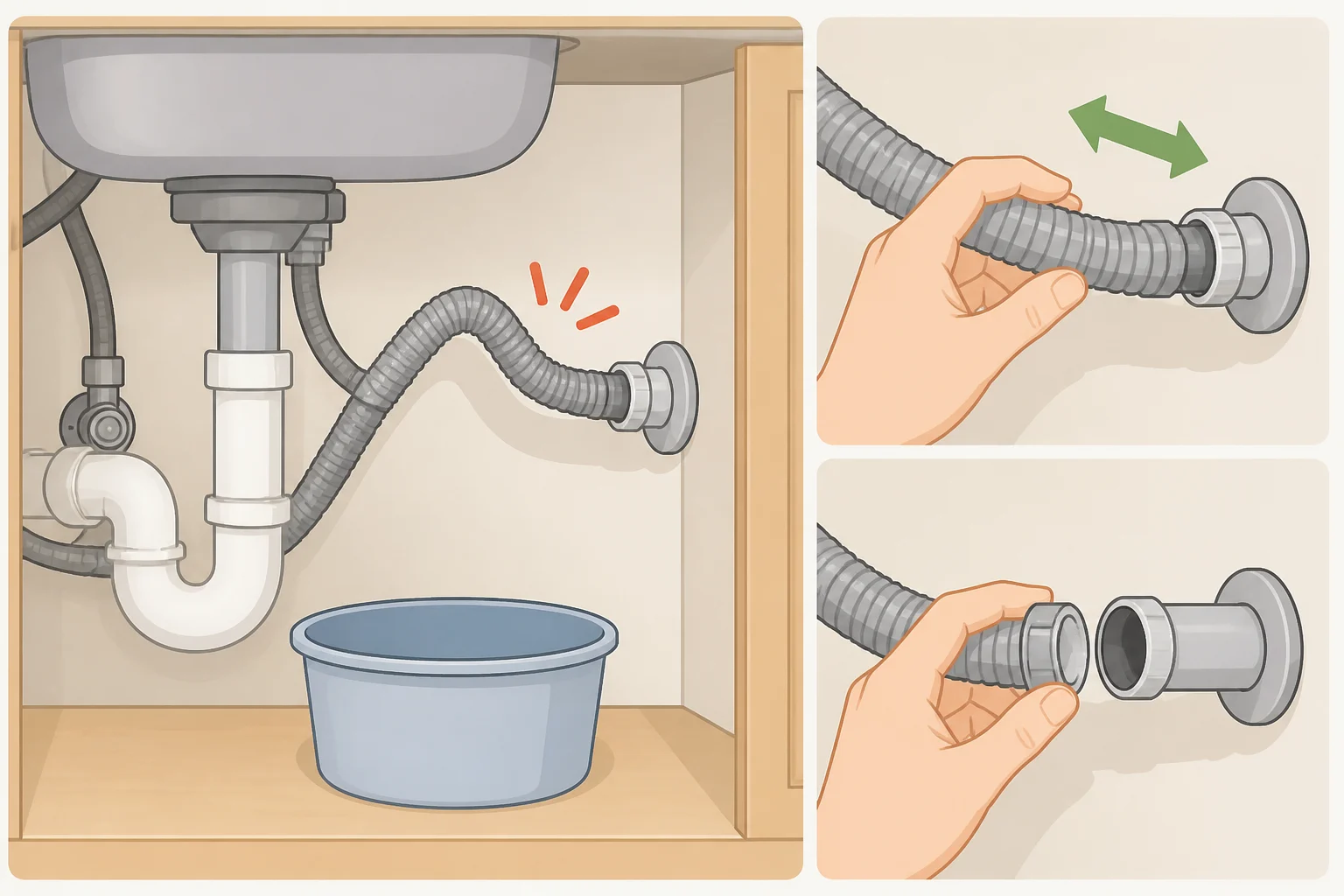
A clean filter doesn't always clear the smell. When it doesn't, the residue has usually settled somewhere a sponge and a damp cloth don't reach. Whirlpool notes that a dedicated dishwasher cleaner is formulated to get into the tub, the racks, the pump, the valves, the drain, and the recirculation hoses, a longer list of parts than most people think to wipe down on a Sunday afternoon.
Start with the basics before reaching for a cleaner. Wipe the interior with a sponge and warm water, pay attention to the bottom front of the tub where soil tends to collect, and wipe down every surface including the door gasket, per Whirlpool. If the smell persists after that, and after the filter is confirmed clean, run the dedicated cleaner or the vinegar rinse described above through an empty cycle. That combination reaches the components routine wiping skips, which is usually where a lingering smell has been hiding.
Dishwasher maintenance tips: what to check if the filter wasn't the fix
Cleaning the filter addresses the most common reason dishes come out gritty or the inside of the machine starts to smell, since it's what keeps food debris from recirculating in the first place. Pair that with a monthly, or twice-monthly, interior clean, a gasket wipe, and a spray-arm check, and most of what builds up over a normal season of use gets handled before it turns into something bigger.
If problems continue past that, the symptom is a decent guide to where to look next. Dishes still coming out gritty after a filter clean point toward clogged spray arms worth a closer inspection. A smell that won't quit after both a filter clean and a full interior clean points toward the deeper components: the pump, valves, and hoses that only a dedicated cleaner actually reaches.
Some dishwashers settle this argument automatically. Models with a "Clean Filter" indicator, per Whirlpool and KitchenAid, or a Machine Care reminder, per Electrolux, will flag their own schedule instead of leaving it to guesswork. At that point, the manual is a better guide than any general rule of thumb.