7 things to wash in cold water (and when not to)
Ask anyone over 40 how to get a load truly clean, and hot water usually comes up first. More heat, more suds, a longer cycle. Consumer Reports' own lab testing tells a different story: cold water gets clothes just as clean as warm or hot, and it helps garments hold their shape and color longer over repeated washes (Consumer Reports).
That finding reshuffles a lot of assumptions about laundry day. The things to wash in cold water generally fall into two camps: fabrics that shrink when heat hits the fibers, and colors that bleed or fade under the same conditions. This guide gets specific about both groups, then covers the moments when the care label, a stubborn stain, or a genuine hygiene concern should override the cold-water default.
Part of why cold water works as well as it does comes down to the detergent, not the water. Most modern formulas are built to activate in cold water, and Consumer Reports tests its own detergent ratings using cool water rather than hot (Consumer Reports). Natural fibers like wool, linen, cotton, and silk are also more prone to shrinking when washed warm or hot, according to Whirlpool, which is the other half of the case for keeping the dial turned down.
None of this makes cold water a universal rule. It's a smart default for specific fabrics and colors, one that should give way to the care label, the soil level, or the actual reason a garment is in the machine in the first place.
What clothes should be washed in cold water?
Video of the Day
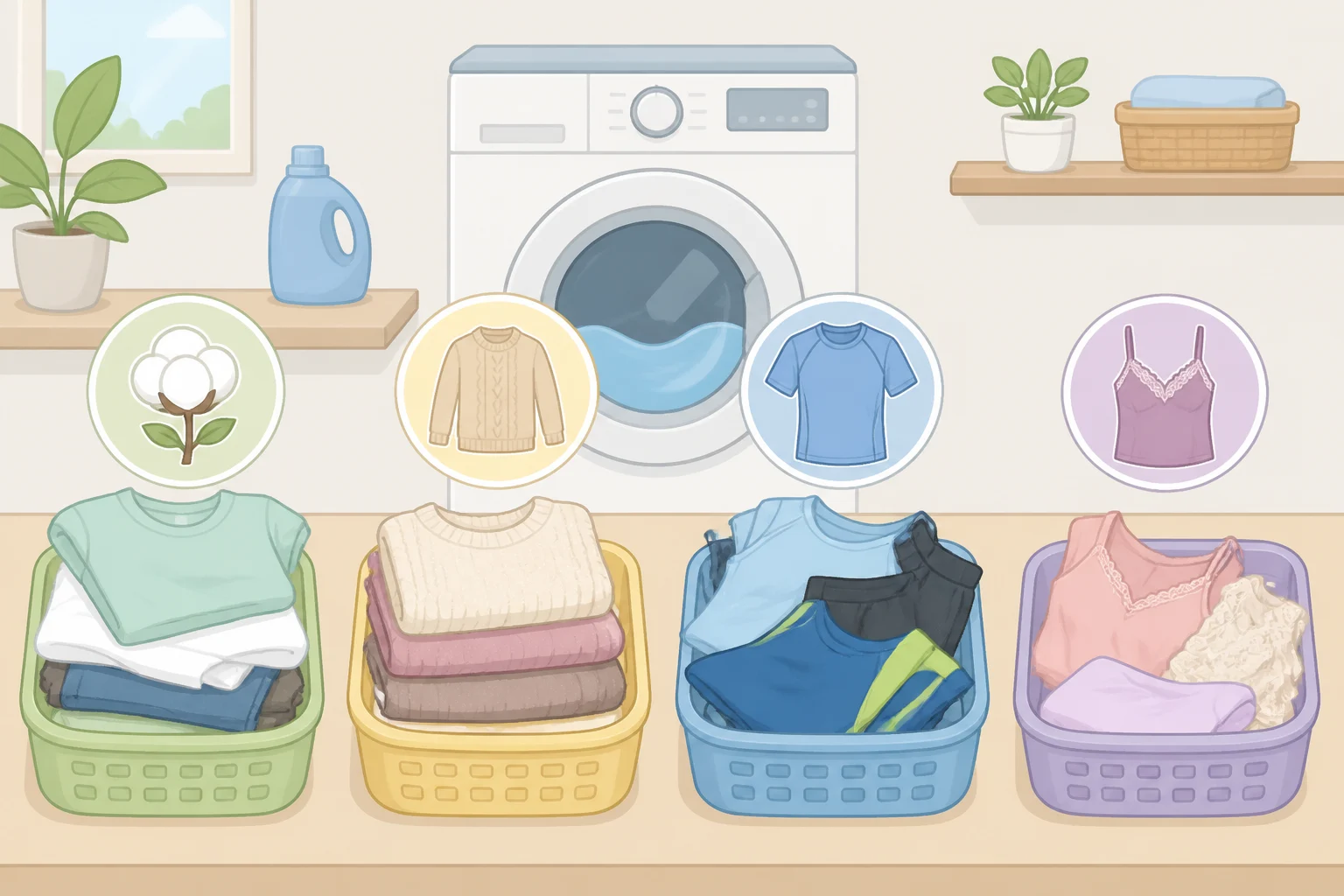
Five categories share a common weakness: heat and their fibers don't mix well. Each one benefits from cold water for a slightly different reason, so treat them as five separate habits rather than one blanket rule.
-
Cotton (everyday shirts, tees, sheets). Hot water can permanently shrink cotton, and Whirlpool recommends cold water, or at least alternating warm and cold washes, to keep it from happening. The exception is genuinely soiled cotton. Whirlpool's own guidance is that cold water is the safer choice "for the most part," as long as items aren't heavily soiled, so a grass-stained pair of gym shorts is a fair reason to go warmer.
-
Jeans and denim. Denim gets its own entry because the goal isn't just avoiding shrinkage, it's protecting fit and color at the same time. Whirlpool recommends washing jeans inside out on a cold, delicate cycle, which limits fading from friction and keeps the fabric from tightening up.
-
Wool. Wool sits among the natural fibers most prone to shrinking in warm or hot water, per Whirlpool, but plenty of wool sweaters carry hand-wash or dry-clean instructions that have nothing to do with water temperature. Whirlpool's broader advice applies here: the surest way to avoid shrinkage is to follow whatever the care label says, not to assume cold water is automatically the safe move.
-
Linen. The same heat sensitivity applies, but linen's bigger risk shows up after the wash. Friction and heat in the dryer may cause shrinkage on top of whatever happened in the machine (Whirlpool), so a cold wash paired with a hot dryer cycle can still undo the point. Wash cold, then tumble on low heat or hang to dry.
-
Silk. Silk belongs to the same heat-sensitive fiber group as wool, linen, and cotton (Whirlpool). As with wool, check the label before assuming a cold machine cycle applies at all. "Wash cold" is only the right instruction if the label doesn't already say something more specific.
Video of the Day
Colors that fade or bleed under heat
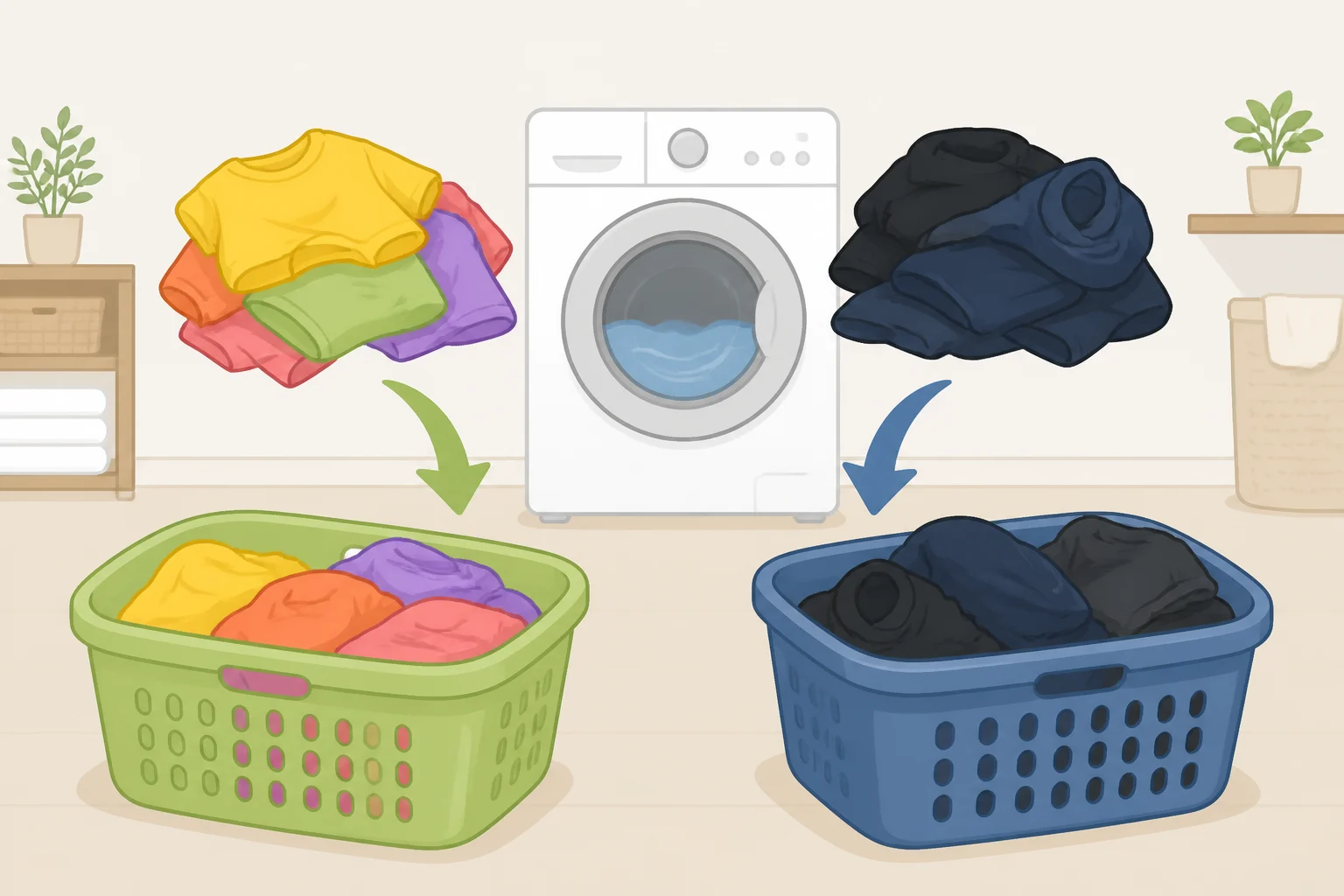
The last two categories aren't about fiber shrinkage at all. They're about what heat does to dye, and that risk shows up regardless of what the garment is made from.
-
Brightly colored clothing. Hot water can cause bright dyes to bleed or transfer onto other items in the same load. A cold wash on a short cycle limits that risk (Whirlpool), which is also why washing brights separately from whites is worth the extra load.
-
Dark clothing. Cold water is generally recommended for dark garments specifically to slow fading over repeated washes (Whirlpool). A black t-shirt that's gone gray after a summer of hot washes is dye loss, not dirt.
Sorting by color matters, but so does sorting by weight. Consumer Reports warns against mixing items of very different weights in the same load, like heavy pillows next to light sheets, since an unbalanced washer will spin itself into a rattling mess (Consumer Reports). A cold cycle only helps if the machine can actually run it properly.
When to break from cold: the decision rule
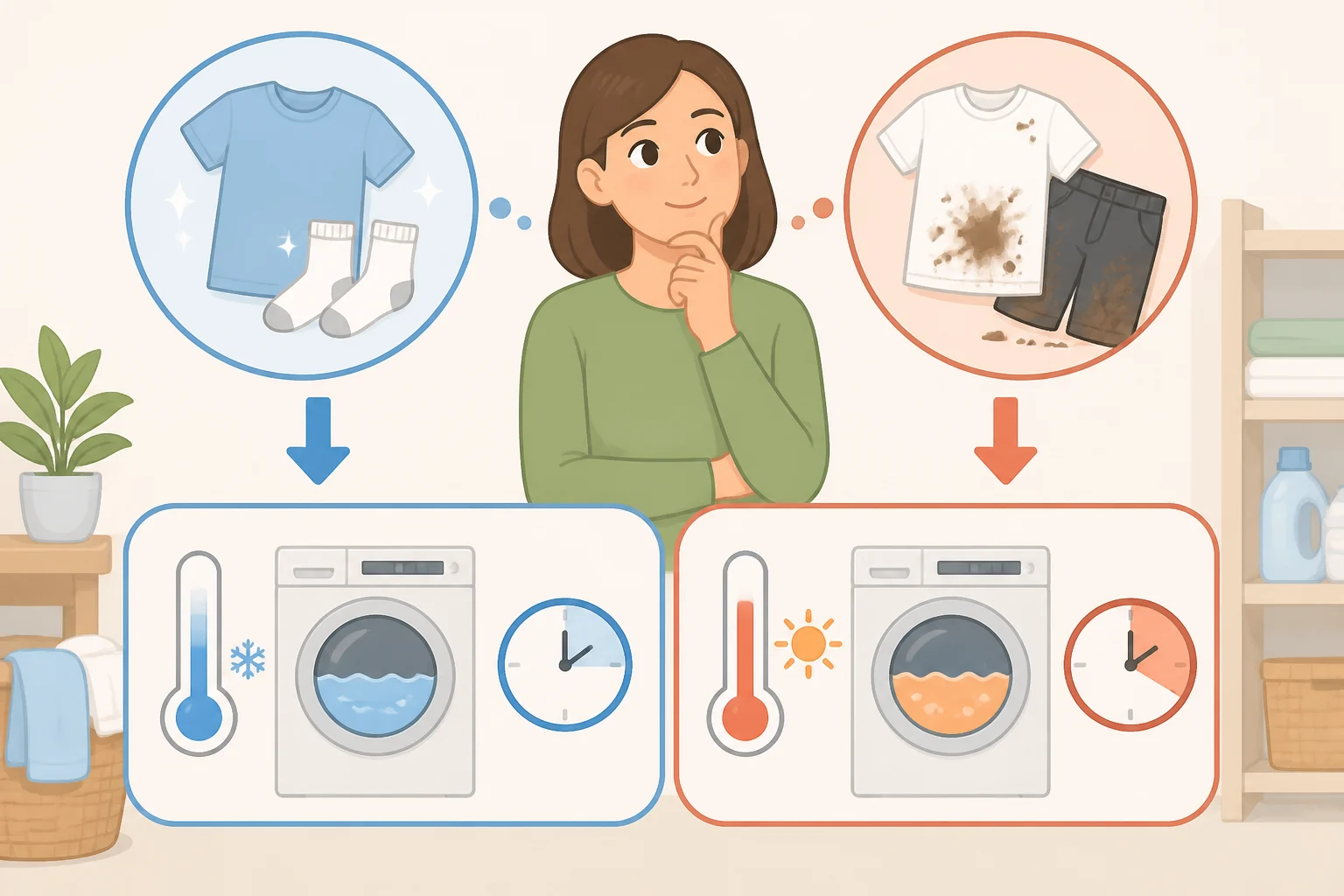
Cold water has limits, and knowing where they sit matters more than memorizing the seven categories above. Three situations call for a different approach.
The first is soil level. Whirlpool's cold-water recommendation comes with a built-in caveat: it applies "for the most part," assuming items aren't heavily soiled (Whirlpool). Heat still has a job to do on genuinely dirty laundry, particularly whites, where hot water helps lift stains and reduce dinginess. That doesn't mean shrinkage risk disappears just because a shirt is white, so check the fabric before cranking the temperature.
The second is hygiene, and it's more nuanced than "hot kills germs, cold doesn't." A study on domestic laundering, published in 2024, found that the temperature needed to reduce bacteria, yeast, and mold on fabric depends heavily on wash time and detergent formulation, not on temperature alone. Detergents containing activated oxygen bleach, or simply running a longer cycle, offset the reduced disinfecting power of colder water for most of the organisms tested. There's one notable exception: the same research found that oxygen bleach did almost nothing against Candida albicans, a yeast, regardless of how long the cycle ran.
The practical version: for everyday clothing, cold water with a decent detergent is fine. For loads where hygiene genuinely matters, someone in the house has been sick, or an item is visibly contaminated, reach for a detergent labeled with activated oxygen bleach and consider a longer cycle before assuming hot water is the only fix. Just don't count on that combination for yeast-related contamination specifically.
The third override is simpler: read the label. That instruction sounds obvious, but it's the one rule in this entire guide that never has an exception.
Making cold water work: detergent, load size, and drying
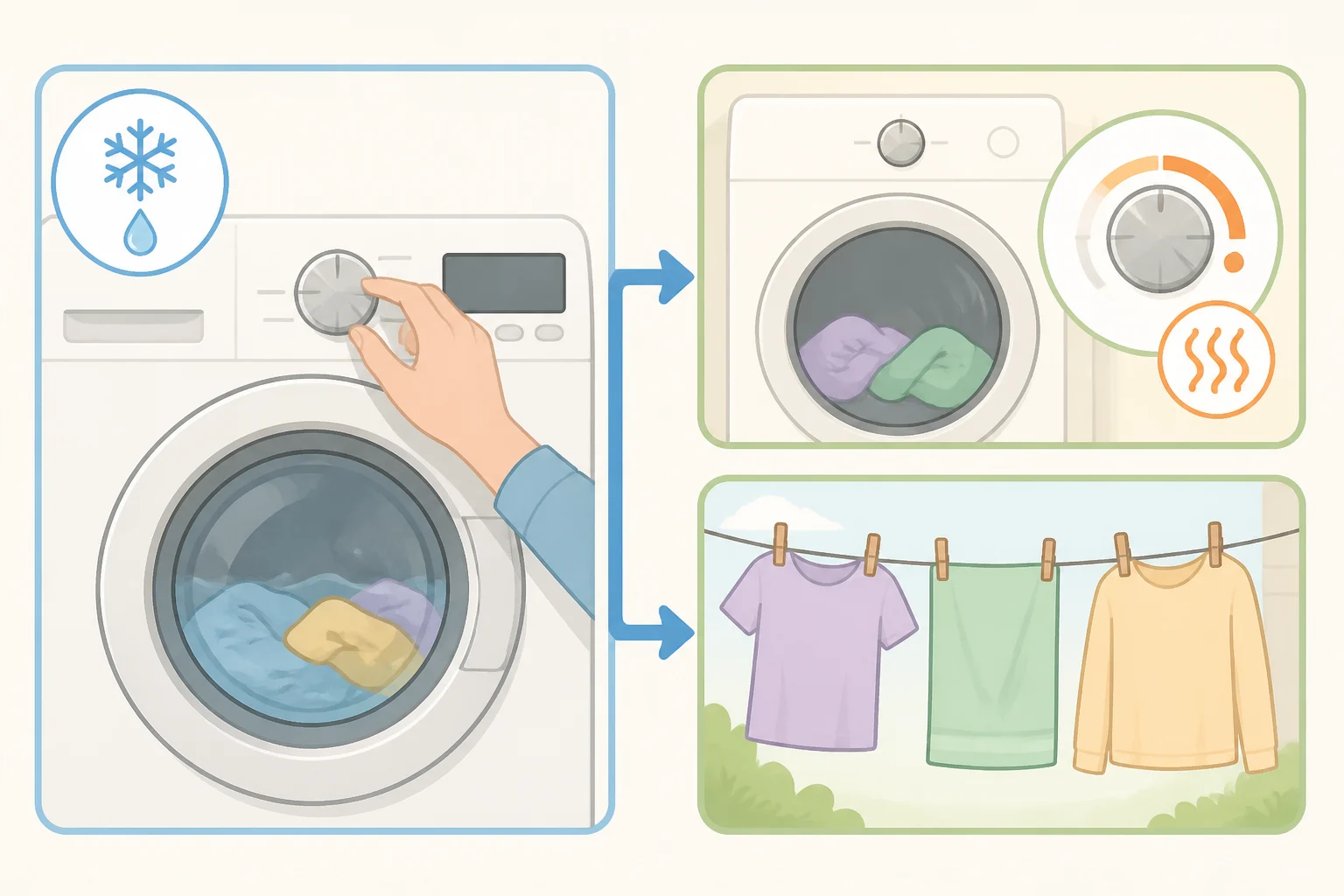
Temperature is only one input in how well a wash performs. Laundry researchers describe washing efficiency as the product of an interplay between temperature, detergent, mechanical action, and time; turn one dial down, and the others have to compensate, according to a 2025 sustainability analysis. For regions where water use and climate impact are the priority, that same study found the best combination is low-temperature washing, a low detergent dose, and a machine filled to roughly two-thirds capacity. In daily washing scenarios aiming for moderate cleaning performance rather than maximum stain removal, that combination can cut environmental impact by an average of 80% compared to a process optimized purely for washing strength, though the advantage narrows for heavily soiled loads that genuinely need more heat or detergent (Sustainability).
The energy case for cold water is straightforward. A 2023 laundry study found that raising the wash temperature from 40°C to 60°C, both warmer than a typical cold cycle but useful for illustrating the trend, increased energy use per load from 0.340 kWh to 0.764 kWh and more than doubled the temperature-related environmental impact measured (Toward Sustainable Household Laundry). Heat costs energy. That's the whole argument in one sentence, and it's why cold water pays off even before shrinkage or fading enters the picture.
One instinct to resist: compensating for lower heat by adding more detergent. The same study found that washing at 40°C with a heavier detergent dose produced a higher environmental impact overall than washing at 60°C with less detergent. Consumer Reports backs this up from the cleaning side, too: extra detergent doesn't get clothes cleaner, concentrated formulas typically need only around three tablespoons for a medium load, and excess detergent can leave residue and build up inside the washer (Consumer Reports).
Cold water also needs a matching dryer setting to actually protect the fabrics it's meant to protect. Friction and heat in the dryer may cause the same shrinkage a hot wash would, so a low-heat tumble cycle or line drying makes sense for cotton, denim, wool, linen, and silk (Whirlpool). Running a careful cold wash and then tossing everything into a high-heat dryer cycle undoes most of the benefit.
Where cold water fits in your routine
None of the seven categories above require memorizing chemistry. What they require is a short mental checklist before starting a load: check the care label first, sort by fabric and color risk second, consider whether soil level or hygiene genuinely calls for more heat, and then pick the detergent, dose, and dryer setting to match. Temperature is one variable in that sequence, not the whole decision.
Cold water earns its reputation as the default setting for most routine laundry: it cleans effectively, saves energy, and spares fabrics and dyes from unnecessary stress. It's not a substitute for reading a label or judging a genuinely dirty or contaminated load on its own terms. Getting that sequence right does more for a laundry routine than any single dial setting ever will.