How to clean white Converse without damaging canvas
White Converse are about as iconic as sneakers get, and also among the fastest to look dirty, according to How to Clean White Sneakers. That's the tradeoff with white canvas: it looks great until it doesn't, and there's no shortage of internet advice on how to clean white Converse, much of it contradictory.
Converse's own care instructions are notably conservative: mild dish soap, lukewarm water, hand-cleaned only, never machine washed or put in the dryer, according to How to Clean White Sneakers. Other footwear brands take a harder line. Clarks and Nike both recommend baking-soda and peroxide formulas for general white sneakers that go well beyond what Converse endorses for its own shoes.
This guide works through cleaning white Converse component by component: canvas first, then rubber and laces, then stronger stain treatment only for the shoes that need it. The goal is to get Chucks looking presentable again without guessing which hack is safe for canvas and which one will wreck it.
Before you start: confirm the material and gather supplies
Video of the Day
This guide is written for white canvas Chuck Taylors. Leather, suede, and mixed-material Converse need different handling entirely, and identifying the material before cleaning is the first thing to do, since treating the wrong material with the wrong method risks permanent damage, per Atoms. Suede in particular should never be soaked or machine-washed, since moisture damages it in ways canvas simply shrugs off, per the same source.
For canvas Converse, gather mild dish soap, baking soda, white vinegar, 3% hydrogen peroxide, an old toothbrush, and a microfiber cloth, per How to Clean White Sneakers and Nike. The soap and baking soda are probably already in a kitchen cabinet; the peroxide and a dedicated toothbrush might mean a quick stop at the store.
Before committing to any treatment, test it first on a spot no one sees. The inside edge of the tongue works well. How to Clean White Sneakers flags this caution for the basic soap method and repeats it even more firmly once baking soda and peroxide enter the picture.
Video of the Day
How to clean white Converse canvas without ruining it
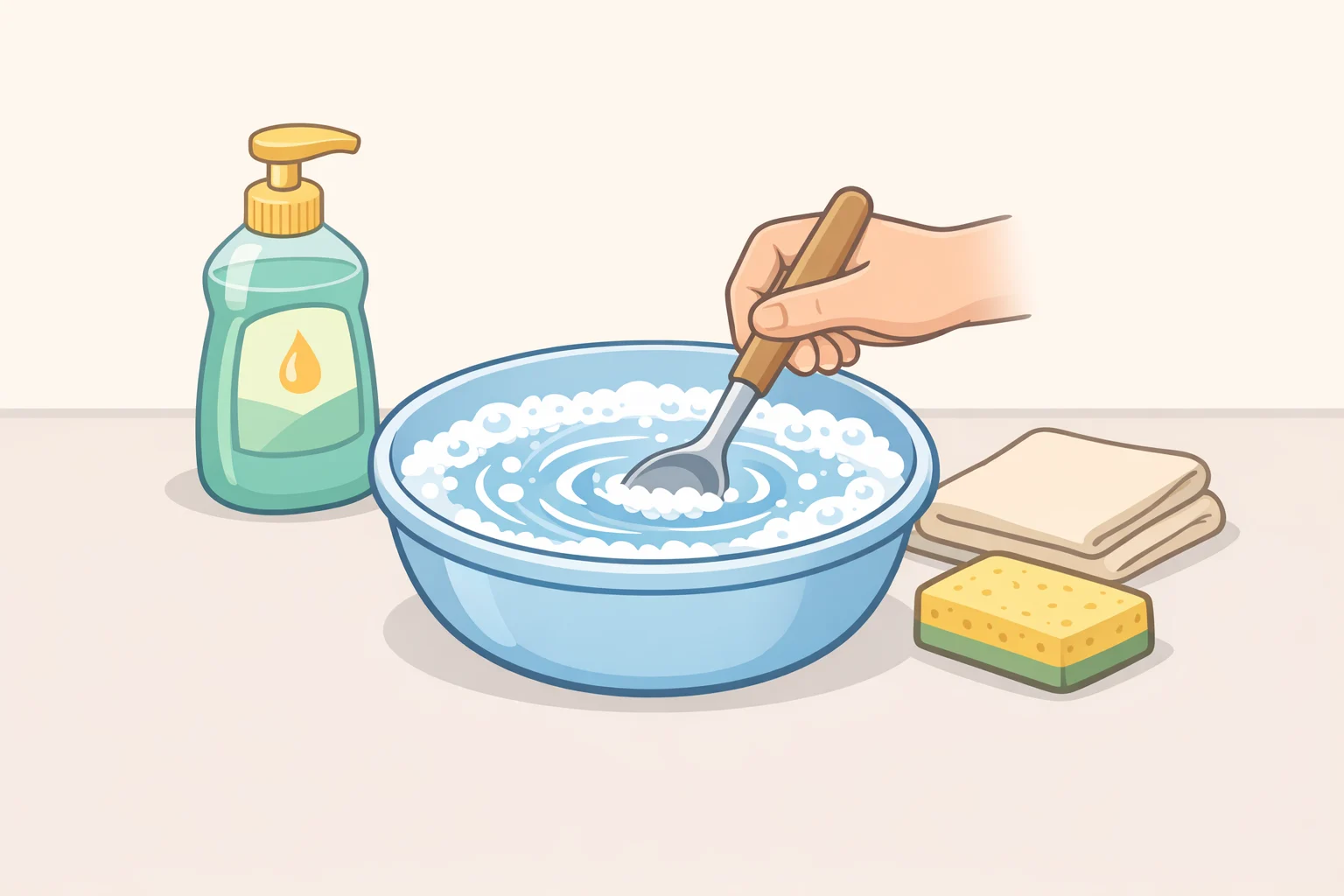
For regular maintenance, this is the sequence to follow. It won't get heavily stained canvas back to bright white the way the baking-soda treatment below can, but it's the lowest-risk method available and the right default for weekly upkeep, per How to Clean White Sneakers.
- Remove the laces and insoles, then dry-brush loose dirt off the canvas and rubber. How to Clean White Sneakers treats this as the step that matters most before anything else touches the shoe.
- Mix a few drops of mild dish soap into a bowl of lukewarm water until slightly sudsy, per How to Clean White Sneakers.
- Rub the canvas gently with a damp cloth or soft brush, by hand. Skip the washing machine and the dryer for this step entirely. How to Clean White Sneakers describes this hand-wash approach as the maintenance method Converse itself officially recommends.
- Wipe away all soap residue with a clean, damp cloth. Leftover residue is a common and avoidable cause of yellowing on white canvas, according to How to Clean White Sneakers.
- Air-dry indoors, stuffed with paper towel to hold the shoe's shape, away from sunlight and heat, changing the paper occasionally. Handled this way, the shoes generally need a full day to dry at room temperature, per How to Clean White Sneakers. This drying method applies to every technique in this guide, hand-washed or machine-washed, so it's worth remembering once instead of repeating later.
Laces get their own cleaning process, covered in the next section along with the rest of the shoe's rubber and trim.
How to clean Converse rubber soles, toe caps, and laces
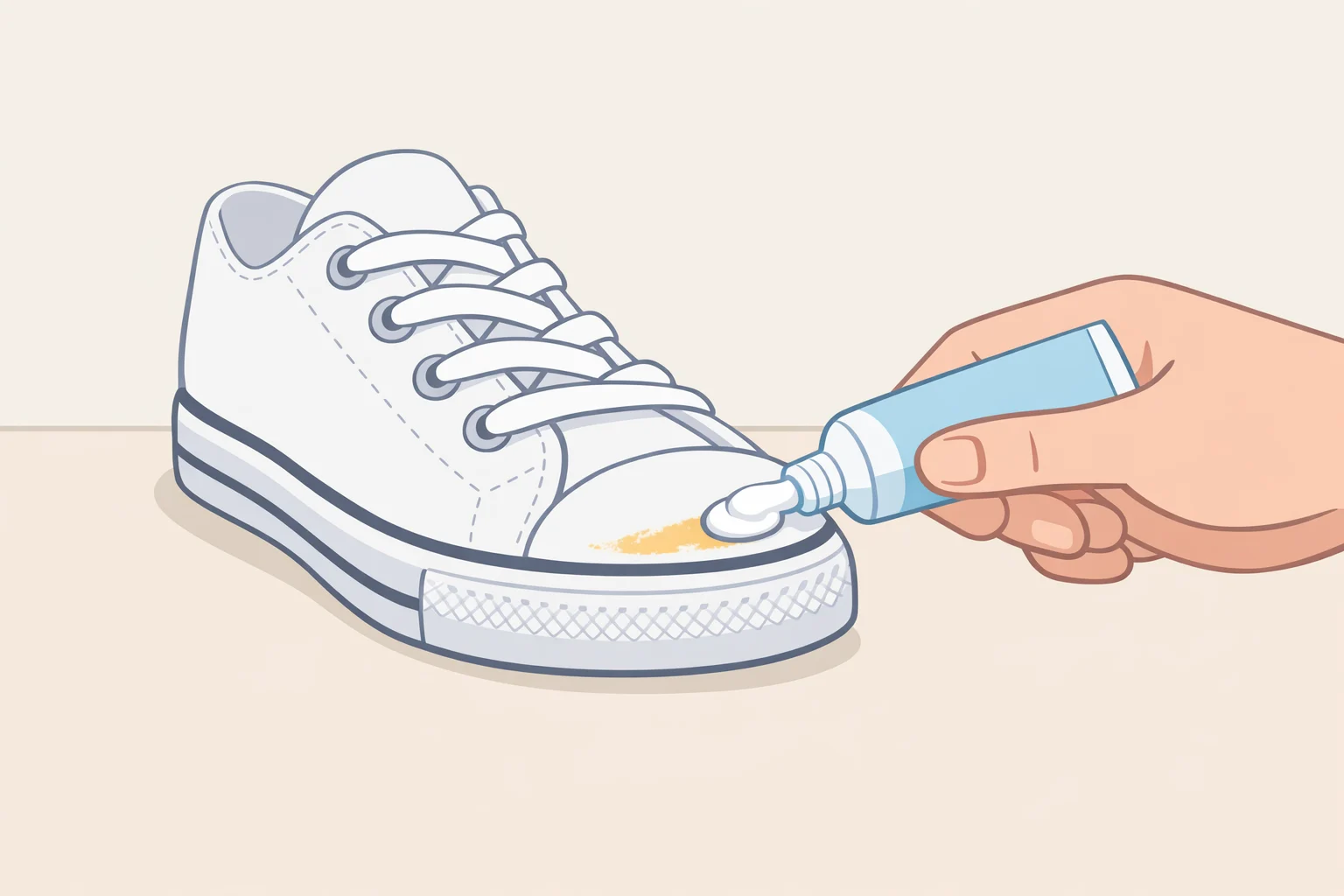
The rubber sole, toe cap, and foxing tape need separate treatment from the canvas rather than one uniform scrub. Atoms's own materials breakdown treats rubber as its own category, with a toothpaste-or-baking-soda routine distinct from canvas care, since the two respond to different products.
Use white non-gel toothpaste; avoid colored, gel, or striped formulas, per How to Clean White Sneakers. Apply a small amount to the toe cap and foxing tape, let it sit for 10 minutes, then scrub with a toothbrush, per the same source. For scuffs specifically, a damp Magic Eraser with light circular pressure clears most of them from the rubber toe cap in under two minutes, according to How to Clean White Sneakers. That toothpaste approach lines up with Atoms's own advice for rubber components, which also lists a baking-soda paste as an alternative if toothpaste isn't handy.
Rubber toe caps yellow over time from UV and oxygen exposure, a process called oxidation, and ordinary cleaning doesn't reverse it, per How to Clean White Sneakers and Atoms. That yellow tinge on an older pair isn't dirt; it's chemistry.
Laces: remove them completely, then soak for 20 to 30 minutes in warm soapy water. The soak dissolves surface grime without any scrubbing, per How to Clean White Sneakers. Rinse, then lay them flat on a cloth to dry rather than hanging them, since hanging stretches wet cotton over time, per the same source. If they're still permanently gray or yellowed after the soak, replacing them is faster than trying to clean them back to white; fresh white cotton laces take under a minute to swap in, per How to Clean White Sneakers.
How to whiten Converse shoes that regular cleaning won't fix
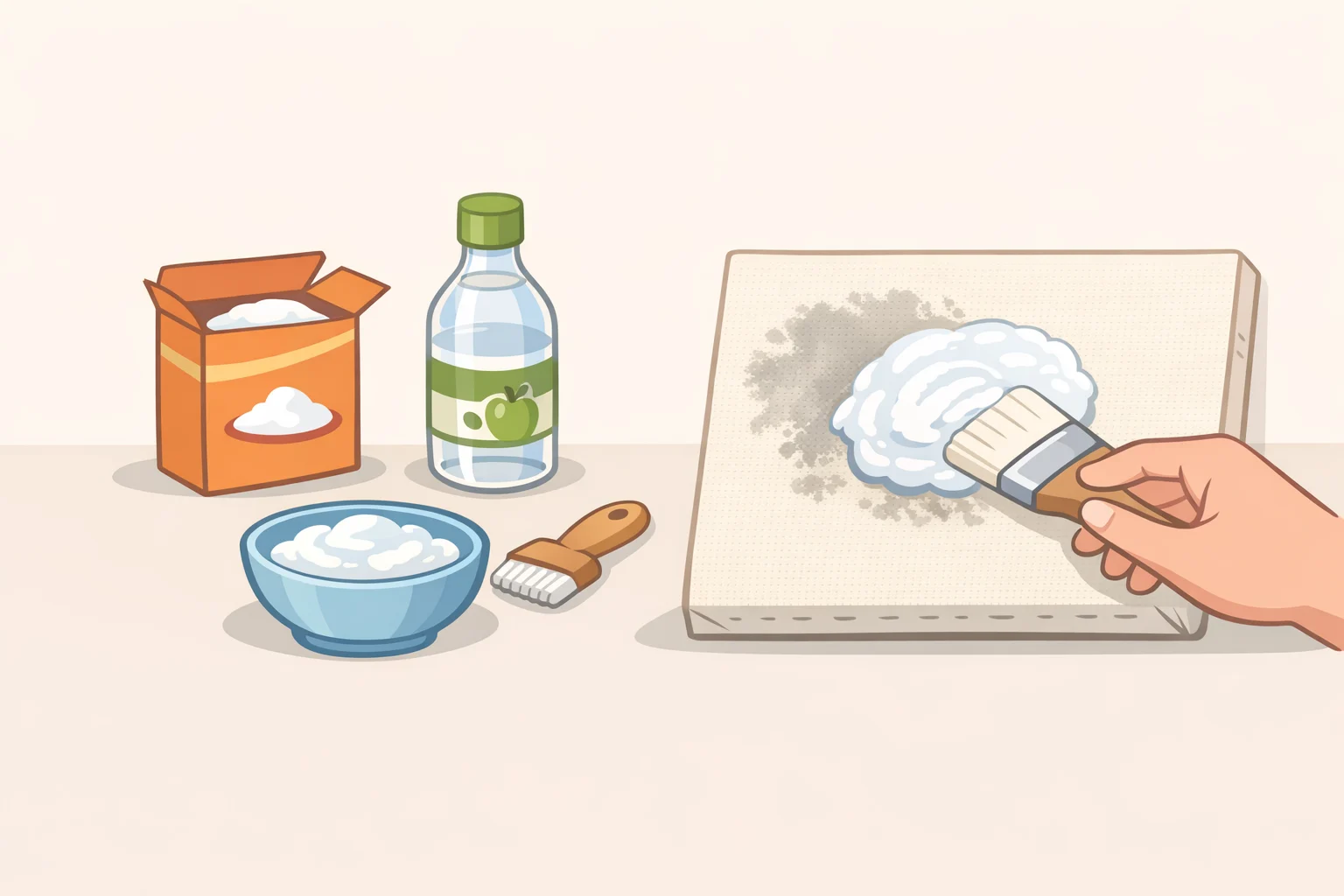
For canvas that's visibly stained or graying despite regular cleaning, escalate to a paste of 1 tablespoon baking soda, 1 tablespoon white vinegar, and 1 tablespoon warm water. Brush it onto the canvas and leave it for 15 to 20 minutes before wiping clean, per How to Clean White Sneakers. Run the same hidden-area test described earlier before trying this or anything stronger; a paste that's fine on canvas can still discolor trim or logos.
Ratios for this kind of DIY paste aren't standardized across sources. Clarks uses 1 tablespoon baking soda, 2 tablespoons vinegar, and a full cup of water, a noticeably more diluted mix than the recipe above. The two versions reflect different sources rather than one tested standard, so pick a single formula and follow its measurements instead of combining ratios from different guides.
For yellowing that a baking-soda-and-vinegar paste won't touch, How to Clean White Sneakers lays out a more specific hydrogen peroxide procedure: mix 1 tablespoon baking soda with ½ tablespoon 3% hydrogen peroxide into a paste, apply it to the canvas, then wrap the treated section loosely in plastic wrap so the peroxide doesn't evaporate before it has time to work. This isn't a method Converse endorses. Treat it as a third-party option for shoes that need more brightening than soap and water can deliver, and always spot-test first.
Where sources disagree is what happens next. The same guide recommends placing the shoes in direct sunlight for one to four hours to activate the paste, per How to Clean White Sneakers. Yet the same source's own drying guidance, described earlier, calls for room temperature away from direct heat and sunlight, with no mention of sun-activation at all. That sunlight advice also sits oddly next to a separate warning, from the same specialist source, that UV exposure is what causes rubber and canvas to yellow through oxidation in the first place. Given that tension, this guide's default is to skip the sun step and let the paste work in shade; anyone who tries sun-activation anyway should know they're trading a faster result for a small risk of the discoloration they're trying to remove.
Nike's version of this treatment uses a different ratio: two parts baking soda to one part hydrogen peroxide, left on for 30 minutes before rinsing, or air-dried in the sun and brushed off once dry, per Nike. Nike also states that the peroxide disinfects against bacteria, fungi, and viruses in addition to brightening the shoe, a claim from the manufacturer rather than an independently verified test, per Nike.
Machine washing sits in similar territory to sunlight: a real option, but one Converse doesn't endorse for its own shoes. On the question of how to wash white Converse shoes in a machine, How to Clean White Sneakers says canvas Converse can go into a mesh laundry bag with mild detergent and a couple of towels for balance, on a cold, gentle cycle, with laces and insoles removed beforehand and drying handled the same way as the hand-wash method above. Converse's own guidance rules out machine washing altogether, and repeated washing risks loosening the glue bond between sole and upper over time, according to the same source. Treat it as a fallback for shoes that need a full interior refresh, not a routine step.
One thing worth skipping entirely: bleach. It breaks down canvas fibers and produces a distinctive orange-yellow chemical yellowing that the same source describes as often permanent, per How to Clean White Sneakers. Atoms backs the broader point, noting that bleach tends to cause yellowing on canvas and mesh rather than prevent it. If that kind of staining has already happened, none of the gentler methods above are likely to reverse it, and prevention is the better bet going forward.
Matching the method to the problem
Not every pair of Converse needs the same level of intervention. A quick way to sort it:
- Light, everyday dirt: mild soap and lukewarm water, the Converse-approved default.
- Scuffed rubber toe caps: a damp Magic Eraser or white non-gel toothpaste.
- Gray, embedded canvas grime: the baking soda and vinegar paste.
- Stubborn yellowing that paste won't touch: the baking soda and hydrogen peroxide method, with the tradeoffs described above in mind.
- Bleach damage or long-set oxidation: manage expectations, since this kind of discoloration may not come out at all.
Start at the top of that list and only move down it if the gentler method doesn't work. It costs less time and less risk to the shoes than jumping straight to the strongest option.
Keeping white Converse clean longer
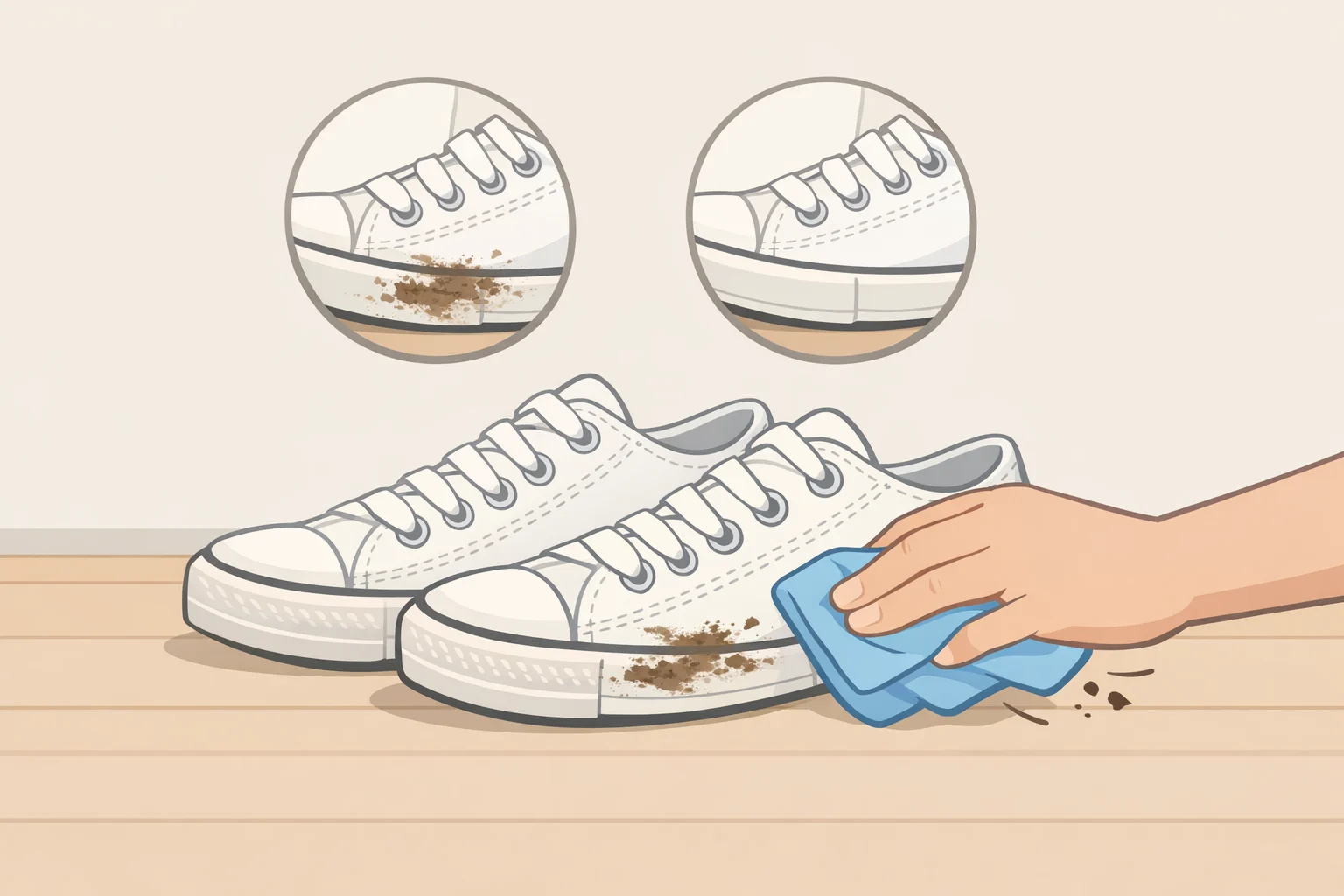
A 30-second wipe-down after every wear removes fresh dirt before it bonds to the canvas fibers. Left for a week, that same dirt may become permanent, according to How to Clean White Sneakers. That single habit does more for long-term whiteness than any paste or peroxide treatment.
Beyond daily wipe-downs, Atoms recommends spot-cleaning weekly and doing a fuller clean monthly, adjusted for how often the shoes actually get worn. A pair in daily rotation will likely need that fuller clean more often than one saved for weekends; that's common sense more than a strict rule.
Swapping in fresh laces on a schedule, not just once they've turned visibly gray, is one more small habit that keeps the whole shoe looking newer for longer.
Routine maintenance carries far less risk than repeatedly reaching for baking-soda pastes or peroxide treatments. The Converse that stay whitest longest aren't the ones restored dramatically once a year; they're the ones wiped down after nearly every wear.