Can you clean with apple cider vinegar? What works best
A New Yorker moved into a new apartment, needed to descale a countertop ice maker, and sent a roommate to the store with one instruction: grab some vinegar. That errand turned into a bigger question: can you clean with apple cider vinegar, or does it have to be the plain white stuff? Two cleaning professionals, Irina Nikiforova of Rocket Maids LA and Kadi Dulude of Wizards of Home, gave the same qualified yes. ACV works as a cleaner, though Dulude reaches for white vinegar on routine jobs while Nikiforova switches to cleaning vinegar once buildup gets stubborn (The Kitchn, six days ago).
The plain answer: apple cider vinegar cleans because it's acidic, the same basic mechanism that makes white vinegar useful around the house. Its amber color, sugar content, and higher price make it a specialty tool rather than an even swap for whatever vinegar happens to be under the sink already.
Standard white vinegar is diluted to roughly 5% acetic acid, while bottles labeled "cleaning vinegar" are bumped up to 6%. That single-point jump matters more than it looks, since cleaning power tracks with hydrogen ion concentration rather than scaling evenly with the number on the label (CleaningTuts). Apple cider vinegar runs on that same acetic-acid chemistry, but it also carries pigments, sugars, and other organic compounds that plain distilled vinegar doesn't have (CleaningTuts).
What follows covers what ACV actually removes, how to use apple cider vinegar for cleaning mineral buildup without leaving residue, why white vinegar usually wins for everyday jobs, when cleaning vinegar is worth the switch, and which surfaces should never see vinegar of any kind.
What apple cider vinegar actually cleans
Video of the Day
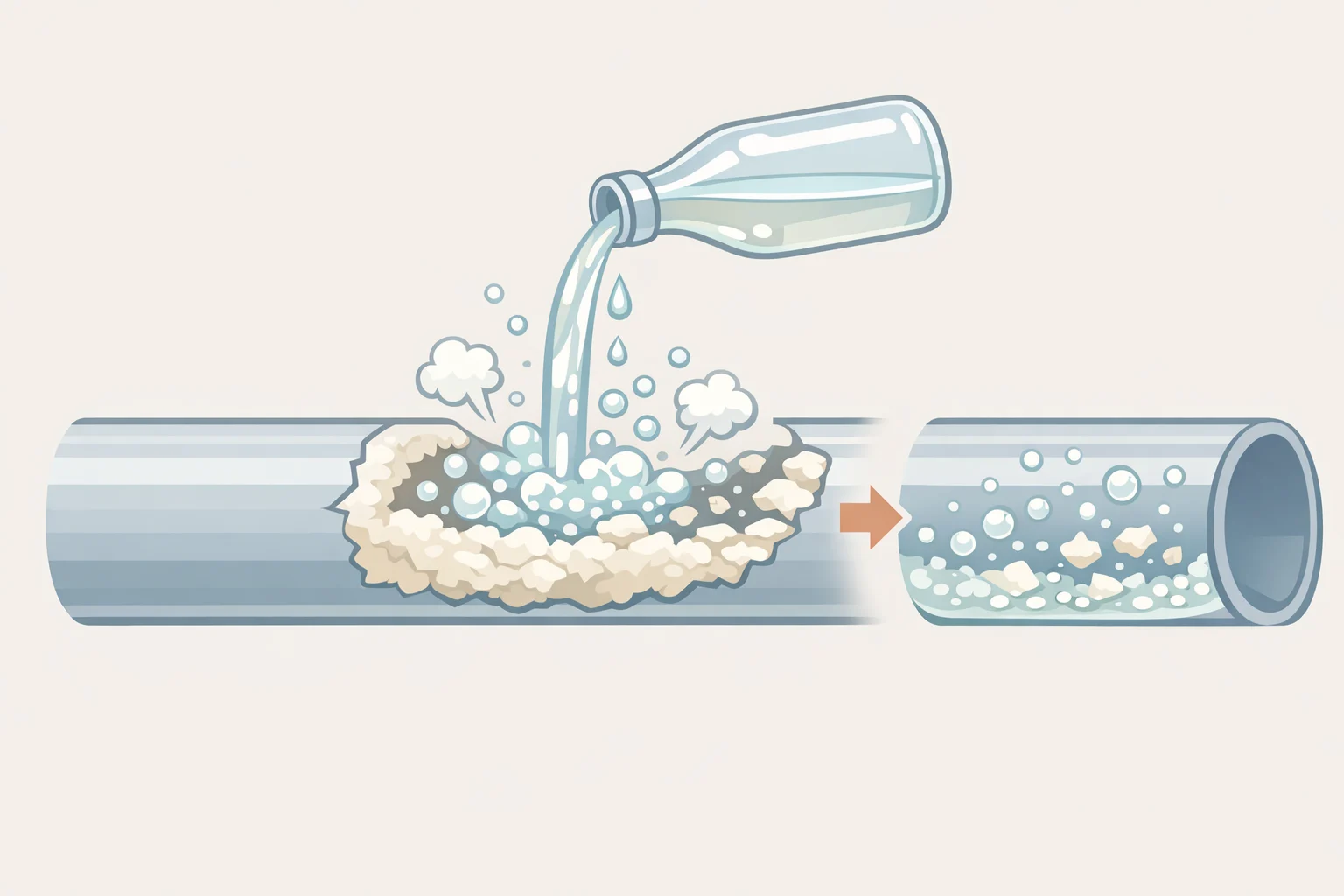
Nikiforova's explanation for why ACV works at all is simple: it's an acidic liquid, and acids break down alkaline buildup. That's why it holds up fine against the mild mineral deposits common in most kitchens, per The Kitchn.
The chemistry explains both what ACV can do and where it stops. Hard water scale is mostly calcium carbonate, and when acetic acid reacts with it, the mineral breaks down into calcium acetate, water, and carbon dioxide. Calcium acetate is water-soluble, so it rinses cleanly away instead of redepositing as a fresh film (CleaningTuts). That same reaction handles soap scum, which is largely calcium and magnesium stearate formed when soap reacts with hard water minerals (CleaningTuts).
To use apple cider vinegar on this kind of buildup, Nikiforova's method is straightforward: soak a paper towel in ACV, press it directly against the deposit, let it sit for a couple of hours, then rinse and scrub with a brush if needed. She recommends this for faucet scale, kettle descaling, and soap scum around sinks and backsplashes, according to The Kitchn.
Patience is the part people skip. A quick spray-and-wipe barely touches mineral deposits, because the acid needs time to react. Thirty seconds is the bare minimum before anything happens, and thick buildup on a showerhead or faucet aerator can take one to four hours of soaking before it fully dissolves (CleaningTuts).
One use where ACV has an edge
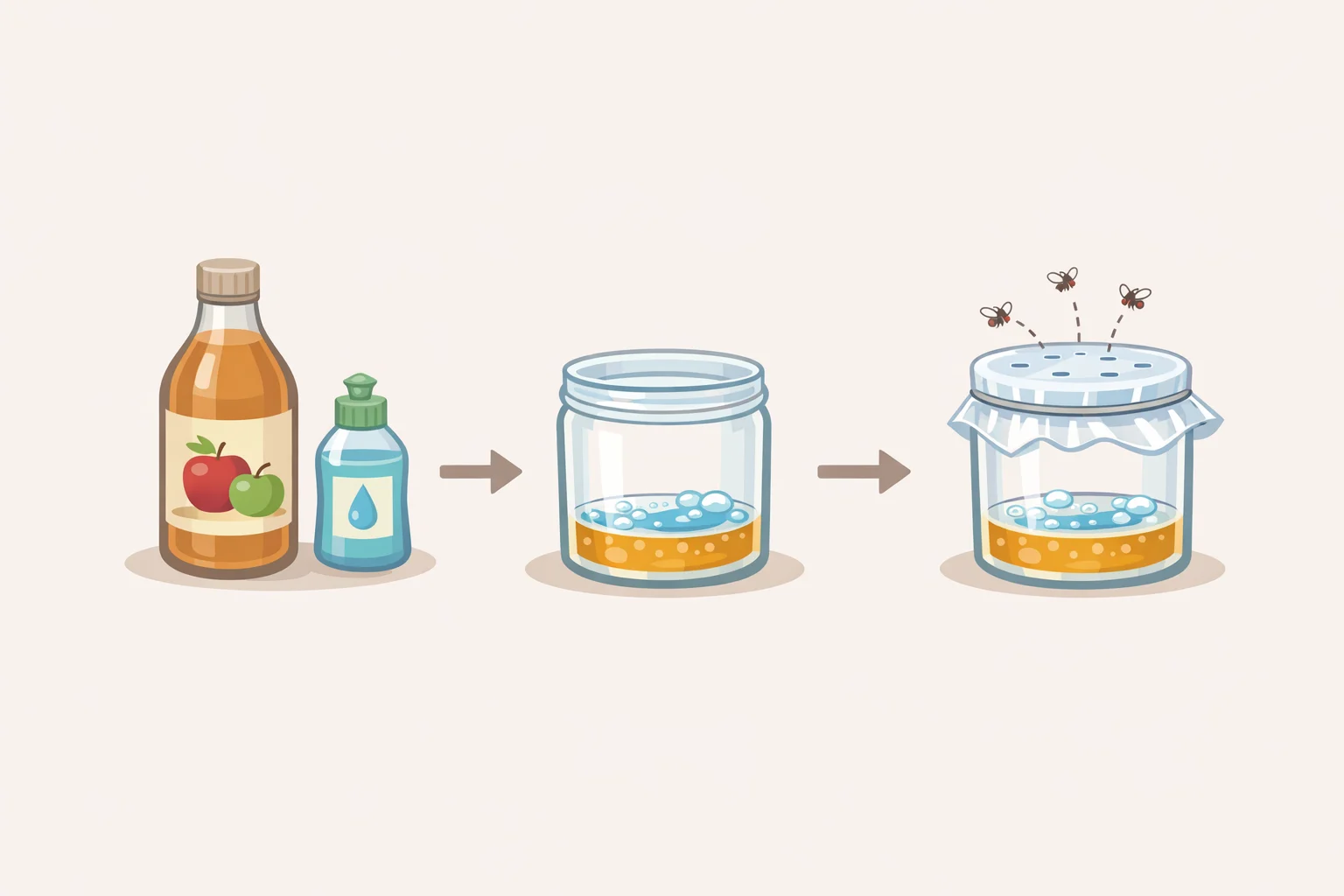
There's a use for apple cider vinegar in the kitchen that has nothing to do with dissolving anything. Dulude calls it the best fruit-fly trap available: about a third of a cup of ACV in a small glass, a few drops of dish soap to break the surface tension, covered in plastic wrap with small holes poked through so flies can get in but not out (The Kitchn). It's the one job where ACV's fruity, fermented smell works in its favor instead of against it.
Video of the Day
Apple cider vinegar vs. white vinegar for cleaning
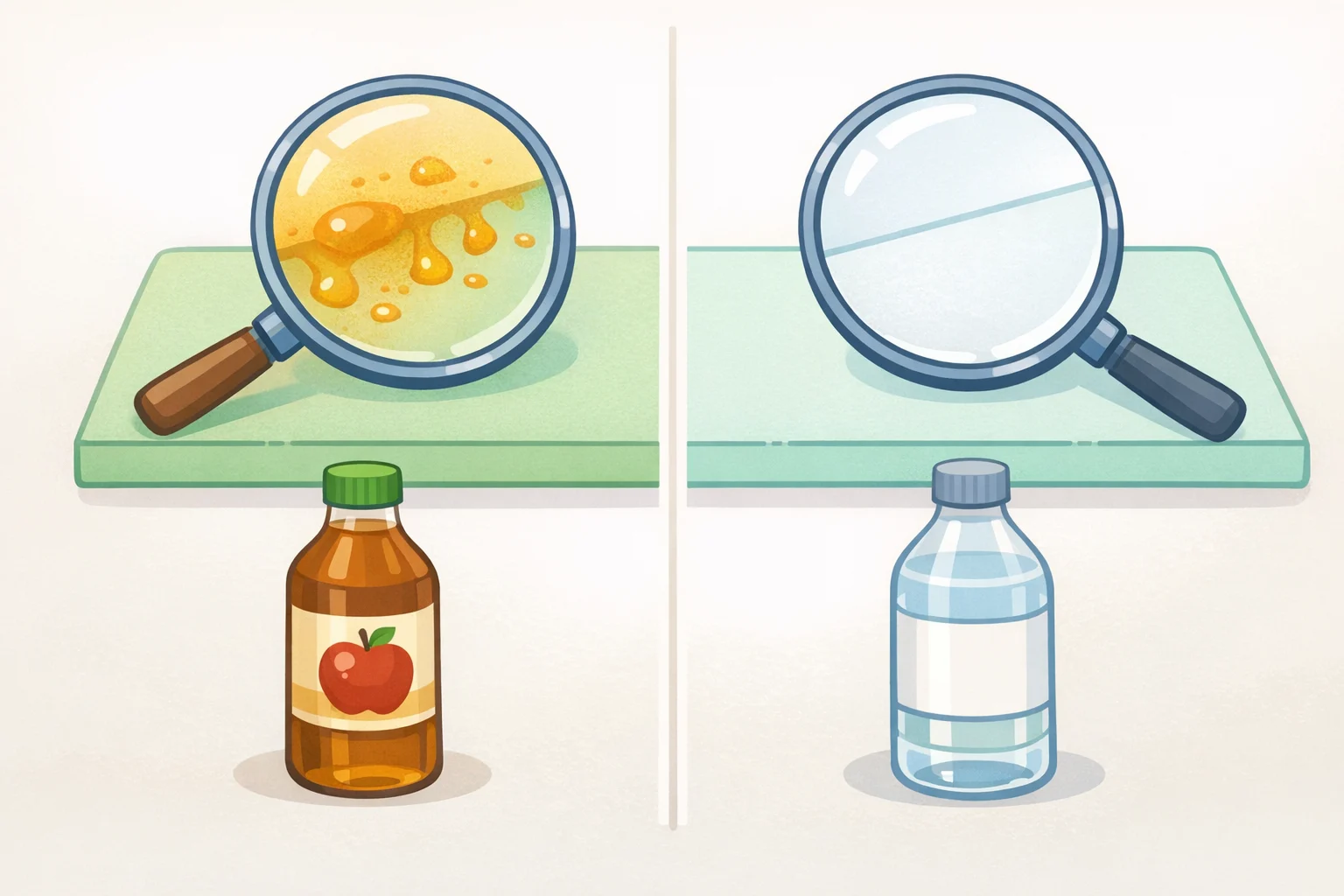
Dulude's case for defaulting to white vinegar over ACV comes down to three practical complaints, told to The Kitchn: ACV costs more, its sugar content can leave surfaces sticky, and its amber tint can discolor lighter countertops and grout.
The chemistry backs up all three. White distilled vinegar has no tannins, no coloring agents, and no sediment to leave behind. ACV, along with other colored vinegars like wine vinegar and balsamic, carries organic compounds, pigments, and sugars that can leave residue or discolor grout and stone (CleaningTuts). That residue isn't just cosmetic. If ACV isn't rinsed off thoroughly, it can leave a sticky film on any surface, which is reason enough to save it for spots where an extra rinse isn't a hassle (The Kitchn).
Dulude does have a use for ACV beyond spot-treating mineral buildup: a 50/50 mix with water in a spray bottle, with a few drops of essential oil like lavender or lemon added for scent, as a daily all-purpose cleaner (The Kitchn). That claim deserves a caveat. Vinegar's acidic chemistry targets mineral deposits, not oils or proteins, so it doesn't cut grease or lift protein-based stains, and it isn't a registered disinfectant (CleaningTuts). Oregon State University chemistry professor May Nyman makes a related point to Consumer Reports: vinegar is a weak acid, weaker even than some sodas (Consumer Reports). None of that makes the daily spray useless. It just means "all-purpose" oversells what's happening. ACV handles light, compatible surfaces fine; it's not a stand-in for a degreaser.
Same acid, different baggage. White vinegar's lack of color and sediment makes it the more practical everyday choice, and ACV earns its place as a specialty option for jobs where those drawbacks don't matter.
When cleaning vinegar wins, and where no vinegar belongs
For tougher jobs, Nikiforova reaches for cleaning vinegar, bottled at 6% acetic acid instead of the standard 5%. That extra concentration shortens the time it takes to dissolve deposits, which matters for heavy hard-water buildup or a dishwasher that needs descaling, she told The Kitchn (CleaningTuts). That's a different claim from the popular bowl-of-vinegar trick for freshening a dishwasher's odor: Consumer Reports tested that method in its own dishwasher lab and found no benefit. For an appliance, the safer move is to follow the manufacturer's cleaning instructions or use a formulated cleaner rather than improvise (Consumer Reports).
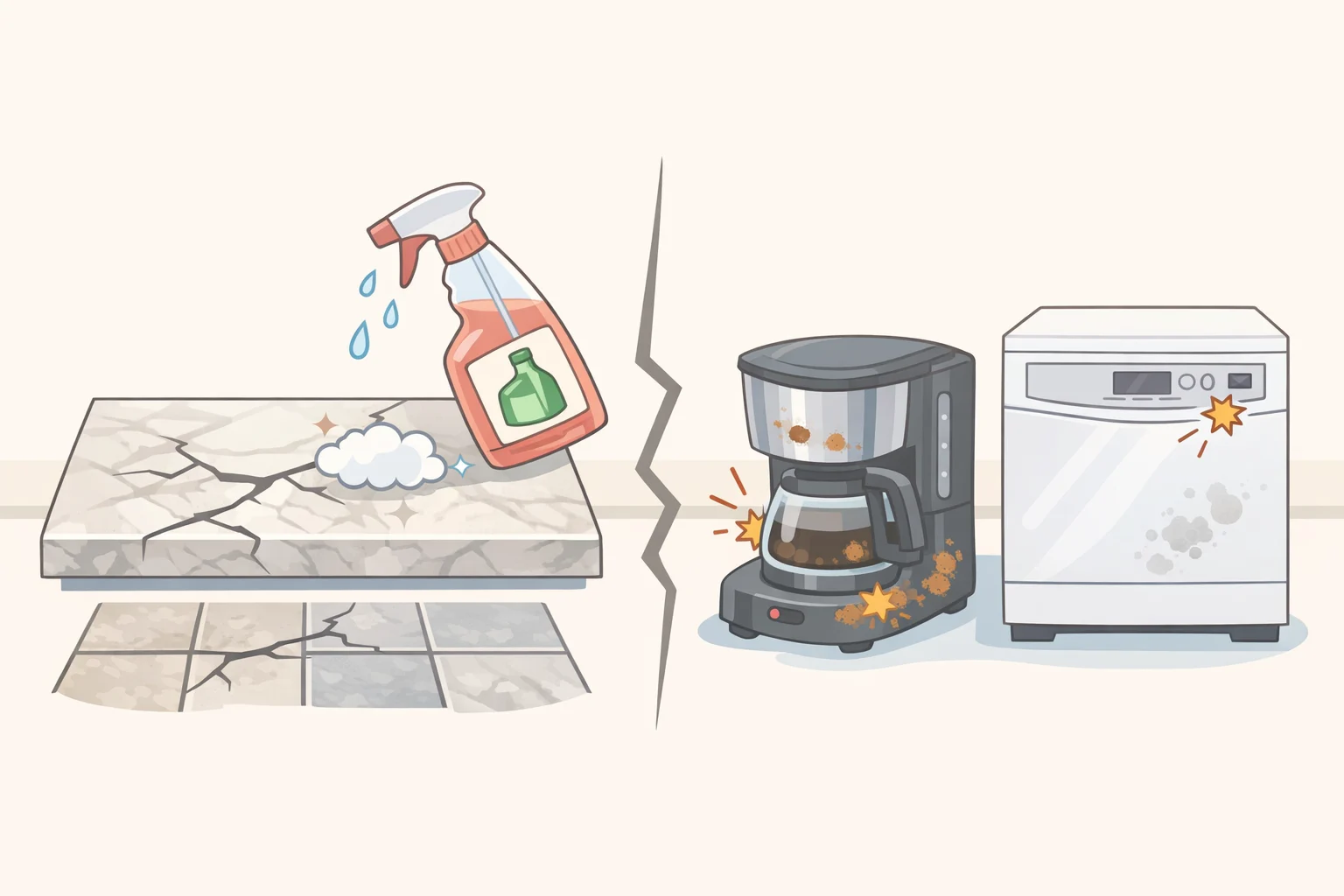
Some surfaces are off-limits entirely, whatever concentration is in the bottle. Natural stone tops that list, no exceptions. Nikiforova warns that acid, even something as mild as ACV, dulls stone over time by cutting through its polish, and Dulude confirms granite, marble, and travertine should all be avoided (The Kitchn). Consumer Reports likewise finds that acid can etch and dull marble and limestone, and that it breaks down the sealers applied to granite (Consumer Reports).
Wood carries a similar risk. Diluted vinegar can strip a waxed finish over time and cause unsealed wood to swell, and some flooring manufacturers will void a warranty if there's evidence vinegar was used on a floor (Good Housekeeping; Consumer Reports).
Washing machines have a separate problem: regular vinegar use can wear down rubber seals and hoses over time, particularly in front-load models, raising the risk of a leak down the line (Consumer Reports). Irons and steamers fail differently. Acid can eat through the protective coating inside the water chamber and then attack the metal underneath, so running vinegar through either appliance risks permanent damage rather than a one-time descale (Consumer Reports; Good Housekeeping).
Never combine any vinegar with bleach. The reaction releases chlorine gas, which is poisonous and can be deadly if inhaled (Good Housekeeping).
Stainless steel is the one surface where the experts genuinely disagree, and it's worth laying out the disagreement rather than picking a side. Dulude says ACV is safe on stainless steel (The Kitchn). Good Housekeeping advises against using vinegar on it at all, citing delicate finishes that acid can damage (Good Housekeeping). Consumer Reports notes that lower-grade stainless steel used in some small appliances may be more vulnerable to acid-driven rust (Consumer Reports). The safer approach depends on the specific finish and manufacturer guidance, not a blanket yes or no.
Matching the vinegar to the job
The right choice comes down to what's being cleaned and what's on hand:
- Mineral scale on a compatible surface: ACV can work, but give it contact time and rinse thoroughly to avoid the sticky residue.
- Routine descaling: white distilled vinegar is usually the cleaner choice, since it won't tint grout or leave a film behind.
- Heavy buildup: cleaning vinegar's extra acid concentration works faster, but only where the surface and the manufacturer's instructions allow it.
- Grease, protein stains, or disinfecting: skip vinegar entirely. It isn't built for those jobs and isn't a registered disinfectant, so reach for dish soap or a degreaser instead.
- Natural stone, unsealed wood, electronic screens, and appliances like irons, steamers, and washing machines: no vinegar, full stop. Check the manufacturer's instructions before improvising a fix, since the wrong shortcut there tends to be an expensive one.