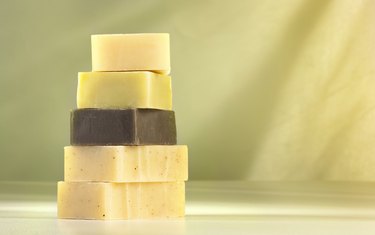
Do-it-yourself goats milk soap can be customized to fit your needs. Add scents and exfoliants or make it into lotion instead. Goat milk soap works well as a decorative accent in your bathroom or for everyday use. It cleanses gently, and it can help relieve itchy skin, eczema, and psoriasis. Most anybody can make this recipe if they apply extra safety measures when working with lye such as wearing rubber gloves, goggles and working in well-ventilated room.
Items Needed
Video of the Day
Tools Eye protection Rubber Gloves Mask to cover nose and mouth Apron Vinegar Soap molds -- or any silicone mold Stainless steel, ceramic or glass pot Large glass or sturdy plastic jug Scale 2 candy thermometers * Immersion blender
Video of the Day
Wear proper safety equipment while working with lye. As a caustic agent, it can burn skin on contact. If you do spill some, vinegar neutralizes lye, so have vinegar handy. Follow all safety instructions on the lye packaging. Add lye to liquids instead of the opposite to avoid causing the lye to splash and spatter.
Soap Ingredients and Variations
This goat milk recipe makes approximately 10 to 12 bars depending on mold size.
10 ounces fresh goat milk or 1 ounce powdered goat milk and 8 ounces of water 8 ounces shortening or vegetable fat 12 ounces sunflower oil 12 ounces olive oil 2 ounces beeswax 4 1/2 ounces of sodium hydroxide or lye * 1 teaspoon to 1 tablespoon essential oil scent of choice
Optional: Add 1/2 to 3/4 cup of ground rolled oats to your soap for an exfoliating scrub bar. You can also add dried rosemary, lavender or other herbs and dried flowers for color and additional scent. The amount of essential oil used for scent is a matter of personal preference.
Cold-Process Soap Making
Put on your protective gear, measure your ingredients with a scale. Open the windows for good ventilation, as lye creates toxic fumes. If you have an outdoor stove or cooking area, use that instead. Heat the milk to just above room temperature and pour it into a jug. Pour over a sink in case you spill; slowly add the lye, stirring well. Place a candy thermometer in the mixture.
In a large pot, gently melt beeswax and oils -- except the essential oil -- over low heat, using another candy thermometer to measure the temperature. When both mixtures reach 120 to 140 degrees Fahrenheit, slowly stir the lye and milk mixture into the oil. Stir in the desired amount of essential oil for fragrance.
Stir the mixture with the immersion blender using short bursts until it takes on a custard consistency, then stir in oats, herbs or dried flowers, if desired. Pour soap into mold and smooth with spatula.
To set the soap, place cardboard over top of the mold and wrap it in a towel to keep in the heat. Let it set for 24 hours, and then remove soap from molds and let air dry for one to two days. Finally, cut the soap into smaller bars if desired, and let air for three to four weeks, turning every other day before using. Always test soap on hands before using on face or body.
Goats Milk Lotion
Goat milk lotion has many of the same benefits and ingredients as goat milk soap, without the lye.
Ingredients 2 ounces emulsifying wax 1/2 ounces cocoa or shea butter 9 1/2 ounces coconut oil 8 tablespoons almond oil 1 cup goat milk 1 1/2 cups distilled water * 1 tablespoon of a proprietary preservative powder to prevent mold and bacteria
Melt the emulsifying wax, butter and oil over low heat. Stir in the goat milk and water. Blend with the immersion blender until it thickens before stirring in the preservative powder. Pour into a container and use within two weeks or store in the refrigerator to keep it fresh longer.