Things You'll Need
Scissor pruning shears
Anvil pruning shears (optional)
Long sleeves
Thin leather gloves
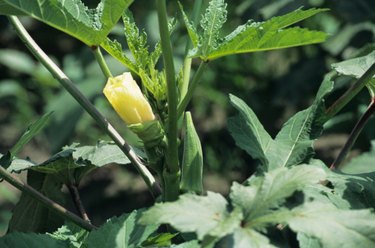
Related to cotton and hibiscus, okra originated from Africa and thrives in hot areas of the U.S., such as the Southeast. Ideally, the okra you planted takes from 50 to 60 days until the time comes for harvesting, and then you will have a constant supply of okra pods until late fall. In the meantime, you need to keep your okra plants healthy or improve their health by pruning okra leaves in your garden. Pruning your okra plants allows you to train your plants, improve the quality of the okra and to restrict its growth if necessary.
Step 1
Select the correct tools to prune your okra plants. For instance, choose a scissor style of hand pruning shears, which have one thin and one thicker sharp blade and make closer, cleaner cuts through your plants. Choose anvil-type pruning shears, which have one sharp blade that cuts against a wide, flat blade.
Video of the Day
Step 2
Wear long sleeves and thin leather gloves when working with your okra plants, unless you have the spineless okra variety. Okra has barely visible tiny spines on the stems and leaves, which will cause major itching of your skin if not protected.
Step 3
Prune your okra plant leaves in the late winter or the early part of spring before the okra starts growing. Avoid pruning later in the spring when your okra grows -- this can cause your plants to grow significantly smaller. Okra needs the new leaves to provide food for the new growth.
Step 4
Pinch or cut off the okra shoots when your okra plants reach 24 inches in height. This causes the okra to branch out, which increases the production of okra.
Step 5
Cut back one-third of the tops of your okra in the late summer if you live in a warm climate with okra plants varieties growing up to 8 feet tall. This pruning technique causes the buds to grow on the main stem and produce a secondary, late crop. Prune dwarf varieties of okra in the same way to rejuvenate the plants.
Step 6
Prune your okra leaves 80 to 100 days before you expect the first frost in your area. This pruning gives the okra the opportunity to create more okra pods.
Tip
Prune or cut off older limbs underneath harvested okra pods using pruning shears. Pruning in this way allows you to move through your okra garden without any problems. Okra will also continue to produce pods later after this pruning. Keep your pruning tools sharpened and stored in a dry room.
Disinfect your pruning tools after each cut you make when you use them to cut diseased okra. This practice keeps you from spreading the disease to your healthy okra. Disinfect your tools using a solution of one part bleach to nine parts water. (See Reference 1 Pruning Equipment)
Oil your pruning tools when you have finished using them to prevent the formation of rust by wiping the blades with an oily cloth. (See Reference 1 Pruning Equipment & Care of Tools)
Video of the Day
- Texas A & M University AgriLife Extension; Follow Proper Pruning Techniques; Douglas F. Welsh, et al.; November 2008
- Texas A & M University AgriLife Extension; Okra
- Fort Valley State University College of Agriculture; Growing Okra; Dr. Mark Latimore, Jr.
- University of Maryland Cooperative Extension; Growing Okra; Bryan Butler, et al.
- University of Maryland Extension; Grow It, Eat It Okra; Jon Traunfeld, et al.; March 2010
- Bonnie Plants: How to Grow Okra
- Eating Well: Okra Recipes