How to Brine Black Olives

For centuries a traditional component of the highly-touted Mediterranean diet, olives, according to The George Mateljan Foundation's World's Healthiest Foods, are rich in vitamin E, monounsaturated fats, polyphenols, and flavonoids, all of which work in one way or another to protect your heart and gastrointestinal tract, fight free radicals, and reduce the effects of arthritis and asthma. That's a whole lot of healthy stuff in a tiny package. You can prepare your own olives at home without all the chemicals and preservatives found in commercial brands. It's a lengthy process, but it's easy and well worth the effort. Does this Spark an idea?

Things You'll Need

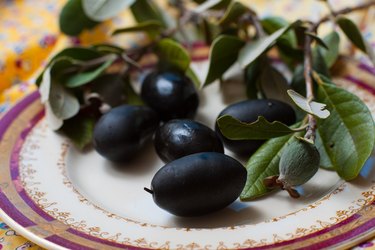
  • 2 lbs. fresh black olives
  • Sharp knife
  • Distilled water
  • Salt
  • Large glass bowl
  • Slotted spoon
  • Airtight glass jars
Show More

Instructions

    • 1

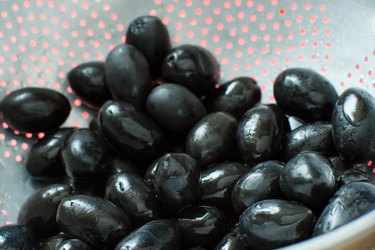
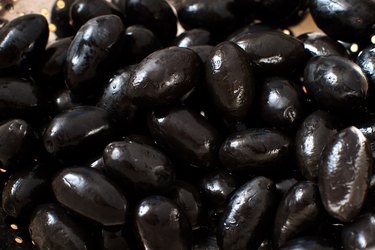
      Rinse 2 lbs. fresh black olives well in cool water.

    • 2

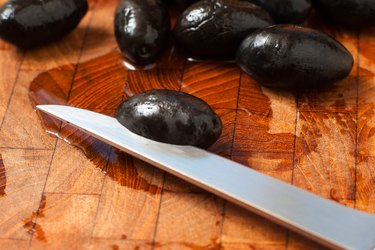
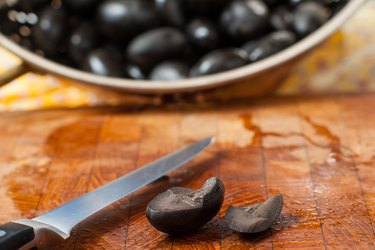
      Cut two deep vertical slits into each olive.

    • 3

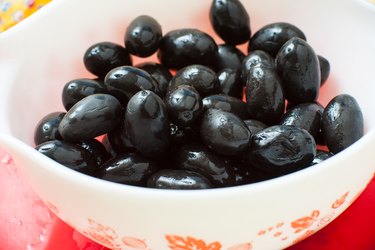
      Place the olives in a large glass bowl. Set aside.

    • 4

      Dissolve 1/4 cup salt in 4 cups distilled water.

    • 5

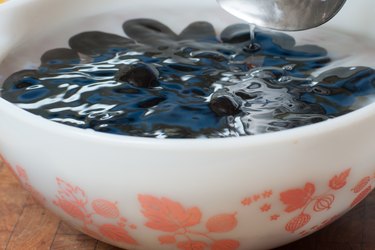
      Pour the salt mixture (brine) over the olives. The olives should be completely covered.

    • 6

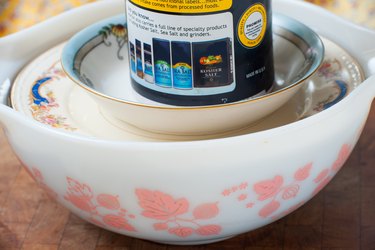
      Place a plate over the olives to force them under the brine. Place a heavy object like a marble mortar or a clean brick on top of the plate to weigh it down.

    • 7

      Allow the olives to soak in the brine for one week. During the week, stir the brine and olives every other day.

    • 8

      Drain the brine from the olives at the end of the first week.

    • 9

      Repeat Steps 3 through 7. At the end of the second week, taste the olives. If they are still too bitter for your taste, repeat Steps 3 through 7 once again. Continue to repeat until the olives are to your liking.

    • 10

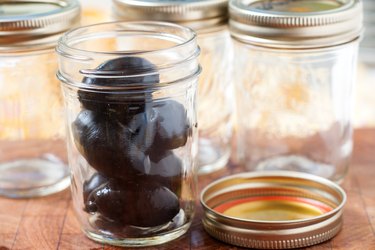
      Remove the finished olives from the brine with a slotted spoon and place them into airtight glass jars. Fill each jar approximately two-thirds full with olives.

    • 11

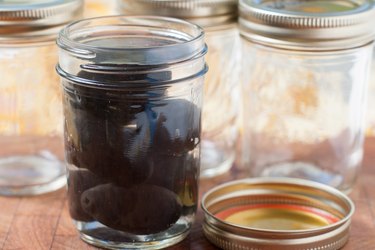
      Pour fresh brine (same recipe as before) over the olives. Leave approximately a quarter of an inch of head space at the top of each jar.

    • 12

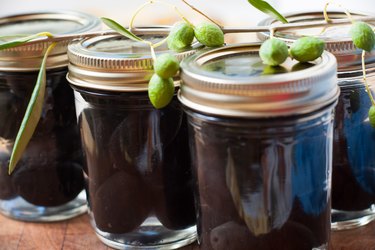
      Store the olives at room temperature for up to three weeks or in the refrigerator for up to two months.

Tips & Warnings

  • Add spices and flavors to taste, if desired. Sprinkle them over the finished olives after you have transferred them to their jars but before you pour the fresh brine over them. Some suggestions: dehydrated garlic, lemon zest, dried oregano, or a few dashes of olive oil.

  • Discard olives if they become moldy, slimy, or taste rotten.

Related Searches:

References

Resources

Comments

You May Also Like

  • How to Preserve Black Olives

    Black olives aren't edible right off the tree--they first must be "cured," which is the process of soaking them in a salty...

  • How to Make Olive Brine

    Brining is a method of preserving food using a salt-laden solution. The salt-to-water ratio and additional flavorings depend on the food to...

  • How to Cure Olives That Turn Black

    It's easier to cure olives than you might think, as they can be cured at pretty much any stage of ripeness. The...

  • How to Pickle Black Olives

    There are several different varieties of olives, but within those varieties, the green olives are unripe while the black olives have ripened...

  • How to Preserve Olives at Home

    Once humans learned to cure the bitter fruit, olives became an ancient delicacy. Today olive trees are grown as ornamentals as well...

  • About Black Olives

    Greek salads, pizzas and tapenade spreads all utilize black olives. This fruit of the olive tree has been eaten and enjoyed for...

  • How to Brine a Chicken for Roasting

    Brine is a mixture of water and salt, sometimes combined with other seasonings, used for soaking meats and vegetables. Brining chicken changes...

  • Types of Black Olives

    Types of Black Olives. Black olives, unlike green olives, remain on the tree and are not harvested until they are fully ripened....

  • How to Store Home-cured Olives

    Home-cured olives typically aren't canned due to the danger of food-borne illness. Storing with a brine solution or freezing ensures the olives...

  • How to Cure Olives

    When you open a jar or can of olives, you probably don't think much about curing your own olives at home. Take...

  • The Differences Between Greek Olives & Other Olives

    The olive is not actually edible when picked straight from the tree. It is tough and bitter as well. All olives come...

  • How to Prepare Black Olives

    Even though they are more ripe than their green counterparts, freshly picked black olives are much too bitter to eat and too...

  • What Is the Difference Between a Green Olive & a Black Olive?

    Olives trees are evergreen trees which can grow up to 30 ft. tall. Olives are native to Mediterranean countries, tropical and central...

  • How to Store Olives for Use at Home

    Olives originated in the Middle East and constituted an important part of the diet of ancient people of the Mediterranean. Olive-pickers harvest...

  • How to Cure Black Olives in Salt Water

    Salt curing is the ideal way to preserve black olives. Salty brine removes much of the bitterness of and hardness of fresh...

  • How to Store Cured Kalamata Olives

    Kalamata olives, also known as Greek olives, are a soft, fruity variety with a distinctive infusion of flavor from the red wine-vinegar...

  • What Is Black Olive Tapenade?

    Tapenade, a Mediterranean olive-based spread, is relatively easy to make and a tasteful, elegant addition to a plate of hors d'oeuvres or...

  • How to Make Cured Black Olives

    Nothing tastes better or gives you a prouder feeling than the savory explosion in your mouth of homemade black olives.

  • How to Make Brine

    One way to avoid overcooking meat and seafood is brining, or soaking lean meats or seafood in a solution of salt, sugar...

  • How to Make Brine Pickles

    Brine pickles take approximately 6 weeks to make from start to finish.

Related Ads

Know Your Knives: Josh Ozersky’s Comprehensive Guide

I have a lot of knives. You probably do too. I really don’t know what to do with them all. There’s a Chinese cleaver, aï؟½

Featured