Things You'll Need
Broom
Rubber gloves
Fiberglass filler
Methyl ethyl ketone peroxide (catalyst)
Putty knife
2-ounce fiberglass mat
Small bucket
Polyester resin
Stir stick
8-inch felt roller
6-inch air roller
Razor knife
100-grit sandpaper
Rags
Acetone
Gel coat
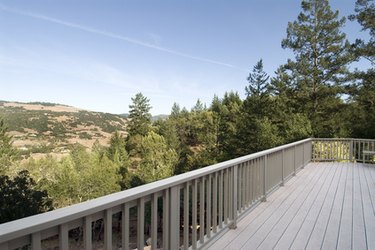
Decks made from wood will over time begin to warp and be discolored due to rain and sun exposure. A good way to waterproof and add a longer life to a wood deck is by covering it with fiberglass. For the fiberglass to properly bond, the deck must be constructed out of 5/8- to 3/4-inch thick T/G plywood. Fiberglass will not bond to many hardwoods because it can't penetrate it to achieve a bond. The deck must also be to code to support the fiberglass.
Step 1
Sweep any dust or debris from the surface of the deck, using a broom.
Video of the Day
Step 2
Put on a pair of rubber gloves and take a large handful of fiberglass filler. Add one to two percent catalyst to the filler and thoroughly mix it together, using your hands. After the filler becomes one consistent color, begin filling any knot holes or seams in the deck. Use a putty knife to smooth the filler out and let it harden for at least an hour.
Step 3
Completely cover the deck with one layer of two-ounce mat without overlapping the edges of the mat. Cut the mat to size, using a razor knife, leaving two inches of overhang on all sides. Remove the dry mat from the deck and neatly stack it in a pile next to the deck, keeping the layers in order.
Step 4
Fill a bucket with polyester resin and add one to two percent catalyst. Mix it together, using a stir stick. Wet out the area of the deck that you will begin at, using an eight-inch felt roller. Apply the first section of mat to the deck and saturate it with resin, using the felt roller. When the entire layer of mat becomes clear with no white spots, go over the entire layer with an air roller to remove any trapped air bubbles and flatten out the mat. Continue this same process until the entire deck is covered in fiberglass.
Step 5
Trim the extra fiberglass from the edge of the deck, using a razor knife. Wait until the fiberglass begins to harden for this step and the fiberglass will be easy to cut. Let the fiberglass harden for at least two to three hours.
Step 6
Sand any rough spots on the deck or on the edges of the deck, using 100-grit sandpaper. Blow off any dust from sanding and wipe the deck down with a rag dampened in acetone. Let the deck completely dry out.
Step 7
Fill a bucket with gel coat and add one to two percent catalyst. Thoroughly mix the catalyst into the gel coat. Apply the gel coat as thick as possible but also as evenly as possible, using an eight-inch felt roller. Allow the gel coat two to three hours to harden before walking on the deck.
Warning
Direct sunlight will significantly reduce the resin's working time, so plan the job around that fact.
Video of the Day