eHow launches Android app: Get the best of eHow on the go.

How To

How to Clean Tile Floors With Baking Soda & Peroxide

Contributor
By Teresa R. Simpson
eHow Contributing Writer
(0 Ratings)

When it comes to cleaning tile floors, baking soda and peroxide is a combination that can't be beat. It acts as a mild abrasive, brightens grout, and removes stains. It does not break down grout the way bleach can and it is less toxic than most commercial cleaners. Best of all, baking soda and peroxide are natural and inexpensive. Ready for sparkling clean floors? Here's how to get them.

Difficulty: Moderately Easy
Instructions

Things You'll Need:

  • Baking soda
  • Hydrogen peroxide (3 percent)
  • Cleaning rags or cloths
  • Old toothbrush
  1. Step 1

    Mix three parts baking soda with one part 3 percent hydrogen peroxide. This should form a thick but spreadable paste. Add a few more drops of peroxide if needed. Make up only the amount you will need because the mixture does not store well.

  2. Step 2

    Scoop about one teaspoon of the baking soda and peroxide mixture onto a dampened rag. This does not need to be an exact measurement---you simply need enough of the mixture to clean a small section of the floor.

  3. Step 3

    Apply the mixture to the floor using a circular motion. Spend extra time on heavily stained areas. Add more mixture to the rag as needed as you work your way across the floor. Scrub the grout between the tiles with an old toothbrush dipped in the mixture.

  4. Step 4

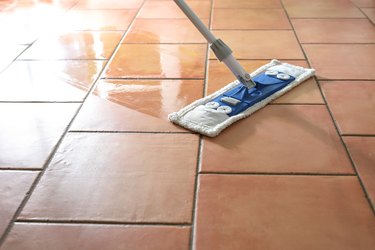
    Rinse the tiles and grout with warm water using a mop or a clean cloth. If any residue remains on the tiles, a second rinse may be necessary. For extra shine, rinse the floor a final time with one gallon of warm water mixed with ¼ cup of white vinegar. Only use the vinegar solution after all traces of baking soda are removed from the floor.

Tips & Warnings
  • For heavily stained tiles or grout, allow the baking soda and peroxide to sit for at least 10 minutes before rinsing.
  • The baking soda and peroxide mixture can also be used on bathtubs and countertops.
  • Although both ingredients are generally non-toxic, use the solution only in a well ventilated environment as the fumes can be somewhat strong.
Subscribe

Post a Comment

Post a Comment

Related Ads

  • Have you done this? Click here to let us know.
I Did This
Get Free Home & Garden Newsletters

Copyright © 1999-2009 eHow, Inc. Use of this web site constitutes acceptance of the eHow Terms of Use and Privacy Policy.   en-US Portions of this page are modifications based on work created and shared by Google and used according to terms described in the Creative Commons 3.0 Attribution License.

eHow Home and Garden
eHow_eHow Home and Garden