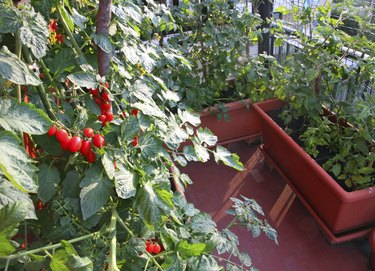
Even with a few square feet of balcony as your only outdoor space, you can enjoy the fruits of edible gardening. Beautiful balconies aren't limited to flowers -- and vegetables, herbs and berries aren't confined to traditional gardens. Urban spaces, at ground level or several stories high, provide prime planting ground. Through thoughtful choices and proper plant care, you take edible gardening to new heights.
Choosing Containers and Soil
Video of the Day
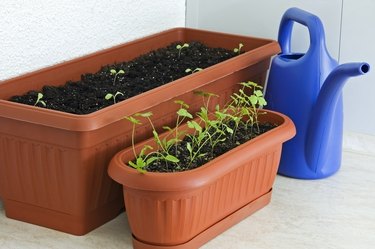
Edible balcony endeavors need containers to fit the bill. Extend your interior with colors, textures and finishes that complement your living space and accentuate crops to come -- or go for function over fashion. Whatever your choice, consider size, shape, material and soil.
Video of the Day
Large plants, such as tomatoes (Lycopersicon esculentum), need 5-gallon pots at least 12 inches deep. Root crops such as carrots (Daucus carota) need depth for unrestricted growth. Consider gourmet mini varieties in pots 8 to 12 inches deep.
Rectangular or oblong containers fit well along straight balcony edges, leaving room to maneuver and enjoy. Lightweight plastic or fiberglass pots move easily and retain moisture longer than terra-cotta pots, which lose water through their sides as well as tops. Whatever your preference, be sure pots have unblocked drainage holes. Place deep saucers underneath, so neighbors don't get wet below.
Use lightweight potting soil designed for container growing. The porous soil helps prevent waterlogged plants and weighs much less than garden soil. Planters become even heavier when watered -- an important consideration, even for sturdy balconies.
Selecting Plants for Smaller Spaces
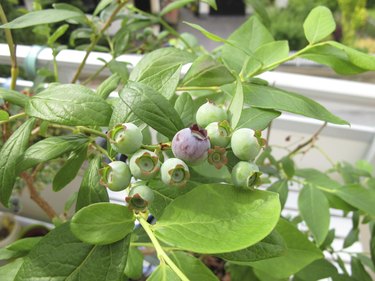
Space is often all that limits your selection of balcony edibles. Given adequate pots and proper care, most plants thrive under the up-close, personal attention balcony gardens brings. Many edibles have been bred specifically for small-space gardens, without sacrificing productivity. They grow just as well above ground as in it.
Choose compact, sturdy varieties for tight spaces. For example, grow determinate, bush-type tomatoes that reach fixed heights instead of indeterminate, vining types that keep on growing. Choose award-winners such as "Patio Baby" eggplant (Solanum melongena "Patio Baby"), bred for prolific harvests in containers.
Don't limit your garden with traditional thinking. Jelly Bean blueberry (Vaccinium "ZF06-179"), hardy in in-ground gardens in U.S. Department of Agriculture plant hardiness zones 4 through 8, stays a balcony-perfect 1 to 2 feet tall and wide. Window-box strawberries (_Fragaria spp., USDA zones 3 through 9) keep breakfast within arm's reach. Bush-type cucumbers (Cucumis sativus) shine in hanging baskets.
Balcony herbs do well in their own small pots, grouped together in an herb garden or stacked in vertical containers. Tuck edible flowers, such as common nasturtiums (Tropaeolum majus), into pots for added color and spicy garnish.
Nurturing Edibles With Balcony-Optimized Care
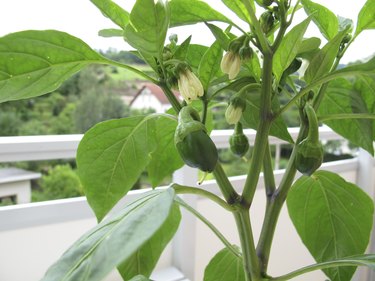
Make the most of what nature and your balcony have to give. Conditions aren't always optimal, but good care minimizes plant stress. Maximize space and sunlight by staggering plants at different levels. Most root and leaf crops tolerate light shade, but heat- and sun-loving peppers (Capsicum spp.) and tomatoes prefer at least six hours of sun. Elevate them into light and heat, while cool-season greens, such as baby lettuce (Lactuca sativa) and arugula (Eruca sativa), bask in shade at their feet.
Containers dry out faster than in-ground gardens, and small pots dry first, but don't water automatically. Check the soil by hand, and let it dry to the touch before watering again. In hot weather and direct sun, that can be daily. Double-check that water drains well, and give each plant or pot what it needs. Most vegetables and berries prefer consistent moisture, but herbs prefer drier soil.
Container plants also need extra nutrition. Frequent watering washes away nutrients that normally stay in soil. Container vegetables benefit from an all-purpose, water-soluble fertilizer at one-half strength every three to four days. For example, mix 1/2 teaspoon of 20-20-20 fertilizer with 1 gallon of water.
Extending Your Harvest and Enjoyment
Balcony crops follow the same schedules as plants growing in the ground. Extend the harvest season by planting varieties that ripen at different times, such as early, mid and late-season tomatoes. Overlapping harvest times keep the bounty flowing. Cover plants with netting if brazen birds steal your fruits.
Most tender vegetables are grown and harvested as annual crops in traditional gardens and balcony spaces. Replace them after they yield their produce or wait for next year. Blueberries and other plants that normally survive cold winters in the ground can't withstand the same temperatures in containers. Treat them like annuals or find a friend with planting room by late summer or early fall.
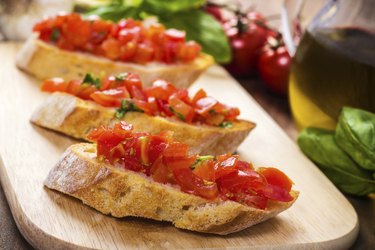
With a productive edible balcony, you can head for the day's harvest instead of heading to the fridge. Whether it's herbal teas, salads or balcony bruschetta with tomatoes still warm from the sun, you can enjoy the fruits of your labors until the season ends. Then dream about next year's edible garden, and start the fun over again.
- Oregon State University Extension: No Yard Space? Here's How to Grow a Container Vegetable Garden
- Colorado State University Extension: Vegetable Gardening in Containers
- BrazelBerries: Jelly Bean "ZF06-179"
- All-American Selections: Eggplant Patio Baby
- Missouri Botanical Garden Plant Finder: Genus -- Fragaria