Things You'll Need
Soil sample
Liter of water
One tsp. dish detergent
One tsp. table salt
Jar that can hold a liter of liquid
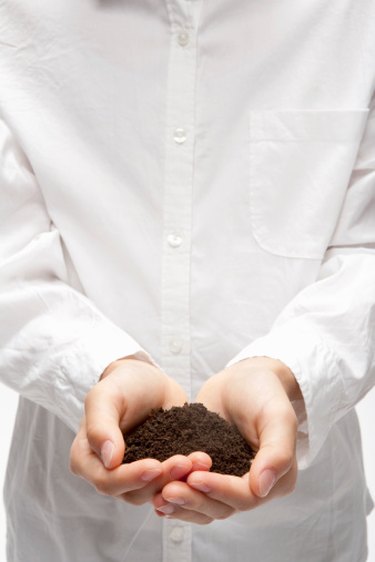
It is very important to know the mineral content of your soil if you are planning on or are already caring for plants. It is crucial to keep a healthy balance of minerals and nutrients in the soil to ensure that your plants are getting all the nutrition they need. This process is also used to ensure that your plants are not absorbing any harmful levels of anything. The proper way to test the minerals in the soil is to use an extractant, which determines what and how many plant nutrients are in the soil. It is made of water, with a particular concentration of certain chemicals that are thoroughly mixed with soil, and filtered afterward for analysis. In lieu of this, there is an alternative that is much easier to find.
Step 1
Fill up a jar with the soil you will be testing, about 2 inches high. Next, fill up the rest of the jar about two thirds of the way with water, add 1 tsp. of dish detergent and 1 tsp. of table salt. Shake the jar vigorously, and let the contents of the jar settle.
Video of the Day
Step 2
Measure the different depths of the separate layers. To measure the layer on the bottom, you must wait one minute because this layer will be just sand. Wait two hours for the finer sand the to settle, so that you may measure it. Wait several days before measuring the clay layer. After you have done this, some of the clay particles will still be suspended despite your efforts. It is the amount of each layer of soil that is measured that will tell you how much of each mineral is in the soil.
Step 3
Test the soil yourself by hand if you do not have the above tools available. Take a handful of wet soil and rub it between your hands and fingers. It is sand if the soil is rough and easily broken up. The soil is clay if it has the feel of being sticky and plastic-like. If the soil feels slippery, and its particles are smaller than that of sand, then it is silt. If you try and mold the soil into a lump, and it stays solid without crumbling, then it is clay. If not, then the soil is sand.
Video of the Day