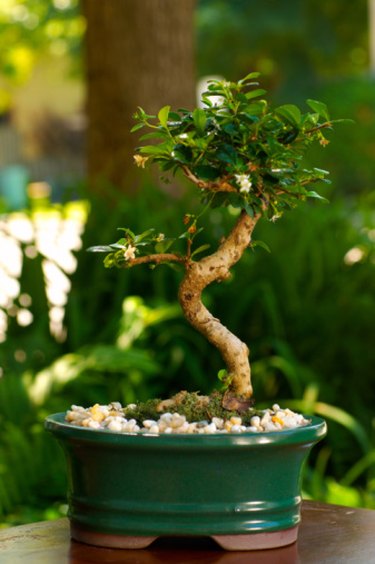
Bonsai trees are typically grown indoors, where their care can be more specialized. These dwarf trees are sensitive to changes in their environment, and there are a number of reasons the leaves may begin to fall off of a bonsai.
Watering Problems
Video of the Day
Bonsai soils are specially formulated to dry out slowly, which is healthier for the tree. Watering the tree too frequently can cause it to become stressed and lose leaves, while infrequent watering can dry out the tree and kill it. Water the bonsai tree when the top half inch of potting soil is dry to the touch.
Video of the Day
Environmental Problems
Bonsai trees in unhealthy environments may begin to lose leaves. Direct sunlight can scorch the leaves of a bonsai tree and cause them to fall off, while a total lack of sunlight will slowly kill the tree, beginning with the leaves. Use a grow lamp or ensure that the bonsai receives indirect sunlight throughout the day to keep it healthy.
Pest Problems
Indoor pest problems like mites can cause a bonsai to drop its leaves as the mites destroy them and weaken the tree. Signs of mites include dropped leaves as well as a white film on the leaves before they fall. Treat the bonsai with a gentle spray pesticide according to the directions on the bottle to control mite problems.