Things You'll Need
Rocks
Pebbles
Bucket
Bleach
Water
Wood
Slate
Stainless steel screws
Drill
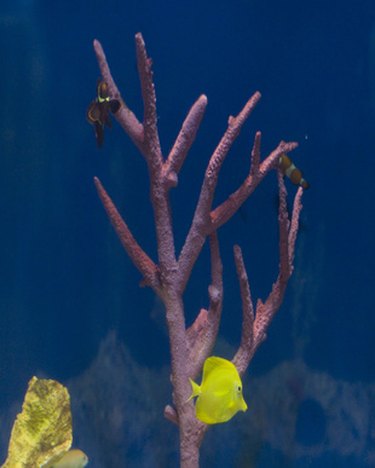
Setting up your own home aquarium can be very rewarding, but the supplies you'll need can be very expensive. Filters, pumps and other pieces of aquarium equipment can be quite costly, so it makes sense to save money wherever and whenever you can. One of the best ways to save money while still enjoying a one of a kind fish tank is to make your own aquarium decorations.
Step 1
Go for a walk on your local nature trail or other natural area. Bring a bucket or backpack with you to gather any interesting rocks, pebbles or pieces of wood you find along the way. If you have a stream in your area, look for rocks that have been worn smooth by the water, and for pieces of wood that have attached themselves to the bottom of the stream.
Video of the Day
Step 2
Mix one part bleach with one part water and fill a five-gallon bucket. Place all of the items you have gathered into the bleach solution and let them soak for at least 24 hours.
Step 3
Remove each item from the bleach solution and rinse it thoroughly with warm water. Set each item aside and decide how it fits into your aquarium.
Step 4
Arrange the rocks you have gathered and place them in the aquarium. Small pebbles can be used to accent the aquarium gravel, while larger rocks make excellent caves for fish to hide in.
Step 5
Place any pieces of wood you found in the aquarium. Bury one end of the wood in the gravel to hold it in place. If the wood will not stay in place attach it to a piece of slate by drilling a hole in the wood and the slate and securing it with a stainless steel screw.
Video of the Day