Things You'll Need
Snow globes
Display shelf
Fabric
Pine boughs
Artificial snow
Christmas lights
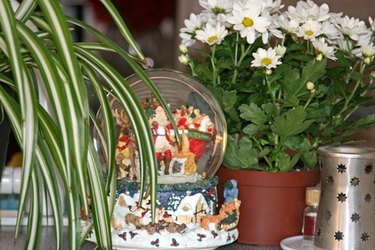
Snow globes add sparkle to a room whether you display them at the holidays or year round. A striking snow globe display involves more than simply placing the collection on a shelf. Take time to create a fitting display so the snow globes can serve as a focal point in the room. There are many factors that influence the look of the snow globe display, and the breakable nature of snow globes means you'll need to take extra care in choosing a safe location for the collection.
Step 1: Select the Snow Globe Display Location
Choose the location for your snow globe collection; one where the snow globes will be noticed without getting broken. Consider a room with good natural or overhead light so the snow globe display is easy to see.
Video of the Day
Step 2: Choose the Snow Globes You Want to Show Off
Assess the snow globe collection. Decide if you want to display all of your snow globes or just your favorite ones or those that are seasonally appropriate. Note the number and general size of the snow globes to be displayed. This helps determine what type of display you'll need.
Step 3: Determine the Display Type
Choose the display type. An open shelf allows the snow globes to be see easily, but it also holds the potential for the globes to get knocked over. A curio cabinet provides more protection but doesn't allow the snow globes to be seen as easily. Mantels and coffee tables also work. Avoid using the coffee table if you have kids or pets that might knock over the snow gloves.
Step 4: Check Your Choices for Stability
Check the stability of the selected display stand. An unstable shelf that can't support the weight of the snow globes increases the risk of broken globes. Shake the shelf or stand to see if it is wobbly. Press on it to determine if it can sustain the weight. If you're using a wall shelf, make sure it is secured to the wall.
Step 5: Cover the Area Attractively
Place a table cloth, table runner, scarf, strip of fabric over the display area. Choose fabric that matches the overall style of the room and snow globes.
Step 6: Focus on a Special Snow Globe
Choose one snow globe to serve as the focal point of the display. Place it in the middle of the display area. Add the other snow globes you want to display on either side. Play around with the arrangement until you find one that you like. Maintain enough space between the snow globes so you can see each of them individually.
Step 7: Add the Accents
Add other accents around the bases of the snow globes that complement the theme. Ideas include pine boughs, garland, strands of Christmas lights or artificial snow.
Tip
Choose accents for the snow globes are low and not overly busy. Lots of tall accents overshadow the snow globes and make the snow globe display look cluttered.
Warning
Avoid placing too many pieces in one snow globe display area. This creates a cluttered look and makes it difficult to see them individually.
Video of the Day