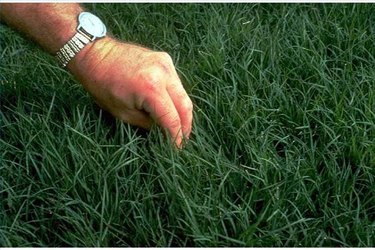
Jiggs bermudagrass is a relatively new hybrid variety of perennial bermudagrass that was developed in Texas to tolerate less-than-ideal drainage and soil conditions. It is a rapid grower used both for decorative lawns and hay, though it is much less nutritious than other bermudagrass hybrids. It can easily be planted with root rhizome, runner or plant top sprigs, or laid down in sod form. Jiggs bermudagrass seeds are sterile, so it cannot be grown from seed.
Step 1
Create a firm, moist bed of quality soil that is free of roots, weeds and stones. Ensure that the soil bed is firm, but not overly compacted, or the roots will struggle to establish themselves. Use a 10-34-0 liquid fertilizer and add any necessary amendments to create slightly elevated phosphorus and potassium levels.
Video of the Day
Step 2
Plant Jiggs root sprigs or rhizomes from late winter through March. Bury the whole rhizome 1 1 /2 to 2 1/2 inches deep, with one end deeper and the other end of the rhizome just barely breaking the soil surface. Water the rhizomes in well.
Step 3
Plant Jiggs' above-ground runners, called stolons, in soil that's approximately 3/4 to 1 inch deep. Plant runners from late spring to early fall. Water them well, but gently, so as not to uncover the runner.
Step 4
Dig small holes with a hand trowel, or furrows with a hoe, and plant mature clumps of Jiggs bermudagrass grass to the existing soil line. Plant mature plant clumps from late spring through early fall, and water in well to support root establishment.
Step 5
Roll out Jiggs sod onto moist, firm soil, butting edges tight to prevent dry out. Walk the sod or press firmly into place to make full contact. Water in the sod well.
Step 6
Carefully monitor and water all of the new plantings on a consistent schedule in keeping with your climate and ground moisture levels for at least a month to support the root development at the new site.
Tip
Fertilize established Jiggs bermudagrass with a nitrogen-based fertilizer once a year.
Warning
When transplanting sprigs of bermudagrass, keep them cool and moist. Soak sprigs that are harvested more than one day before planting in tepid-to-cool water for 10 to 16 hours before planting.
Video of the Day