
Furniture shoppers frequently choose couches upholstered in microfiber because of its stain resistance and durability, as well as its resemblance to suede. Microfiber mimics suede's felted-like texture and appearance. Shoppers who prefer a plush texture and super-soft feel may prefer chenille upholstery. The synthetic fibers used to create chenille yarns provide strength and durability without diminishing its three-dimensional beauty. Both are good options for buyers who want a long-lasting couch fabric that feels as good as it looks.
Microfiber History
Video of the Day
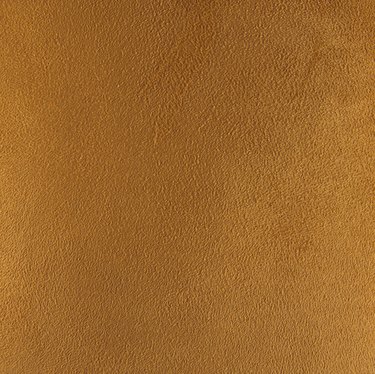
Dr. Miyoshi Okamoto, a scientist working for Toray Industries in Japan, developed microfibers in 1970. At the same company, a colleague, Dr. Toyohiko Hikota, introduced a faux suede fabric later branded as "Ultrasuede." This so-called miracle fabric is soft and supple to the touch, like sueded leather, yet lightweight. It is stain and discoloration resistant, machine washable and dry cleanable. During subsequent decades, the use of microfibers in the textile industry expanded to include fabrics that feature an impressive array of useful properties.
Video of the Day
Chenille History
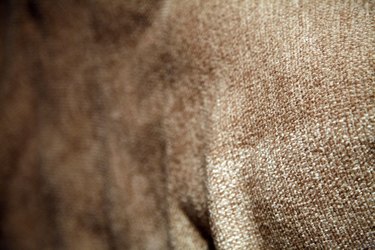
Chenille, which is French for caterpillar, has a soft, fuzzy texture, not unlike its namesake. Chenille yarn first appeared in the 18th century. In the 1920s and 1930s, hand-tufted cotton bedspreads with a fuzzy embroidered appearance became fashionable, and the word chenille referred to this craft also. Commercial production of chenille pile yarns began in the 1970s, but the yarns were not consistent in quality. With the advent of new machinery in the 1990s, reliability improved and the popularity of chenille grew. In recent years, the use of synthetic fibers makes chenille viable for new applications, such as upholstery.
Microfiber Composition
Polyester and nylon are the most common polymers used to produce microfiber strands. Deniers per filament, or DPF, measure a microfiber. The filament thickness ranges between .01 and 1.5 DPF and is invisible to the human eye. A complex series of patented processes transforms the fine fibers into a dense, unwoven fabric infused with adhesive binders, resulting in a suede-like surface. Finally, the fibers receive a polymer coating that significantly strengthens the new fabric while preserving its luxurious hand.
Chenille Composition
Originally, hand-cut cotton fibers created chenille pile. In contemporary upholstery fabrics, synthetic fibers including rayon, acrylic and olefin form chenille. The three-dimensional quality of chenille yarn results from placing short lengths of fiber, called pile, between a core of two long fibers called yarns. The yarns are twisted to secure the pile in place. Using nylon for the core fibers and steaming the lengths of yarn when the pile is in place creates strong, firmly bonded chenille that's useful for numerous applications.
Features Comparison
Microfiber and chenille fabrics are both durable enough for upholstery use. Because chenille has pile, it is slightly more apt to hold a stain than microfiber, which is smooth and repels liquids. Both fabrics are available in a range of colors and are washable in cool to moderate temperatures. The surfaces of both fabrics appear to change color when brushed or when viewed from different angles. Although both fabrics are soft to the touch, chenille's deep pile makes it feel more luxurious. Microfiber is moderately priced. Chenille's complex manufacturing process frequently gives it a higher price point.