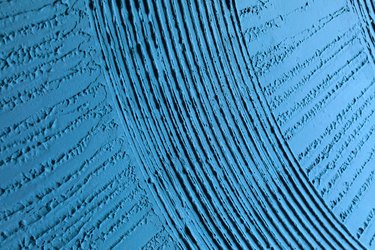
Many inexperienced painters consider Venetian plaster to be a faux finish and drastically underbid for projects. In fact, high-quality Venetian plaster materials are expensive, and the work itself is very labor intensive. If you are tempted to expand into Venetian plaster work, or have had negative experiences with undercharging, break the job down into parts and charge accordingly.
Square Footage Cost of Venetian Plaster
Video of the Day
One of the simplest ways to charge for Venetian plaster is by the square foot. Measure the wall horizontally and vertically, and multiply those measurements to find the square footage. This will help you to set a Venetian plaster price.
Video of the Day
When charging by the square foot, many contractors subtract openings, such as doors and windows. Others include these areas in the total, since they must be masked and edged. Masking and edging can, of course, take a substantial amount of time. The average price per square foot is $10 to $25, depending on your location, technique and level of expertise.
Hourly Rates for Plaster Jobs
Some contractors prefer to charge by the hour. Estimate the length of time that the job will take, and multiply by the hourly rate you want to make to determine the cost of Venetian plaster installation. Hourly rates vary dramatically, again, by location and level of expertise, but $20 to $30 is a good rule of thumb for beginners. Some sources indicate that hourly rates can rise to as much as $100 for experts.
You need to have enough experience to know how long the job will take. Charging by the hour is not recommended for beginners on large jobs, as it may take a significant amount of time, and this could lead to dissatisfied customers. This puts you at a disadvantage against larger contracting groups who can commit to a flat project rate or square footage pricing model.
Daily Rates for Plaster Jobs
Many contractors prefer to charge daily rates for Venetian plaster work. Even if you are at a customer's house for only part of the day, you also have travel time, set-up and clean-up time. The work is highly detailed and must be done quickly and accurately.
A daily rate provides room for error, as you can simply stay later to catch up. Average daily rates vary, with a national average of approximately $200 for beginners.
Extra Charges and Other Considerations
However you price a basic Venetian plaster job, extra work should be priced separately. Charging a premium for jobs that require ladders or scaffolding is common. Curved walls and complicated architectural features also cost extra.
Base charges typically include three layers--a base coat, middle coat and finish coat of plaster. Extra layers such as wax or clear sealant, or techniques such as burnishing add cost. Prepping and priming the wall are usually charged separately.
Only you know your personal situation. Are you swamped with work? How much do your materials cost? Do you need the job? Would the customer be a great reference? Artists' prices are rarely set in stone, as each situation is different. Set base rates that make you comfortable, but never be afraid to adjust them up or down depending on the circumstances of each job.