What Is Active Solar Energy?
Capturing the energy of the sun and converting it to electrical or mechanical energy is referred to as "active solar technology." Energy from the sun is free, and much effort by industry, business and individual homeowners is being made to harness this energy.
-
Active Solar Domestic Water Heating
-
Providing hot water for washing, showering and other uses in a home is usually produced by an electric, oil or gas water heater. Water is heated in a tank by flame, or in the case of electric water heaters, an electrical element is immersed in the water. A typical active thermal solar hot water system consists of collectors mounted on a home's south-facing roof. The collectors are black to absorb the most heat from the sun's rays, similar to a greenhouse effect. Pipes inside the collectors are filled with a heat transfer medium, usually a mixture of water and antifreeze. Hot air in the collector box is transferred to the fluid in the pipes. A pump circulates the fluid down through the water tank to heat the tank's water. The fluid does not come in contact with the water used by the homeowners.
Space Heating
-
In many large buildings and some industrial situations, fresh air is drawn in from outdoors for ventilation. To reduce heating costs, the air can be preheated before being distributed throughout the building. In this type of installation, air is heated by the sun hitting a darkly colored, perforated aluminum sheet and drawn in by a fan. The building's conventional heating system has to do less work to make up the temperature difference between the incoming air and room temperature air.
-
Swimming Pool Heating
-
Changing the temperature of water requires a lot of energy, and therefore can be expensive to heat. In regions where the summer season is short, pool owners can extend the time they enjoy their pool by heating the water. This is a perfect application for active solar heating. Solar collectors can be mounted on the roof of a nearby building, often on a tool shed or small structure that houses the pool's filter. Using the pool's pump, water is diverted to circulate through the collector, where it is warmed and returned back to the pool.
Photovoltaic Systems
-
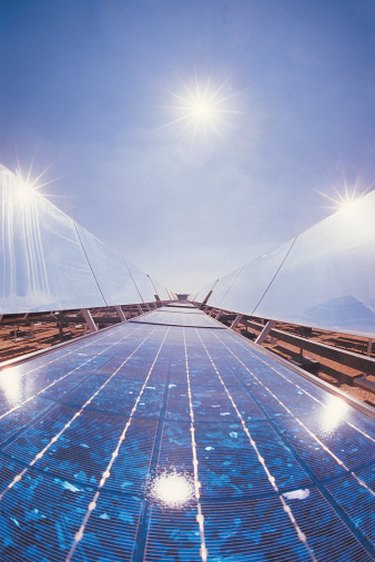
Solar panels that convert light from the sun (not heat from the sun) to electricity are called photovoltaic solar panels. Panels can be mounted on the ground, but are usually installed on a home's south-facing roof. The panels generate DC (direct current), which is fed to a device called an "inverter" that converts the DC to AC (alternating current), or standard house current. The home remains connected to the local utility company's electric grid to supply power when the panels do not generate enough electricity to meet the home's demands, which can occur during cloudy days and, of course, at night. When the system generates more electricity than is needed by the home, the surplus power is fed back to the utility grid, and the homeowner receives a credit on his electric bill.
Economics of Active Solar
-
Utilizing solar energy can save a homeowner utility costs for many years. Solar electric and solar hot water systems are very durable and are designed to run virtually maintenance-free for years. Employing active solar technology also helps conserve the world's fossil fuel supply. The drawback is that the initial cost of these systems tends to be quite high. The "payback period," that is, the time it takes for the system to repay the initial investment, can sometimes be longer than is economically feasible. However, the federal government and many states are offering financial incentives in the form of grants and income tax credits to help defray the cost of installation, reducing payback time to attractive levels. Also keep in mind, the price of fossil fuels will increase in the future, while the sun's energy will remain free.
Active vs. Passive
-
Active solar energy technology generally refers to electrical or mechanical devices required to take advantage of the sun's energy, as in the case of an electric pump circulating heat transfer fluid between a collector and a water heater tank. "Passive solar" requires no such devices and is therefore less expensive, but it does not give the big energy gains made possible with active technologies. Passive solar involves planting large shade trees along the south side of a house to help reduce air conditioning costs, and using trees and shrubs to act as windbreaks to reduce winter heating costs.
-
Resources
- Photo Credit Photovoltaic active solar installation (Photo from www.bpsolar.com)