Things You'll Need
4 pieces poster board
Masking tape
Scissors
Round balloon
1 cup flour
1 cup water
1/2 tsp. salt
Bowl
Spoon
Newspaper
6 brad fasteners
Gold or silver paint
Feathers (black or red)
Craft knife
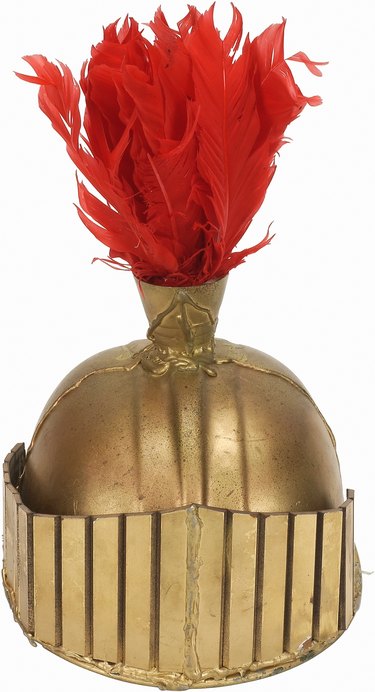
The Roman Centurion soldier is traditionally depicted with a silver or gold helmet topped with a feathered plume. The plumes, usually red or black, were used to denote rank and unit. They were also used as decoration during military parades. You can make your own Roman Centurion helmet and add a leather breastplate, leather skirt and sandals for a complete Roman uniform. The helmets featured face and neck plates which protected the warriors from swords and arrows.
Step 1
Cut a 3-inch strip of poster board that fits around your head. Secure the end with masking tape and trim off excess poster board. Blow up the balloon until it is the size of your head and squeeze it into the headband.
Video of the Day
Step 2
Combine the flour, water and salt to create a paper mache glue. The mixture should be the same consistency as pancake batter. Cut the newspaper into 2-inch wide strips and dip the strips into the paper mache glue. Allow the excess to drip off and lay the strips down over the headband and the top of the balloon. Overlap the strips as you go. Do not paper mache beyond the headband. Leave it to dry overnight.
Step 3
Repeat the paper mache process, leaving each to layer to dry overnight, until you have four layers of paper mache. Leave to dry thoroughly. You will know it's dry when you can gently push a fingernail into the paper mache without leaving an indentation.
Step 4
Create two faceplates and a neckplate. The two faceplates hang down from the headband, over the cheeks to the jawline. The neckplate is a brim that hangs from the headband at the back to the top of the spine. Cut several patterns and shapes from the newspaper until you find a pattern that works. Cut the shapes out of poster board.
Step 5
Lay down sheets of newspaper. Lay the face and neckplates and the helmet on the newspaper. Paint with silver or gold paint. Leave them to dry and then paint the underside of the items and let them dry. Attach the face and neckplates, with a brad pin on both sides, to the headband.
Step 6
Gather the feathers together in a bouquet. Secure the bottom tips with masking tape. Cut a hole in the top of the helmet with a craft knife and press the feather plume through it.
Tip
If your feather plume comes undone or falls out, secure it with adhesive or masking tape which you can paint over. To keep your balloon upright, put the bottom into the top of a sneaker overnight. You can pop the balloon after the first layer of paper mache has dried. You can add a chin strap if your helmet falls off. Cut a strap from an old belt or from broad elastic.
Video of the Day