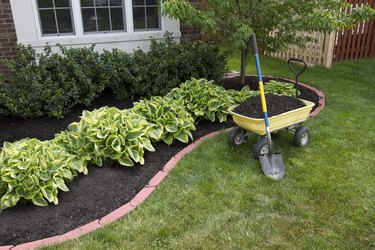
Most people take soil for granted; yet, it is the one thing that sustains plant life so that the rest of us can live. Soil is composed of several layers, which all differ in their composition and depth within the earth. Topsoil, subsoil and bedrock are three such layers of soil, and they all have important characteristics for gardening and landscaping.
Topsoil, subsoil and bedrock
Video of the Day
Making soil is a biological process accomplished by several different microorganisms. Bacteria, fungi and other organisms decompose living matter and eventually turn it back into soil. From there, temperature, along with pressure and weathering, shapes the remains of previous living beings into what we call soil. Furthermore, soil formation still goes on today and deep within the earth, the same processes work to change bedrock into topsoil at a rate of one inch every 500 years.
Video of the Day
What is Bedrock?
The most fundamental level of the soil is bedrock. The bedrock layer of soil sits below the subsoil and topsoil levels in the form of very hard rock. Here the bedrock waits for erosion and other geological processes, such as earthquakes, to begin changing its form.
Bedrock is very hard and tough to work with and allows little, if any, water or air circulation through its tough form. The top of the bedrock, called the rockhead, is where the bedrock meets the next layer of soil. Engineers often have to dig and find the rockhead before beginning some construction projects.
What is Subsoil?
Subsoil is the layer of soil below the topsoil. It contains mainly sandy and clay deposits without a lot of organic matter. Although subsoil is much less fertile than topsoil, it can be amended to increase its plant-growing capacities.
It is also much lighter in color and much harder to handle than topsoil, notes the London Topsoil Company. It is, however, much looser than the hardened layer of bedrock lying beneath it. One advantage that subsoil has over topsoil is that it contains few if any weed seeds because of its depth, therefore increasing its attractiveness to growers and companies that make topsoil.
What is Topsoil?
The layer of soil closest to our feet is topsoil. Geologists refer to it as the "A" horizon, whereas subsoil is the "B" horizon, advises North Carolina State University Cooperative Extension. Topsoil is much more fertile than subsoil because it contains more organic matter, thus giving it a darker color.
A layer of humus, which is essentially dead and decaying organic matter, sometimes covers topsoil. This humus has a number of important properties for gardeners, and, as it decays into topsoil, it creates a nutrient-rich blend of soil that gardeners and landscapers dream about.
Unfortunately, being the top level of soil comes at a price. Topsoil is lost to soil erosion and poor farming practices at an alarming rate. In fact, the Green Trust organization estimated that the U.S. lost about 60 percent of its topsoil in 200 years of farming.
Identification Tips and Implications
Topsoil depth varies from a few inches to several feet depending on geological processes. Thus, when gardeners and landscapers explain their soil type as clay, sandy or loamy, they are often referring to the top layer of subsoil. A good rule to remember is that the darker the soil, the more nutrients it carries. Additionally, if a gardener or landscaper is concerned about soil fertility, he can have tests done at garden centers or university cooperative extensions.