eHow launches Android app: Get the best of eHow on the go.

How to Create Storyboards

Video Preview

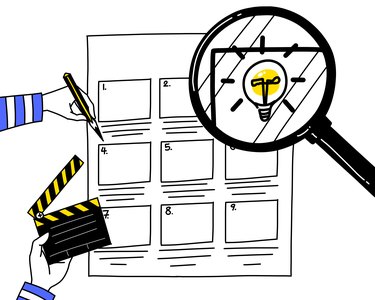
Summary: Creating storyboards for films requires having artistic talent to convey the concepts and sequences of a movie scene. Use storyboards to establish the flow and vision of a film with tips from an independent filmmaker in this free video on the film industry.

Views:
923
Presenter
By Nathan Boehme
eHow Presenter

Nathan Boehme is a writer, director and editor who currently lives and works in Los Angeles. He has worked extensively as an independent filmmaker for more than 10 years, producing and...read more

Post a Comment

Post a Comment

Video Transcript

"Okay folks, in this clip we're going to talk about how to create storyboards. Now, for the purpose of this video I'm going to assume that you are artistically talented in some way, because if you're not, you really shouldn't be trying to tackle the whole storyboard thing, unless you're purely trying to get your framing issues down, where, in that case, you can just draw little stick figures within the boxes, and, you know, know exactly, you know, roughly what size you want the individuals to be in the frame. Storyboarding is roughly about translating what the director wants to see into the early conceptual designs, before anything's ever been shot. It's a...a lot of times, it's followed, you know, very much to....by frame by frame by frame when it actually comes to shooting. Some directors stick to their storyboards like the Bible. Others toss 'em out as soon as they arrive on the set. To create good storyboards, basically what you need to understand first of all is the way a sequence is going to piece together. You're going to want to start largely with your establishing shot, the first thing that the audience is going to see in the frame, whether it be a close up of an individual or a sweeping landscape, just to establish wherever you are. Then you're going to want to immediately follow up with a second shot of the frame, which is essentially when the action starts. When, you know, the guy who's in close up takes a swing at the next guy. Or we, you know, focus in on one individual working on something in the frame. Basically it's the....we've already established the shot. We move into the very next shot. Now from here, you can pretty much, you know, do anything as it...it really depends on the scene. If it's an action scene, you're going to basically wanna...lay out each individual action beat, and kind of show what the camera's going to see each and every frame. If it's just a scene where you have two people having a conversation, you don't necessarily need to go into great detail about when the close ups are going to be, and when the wide shots or medium shots are going to be. You've already sort of established that. Storyboards, at the end of the day, are to show when the, sort of, the specialty shots come in. The ones where the director's like "Man, I have this idea for this shot, and I want to get it down now so that I don't forget it later. And I want to be able to use this as a reference later on when I'm actually there on the set." So, being a storyboard artist is all about laying down those shots that you're going to want to get later on. And to do that, you have to understand how to frame things, you have to understand how sequences piece together. And once you've learned how to do those things and understand those things, you are definitely well on your way to becoming a very good storyboard artist."

eHow Article: How to Create Storyboards

Related Ads

  • Have you done this? Click here to let us know.
Get Free Arts & Entertainment Newsletters

Copyright © 1999-2009 eHow, Inc. Use of this web site constitutes acceptance of the eHow Terms of Use and Privacy Policy.   en-US Portions of this page are modifications based on work created and shared by Google and used according to terms described in the Creative Commons 3.0 Attribution License.

Demand Media
eHow_eHow Arts and Entertainment