eHow launches Android app: Get the best of eHow on the go.
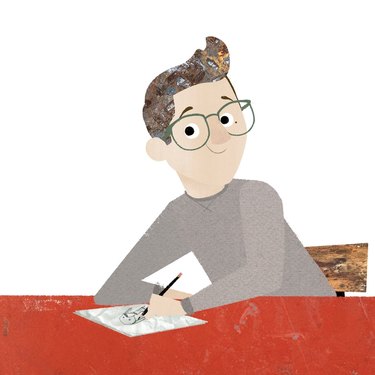
Summary: Find yourself staring into oblivion for hours? Learn some tips on dealing with writer's block from our play writing expert in this free video clip.
Kirk Bowman is a Los Angeles-based playwright. He majored in both Theater and Cinema at USC.
Bowman has written 200 scenes for actors, plus full length plays for theater...read more
"In this clip we're going to cover how to deal with writer's block. Now I'm sure you know that dreaded feeling of when you have things really cooking on a project, your creative juices are flowing, and then one day you go to work on it and all of a sudden it's blank, nothing. You can't seem to get past that, you can't seem to know where to start. The main thing there is to not get down on yourself and not get upset. Writer's block is completely normal. You might try the obvious which I'm sure you've thought of is just taking a little time, getting away from that project. Taking a walk, changing your routine a bit, and going back to it later. Now if you notice you still can't get rid of that writer's block, I think it really breaks down to, it could be in two possible areas that there's a problem. One is personal things going on, and another is problems relating directly to that project. Now on a personal note you may have things as silly as cleaning the garage or calling to make that dentist appointment, making some phone calls -all these little nagging things that are in the back of your mind. Normally you can deal with those, but when you've got the pressure of writing and your being creative that's taking up all that room, these nagging little things can all of a sudden have a louder voice. Sometimes if you recognize that helps it. Other times it's just like you might have to really take out that time and go clean the garage. I hate to tell you to do that, I hate that myself, but that might be the answer. Take care of some of these nagging things and you'll find that when you sit down you can feel like, "Hey, I can justify this time of sitting down and working on my project." Now the other possibility might be that your writer's block is based on your specific project. You may be doing too much. You may be doing twenty page dissertations on each character and their backgrounds. In that case, somewhere in your back of your mind, it's going "This is too much," and you're blowing a fuse. You need to, in that case, do the basic research you need and jump into your project, move forward. If you're having a problem in one area, move to something else. Put your time working on your project into writing, into jumping in into that creative process as soon as you can, and getting a rhythm. Now my personal take on writer's block is that when we're creating, when we're writing a play and dealing with all of the characters and the plot points and putting it all together and pouring fourth that creative energy, we're using a lot of our brainpower. To me, when we're doing daily chores and going to work and driving around, we're plugging our brains into the wall socket. When we're writing a play and being creative, we're plugging our brains into the power plant down the street. Usually as you're writing, even if you're stuck on some things like you'll have a couple great characters, you'll have certain plot points that are really working and areas you can move forward, if you get stuck in all of those areas, your brain just might shut down. So you need to step back and really look and maybe see what the problem is. Maybe you need to add a character, maybe you need to change a plot point. See what it is that might be causing the blockage, and it could just be one character is bothering you, or one conflict isn't real enough. You can change that and things will start to flow again. Of course the final option is that somewhere in the back of your mind you're realizing that this is not the project for you, and that's fine. You're not expected to know exactly what you want to write, and as you're writing it you may like the idea still, but you may not really be excited about it, which you should be. You should be passionate about your idea. If you're not, it's fine to put it down, file it away. Maybe in six months or a year you'll want to pick up the idea or you'll get some other concepts for it, and that's fine. So in combating writer's block, remember don't get down on yourself, and if it is more than a real temporary thing, take a look at if it's a personal or more a problem related with the project. Try to identify what that is, and solve it, and hopefully that will move you right ahead."