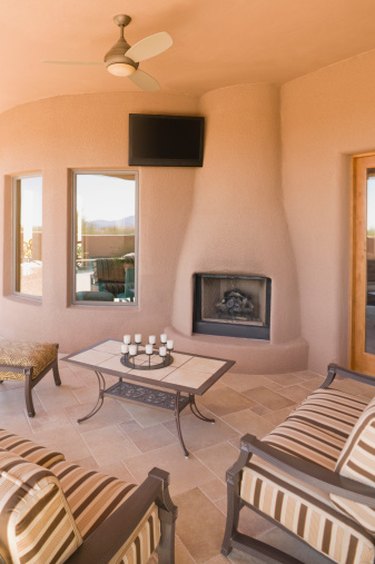
Kiva Fireplace History

Kiva fireplaces trace their long history back to the 8th century. Kiva fireplaces were first used in the underground sacred chambers of the Pueblo Indians. These characteristically Southwestern home fixtures have evolved from simple holes in the ground to full-featured fireplaces, often known as "beehive fireplaces" due to their distinctive shape. A kiva fireplace adds history and warm to a mission-style home. Does this Spark an idea?

  1. History of Kivas

    • The reamins of a kiva can be seen in the center of ruins in Mesa Verde, Colorado.
      The reamins of a kiva can be seen in the center of ruins in Mesa Verde, Colorado.

      The ancient Pueblo people of North America first built kivas around 750 C.E. These circular underground chambers were up to 60 feet in diameter. Kivas, still used by the Hopi and other tribes today, feature entrance holes in the ceiling. Once inside, visitors often find a stone bench for sitting as well as a sipapu, a small hole in the center of the kiva's floor that symbolizes a connection with the earth. Kivas built after the 10th century often include a small storage room built onto the perimeter of the circle, giving the kivas keyhole shapes when viewed from above.

    Kiva Fire Pits

    • The first kiva fireplaces were simple pits.
      The first kiva fireplaces were simple pits.

      Kivas from the 700s to the present characteristically feature a fire pit, usually in the center of the chamber near the sipapu. In most kivas, the fire pit is a simple hole, though some kivas feature fire boxes made from wooden planks. Oftentimes, an air deflector located in front of the pit helps distribute heat evenly through the kiva. Kivas generally feature ventilator shaft or tunnels that release excess smoke and heat from the fire. Pueblos used deep cists (chambers in the ground usually lined with stone) between the fire pit and the ventilator shaft to collect ashes, according to archaeological investigations of kivas from about 1000 C.E.

    Kiva Fireplaces

    • As mission-style homes began to appear in the American Southwest as early as the late 1700s, the kiva firepit was reinvented as the kiva fireplace. This iteration features a beehive-shaped design with an arched firebox opening. Kiva fireplaces stand in the corner of a room, with ventilator shafts protruding from their tops. Traditionally, kiva fireplaces feature adobe brick construction. This type of fireplace is especially common in New Mexico.

    Modern Iterations

    • Modern iterations of the kiva fireplace typically use masonry rather than adobe bricks, such as cinder blocks. They often feature wire frame or plaster construction elements. Numerous hearth makers offer prefabricated kiva kits; some kits are freestanding while others require some modification to the home. Modern kiva variations add built-in benches -- or "bancos" -- as well as recessed niches, shelves and other decorative elements. Some designs accommodate outdoor use or stand in the center of the room, but most still find their place in the corner of a room.

Related Searches:

References

  • Photo Credit Ancient Indian ruins at Mesa Verde, Colorado image by Alexey Stiop from Fotolia.com fire wood hot coal flame firewood firepit image by Paul Retherford from Fotolia.com

Comments

You May Also Like

  • Designs for an Outdoor Fireplace

    Outdoor patios and courtyards provide homeowners with additional living and entertaining space during warm-weather months. Extend the outdoor season into fall and...

  • How to Design a Fire Pit

    Coming up with a rock solid design for an outdoor fire pit requires a good understanding of how and where it will...

  • Corner Fireplace Styles

    Corner Fireplace Styles. Corner fireplaces add a distinctive ambiance to a room and give the room a focal point around which to...

  • How do I Build the Masonry Section of a Fireplace?

    The solid, sturdy appeal of a masonry surround fireplace can bring warmth and comfort to any home. Building the surround of a...

  • 19th-Century Fireplace Designs

    19th-Century Fireplace Designs. Fireplaces often become the focal point of the rooms they grace, but before modern heating techniques were available, fireplaces...

  • How to Remove a Beehive

    In most cases, you want to leave bees in peace without disturbing their hive. However, you may find that a hive needs...

  • How to Build a Fireplace Hearth

    A hearth can be used to raise a fireplace for practical and aesthetic reasons. It's easy to build a hearth and simply...

  • Fireplace Entertainment Design Ideas

    Fireplace Entertainment Design Ideas. The home fireplace was where a family congregated before houses were wired with electricity, because the fireplace provided...

  • Facts About Anasazi Indians

    Anasazi is a Navajo word that means "ancient ones" or "ancient enemy." No written history offers the true name of this long-lived...

  • Residential Desert Landscaping Ideas

    Residential landscaping in the desert eschews rich lush lawns and towering oak trees, opting instead for cacti and ocotillo trees. Such water-wise...

Related Ads

Featured