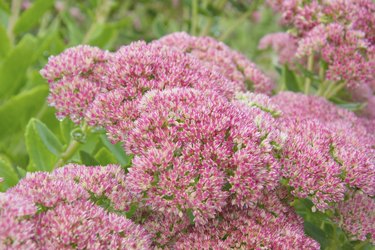
Japanese spirea (Spiraea japonica), grown in U.S. Department of Agriculture plant hardiness zones 3 through 9, blooms on the year's new growth and must be pruned in late winter or early spring before new growth and buds begin. Late pruning cuts off the shrub's new buds, resulting in little or no flowering during the midsummer blooming period. Common Japanese spirea cultivars include "Shirobana," grown in USDA zones 4 through 9, and "Gold Mound," "Goldflame" and "Little Princess," all hardy in USDA zones 4 through 8.
Pruning Tools
Video of the Day
Japanese spirea shrubs have narrow branches requiring the use of small hand pruners for trimming individual branches and hedge or grass shears for pruning multiple branches simultaneously.
Video of the Day
To avoid spreading plant diseases to a Japanese spirea, disinfect all pruning tools before and between cuts, using rubbing alcohol or a 10-percent solution of diluted bleach mixed at a ratio of 1 part bleach to 9 parts water. The blades should stay wet for 10 minutes for complete disinfection. Keep a spray bottle of disinfectant solution handy in the garden while you prune to quickly clean blades after pruning diseased branches.
Rejuvenation Pruning
Japanese spireas are most commonly pruned through annual rejuvenation pruning during which the shrub is cut back low to encourage healthy new stems. This type of pruning is performed in late winter or early spring. "Goldflame" and "Gold Mound" benefit particularly well from rejuvenation pruning because their gold-green color is brightest on young stems.
General guidelines suggest pruning shrubs back 4 to 10 inches from the ground. The species standard grows up to 6 feet tall and 7 feet wide, making it best suited for a taller pruning height of 10 inches. Compact cultivars like "Gold Mound, "Goldflame," "Little Princess" and "Shirobana," which average 2 to 4 feet tall, can be cropped back closer to the ground.
Use hedge shears or grass shears to quickly and efficiently cut back the entire plant. Some gardeners use a lawnmower to cut back Japanese spirea; however, this results in a shorter finished height, and there is no way to guarantee disease protection with mower blades.
Regular Maintenance
Rejuvenation pruning might be the standard practice, but some gardeners opt not to prune so severely with such frequency. Japanese spirea can mature for longer periods between rejuvenation pruning, but the plant requires regular pruning maintenance to stay healthy. Prune all dead, diseased and broken stems as they occur -- cut back to the nearest healthy branch intersection or back to the ground if the damage extends throughout the stem. In late winter or spring, prune the spirea to maintain a uniform shape. Cut back any long, unruly stems to the length of the surrounding stems. Remove any rubbing branches or branches that point toward the center of the plant. Make the cuts within 1/4 inch above a branch intersection or leaf node.
Deadheading Spiraeas
Japanese spireas and cultivars bloom from June through July, with the exception of the "Little Princess" cultivar, which blooms from May through July. Removal of spent blooms extends the blooming period, encouraging a second round of spirea's showy white, pink or red flowers. As individual flowers expire, trim them back to just above the first leaf set. For speedier pruning, wait until most of the flowers fade, and shear off all the old flowers at once with hedge clippers. Leave the shrubs untouched at the end of the second flush of flowers. Aside from occasional pruning to remove dead, diseased and broken stems, the next pruning is due in late winter to early spring of the following year.
- Floridata: Spiraea Japonica
- Clemson Cooperative Extension: Pruning Shrubs
- Fine Gardening: Genus: Spirea
- University of Wisconsin Horticulture: Pruning Deciduous Shrubs
- DenverPost.com: Make Sure the Time's Right to Lop Shrubs
- Iowa State University Extension: Pruning Ornamental Shrubs
- Iowa State University Extension and Outreach: The Proper Time to Prune
- Missouri Botanical Garden: Spirea Japonica
- Monrovia: Shirobana Spirea
- Missouri Botanical Garden: Spirea Japonica "Goldflame"
- Missouri Botanical Garden: Spirea Japonica "Gold Mound"
- Missouri Botanical Garden: Spirea Japonica "Little Princess"