Things You'll Need
Clay pottery (fired)
Sandpaper (variety of grits)
Water
Piece of denim
Pair of vice grips (optional)
Water-based acrylic
Large tub
Paint brushes
Clay pottery (leather hard or bone dry)
Canvas or cloth
Smooth stone or metal spoon
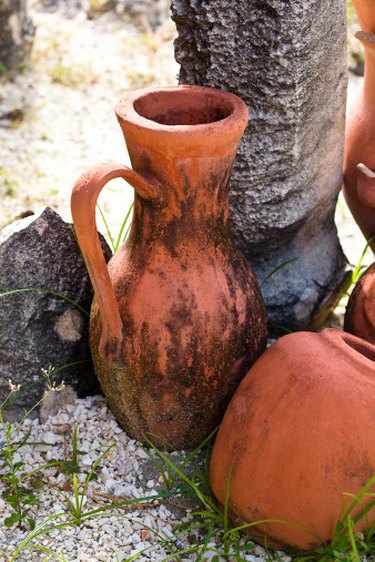
Clay pottery production boasts an extensive history as both an art form and as a practical industry. Not only can clay be used to make sculptures and decorative pots, many cultures devised a majority of their cooking and eating utensils from clay. Countless techniques for forming, firing, and glazing have been discovered and perfected. One of these techniques is polishing. By polishing clay you can bring out the natural color and shine of the clay which can be hidden in the glazing process.
Sand, Buff and then Polish Clay
Step 1
Run your fingers over the clay and select the type of sandpaper which has a grit approximately matching the texture of the clay. Cut squares of sand paper about 3 inches by 3 inches from the sandpaper matching the clay's texture and also from several other pieces of finer grit.
Video of the Day
Step 2
Wet the surface of the clay and the square of sandpaper with water from a shallow bowl, then begin to lightly sand the clay using the wet sandpaper. Run the piece of sandpaper back and forth over the clay or in small circles, spending about 30 sections on each area, rinsing the sandpaper and the clay frequently.
Step 3
Repeat the process with sandpaper of a slightly finer grit then repeat again with an even finer grit of sandpaper until the surface of the clay is completely smooth and even in texture. When the water in the bowl becomes cloudy from the clay, dump it out and refill it with clean water.
Step 4
Buff the sanded clay with a piece of old denim. Either hold the denim in one hand and the clay in the other hand and rub the denim vigorously over the surface or stretch the piece of denim between two vice grips and rub the clay over it. The more quickly you move the clay over the denim, the higher the shine you will achieve.
Step 5
Polish the clay using a water-based acrylic by either dipping it in the polish or brushing it onto the surface. To dip the clay in polish, pour enough water-based acrylic into a large tub to submerge the clay entirely. Wrap a loop of wire around the neck of the pot, if possible, or insert your hand into the mouth and spread your fingers so you have a grip on the inside. Lower the clay into the polish and then slowly draw it back out, allowing the excess to drip back into the tub. To brush on polish, simply dip a brush into a jar of polish and draw it back and forth across the surface of the clay, working quickly so the polish does not dry in between strokes.
How to Burnish Clay
Step 1
Select a smooth stone or metal spoon to use as a burnishing tool. A burnishing tool will create a smooth, glossy texture on the surface of the clay that looks like polish.
Step 2
Smooth the surface of a piece of unfired clay in the leather hard stage with a piece of canvas or cloth to remove bumps and imperfections. Clay reaches the leather hard stage when its shape becomes fixed but it has not yet dried completely and become porous.
Step 3
Burnish the leather hard clay by rubbing the burnishing tool, a smooth stone or the rounded back of a metal spoon, in small circles all over the surface of the clay. It's also possible to burnish clay in the bone dry stage, the stage at which all of the moisture has left the clay and it appears almost white in color. To burnish bone dry clay, sand the surface first with fine sandpaper to remove imperfections, then dampen the clay with water before following the burnishing procedure.
Tip
For the best results, the polish should be the consistency of milk so the excess will drop off without leaving streaks. When selecting a polish, look for brands that do not yellow over time and avoid spray on and oil-based polishes, which tend to become sticky.
Warning
When buffing your clay, do not use new denim because the dye may rub off onto the surface of the clay. When sanding clay, wear safety goggles and a mask to avoid the inhalation of clay dust.
Video of the Day