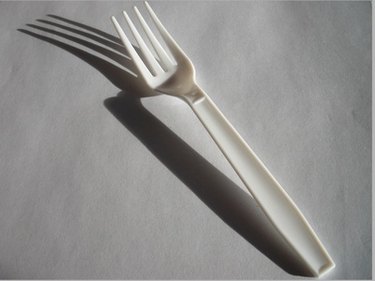
The convenience of plastic forks is hard to beat. Plastic forks are used daily in fast food establishments and at parties because it's easy to dispose of them. However, throwing out plastic forks contributes to environmental degradation. Recycling reduces waste in landfills and helps preserve valuable resources that are used in the manufacture of plastics. Some plastic cutlery, including forks, can now be recycled.
Step 1
Wash and reuse the fork. According to UK-based Waste Online website, reuse is "preferable to recycling as it uses less energy and fewer resources." Another alternative is to select a fork made out of biodegradable materials that decay when exposed to sunlight. McDonalds and some other fast food establishments now use biodegradable cutlery.
Video of the Day
Step 2
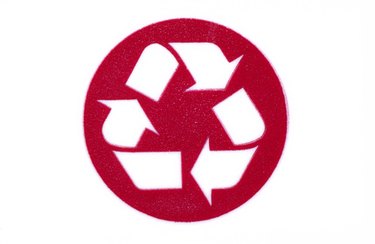
Check the number on the fork. Thirty-nine states in the U.S. require a number stamped on plastics that is surrounded by a triangle made of arrows. This number, which ranges from 1 to 7, indicates what type of plastic is used to make the item. Recycle the fork if the number stamped is 1 to 6. Items stamped with a 7 are difficult to recycle and are best rewashed and reused. Unfortunately, most plastic cutlery is stamped number 7.
Step 3
Recycle the fork by donating it to a local homeless shelter, battered women's shelter or other organization offering food. These organizations will use the fork to serve their clientele.
Step 4
Recycle the fork by donating it to a local elementary school or daycare center. The forks are useful for art projects.
Step 5
Recycle the fork as a plant label for a garden. Use a permanent marker to label the seeds and place in the ground with the tines in the earth next to the plants.
Video of the Day