How do I Make Pearl Ex Powders Stay on Polymer Clay Beads?

Jacquard Pearl Ex powders are versatile pigments that can be mixed with a variety of materials and applied to many surfaces. Pearl Ex pigment powders create faux finishes that mimic metallic sheens and shimmering pearlescents. Non-toxic, Pearl Ex powder pigments will not fade or tarnish. Mix the pigment powder into varnish, acrylics, wax, oil and most any liquid or viscous product. You can apply the powder to glass, metal, wood, fabric, paper clay and almost anything. You can make Pearl Ex powders stay on polymer clay beads in several ways, depending on whether you are making the beads or simply enhancing them.

Things You'll Need

  • Polymer clay
  • Pearl Ex powder
  • Clay cutter
  • Aluminum foil
  • Baking sheet
  • Polymer clay mold
  • Clear acrylic paint medium
  • Paint sponge
Show More

Instructions

  1. Handmade Polymer Clay Beads

    • 1

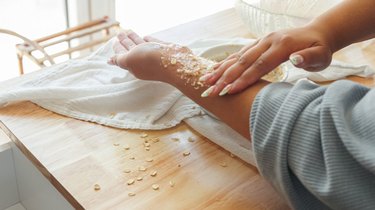
      Soften a section of polymer clay. Mix Pearl Ex powder in with the softened clay and continue to knead the clay. The powder clings to the softened clay.

    • 2

      Roll the clay into a snake. Cut the snake into sections to make the beads. The width of each section is the thickness of the bead.

    • 3

      Insert a needle, small dowel, knitting needle or skewer through the bead to make a hole.

    • 4

      Cover a baking sheet with tin foil. Bake the beads on the foil sheet according to the manufacturer's directions. The Pearl Ex powder will stay on the bead as it bakes.

    Molding Beads with Pearl Ex Powder

    • 5

      Cover the inside surface of a polymer clay bead mold with Pearl Ex powder. Press the softened clay into the mold.

    • 6

      Sprinkle Pearl Ex powder on top of the exposed clay in an open bead mold. Press the powder gently into the softened clay.

    • 7

      Remove the clay from the mold. The Pearl Ex powder will stay on the soft clay bead. Bake the beads according to the manufacturer's directions.

    Decorating Polymer Clay Beads with Pearl-Ex Powder

    • 8

      Mix Pearl Ex powder into clear acrylic paint medium. The powder blends with the clear medium, adding color and sheen.

    • 9

      Paint the hardened polymer clay bead with the Pearl Ex acrylic mixture using a paint sponge.

    • 10

      Allow the finish to dry on the bead.

Related Searches:

References

Resources

Comments

You May Also Like

  • How to Make Faux Mother of Pearl With Polymer Clay

    You can create the illusion of just about any type of semi-precious gemstone with polymer clay. Faux mother of pearl is no...

  • What Paints to Use for Polymer Clay

    Polymer clay contains no natural clay minerals. It is made from a PVC base with liquid plasticizers, which makes it possible to...

  • How to Use Foil Techniques With Polymer Clay

    Adding foil elements to your polymer clay project adds beautiful metallic qualities to jewelry, beads and other projects. Using foil in your...

  • How to Make Green Clay

    If you are looking for a fun way to entertain your kids, consider making homemade clay. Although you can buy clay in...

  • How to Soften Polymer Clay

    Polymer clay is a soft craft clay, but you still need to work to make it pliable enough to begin your crafts...

  • How to Make Polymer Plastic

    Polymer plastic is a type of plastic that conforms to the shape of a container. Good examples of polymer-based items are rubber...

  • How to Make Paper Clay Over Fabric Beads

    Fabric beads can be beautiful, but not if they begin to fade. They can also lose their luster as your personal style...

  • How to Make Art With Clay

    Since prehistoric times people have used clay art to make statues of the gods, likenesses of prominent people and animals, and containers....

  • Pearl Powder & Acne

    Chinese pearl powder, made from ground pearls, is touted as an acne treatment that can be applied externally or taken internally.

  • How to Make Hydrated Green Clay

    Green clay, or Bentonite, swells to up to 18 times its volume when fully hydrated. Green clay can be mined all over...

  • How to Make Clay Hand Prints Shiny

    Clay hand prints are one of the most common crafts for keeping our precious memories of babies. One way to customize this...

  • How Do You Hand Knot Pearls?

    Pearl necklaces are often passed from one generation to the next because of the beauty and continuing value of pearls. Over time...

  • How to Make Mica Powder With Pigments

    Mineral makeup shimmers and glows, thanks to mica pigment powders. Many people mix their own mica powders because it is an all-natural,...

  • Rubber Stamp Techniques for Polymer Clay

    Rubber Stamp Techniques for Polymer Clay. There are several types of polymer clay available. For the purpose of rubber stamping, a soft...

  • How to Get Started Working With Polymer Clay

    Polymer clay is a versatile material that can be used to create beads, jewelry, wall art, vessels and sculpture. The clay can...

  • How to Make Colored Resin

    Resin is a natural secretion of coniferous trees and other organisms. The resin used in jewelry making is an artificial compound called...

  • How to Make Wax Beads

    Wax beads are small balls of wax sold in bulk. When wax is in this form rather than large, solid shapes, it's...

  • How to Make Modeling Clay

    "I'm bored!" It's the summer vacation mantra for children. Getting the kids involved in arts and crafts is a wonderful alternative to...

Related Ads

Featured