Things You'll Need
Gardening gloves
Clippers or grafting knife
Plastic bags
Twine
Commercial rooting compound
Vermiculite, perlite or builder's sand
Pots and baskets
Plastic wrap
Compost or peat moss
Mulch
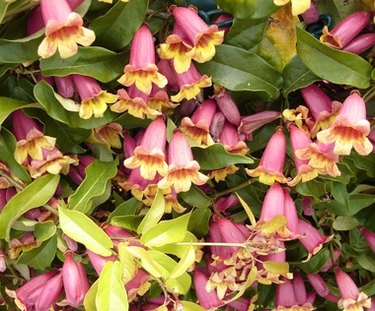
You can clip and root honeysuckle plants (Lonicera) by taking cuttings from an existing healthy plant. From the red-flowered honeysuckle trumpet vine to the multi-colored, showy tatarian honeysuckle shrub, these plants are low-maintenance favorites in many summer gardens and yards. To take and successfully root honeysuckle cuttings, you'll clip vines or wands from healthy plants and prepare them to form new roots before a transplant. When propagated properly, these fragrant plants will regrow quickly to attract pollinating bees and hummingbirds to your garden.
Step 1
Take softwood cuttings from a honeysuckle plant in early summer when the plant is growing. Use short garden clippers to make a clean cut of a wand between 4 and 24 inches long. Cut at a slight slant. Avoid clipping older strands that have already become woody. Leave very immature shoots on the honeysuckle bush or vine.
Video of the Day
Step 2
Drip 1/4 cup of water into a small plastic bag. Put the cutting, cut side down, into the bag. Seal with twine and set aside while taking other cuttings.
Step 3
Initiate rooting by stripping the cutting of leaves on its bottom half. Dip the cut end into a commercial rooting compound.
Step 4
Prepare the pots, baskets or bags that you'll use to complete the rooting process. Choose an unfertilized medium such as builder's sand, vermiculite or perlite. Bury the entire half of the wand that is without leaves. You may plant multiple wands in a single pot or basket.
Step 5
Tamp the soil down firmly and water well. Wrap the pot or basket top in plastic wrap to create a greenhouse effect. Maintain steady moisture for the plant until rooting is complete. Water whenever condensation fades from the plastic cover.
Step 6
Check the plants after two to three weeks to see how rooting is progressing. Gently lift one or two cuttings to view roots. Cuttings are ready to be planted when roots have grown to about 1 inch long.
Step 7
Plant the new plants in well-tilled soil enriched with compost and peat moss. Keep them well-watered during the first year. Mulch in the fall with a blanket of straw or shredded leaves.
Tip
Cuttings are best when taken in early morning or at dusk when the temperature is cooler.
Video of the Day