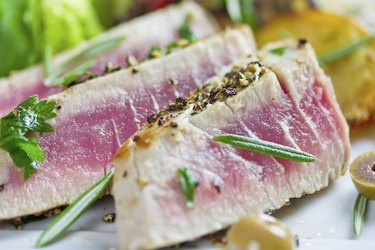
A broiled tuna steak makes for a dinner that appears elegant, but takes only minutes to get onto the table. A meaty fish with flaky flesh and a strong flavor, tuna benefits from short bouts of high-heat cooking, which helps prevent it from drying out. Marinate the tuna first, or finish it with a quick sauce for the most flavor.
Selecting a Steak
Video of the Day
Choose fresh tuna steaks -- they have the best flavor and quality for broiling. They should not smell fishy, but rather have a meaty aroma. A deep, dark red flesh also indicates a quality steak; brownish or maroon-ish coloring could indicate a steak cut from near the bone that will have a strong, and sometimes unpleasant, flavor. Albacore tuna steaks are lighter red in color and often less expensive than bluefin, a highly sought after variety, and yellowfin. Go for thick steaks, because these are less likely to become dry when broiled. If you opt for flash-frozen tuna steaks, allow them to thaw in the refrigerator -- don't try to speed up the process by placing them in the microwave or on the counter.
Video of the Day
Prep the Steaks
Pat fresh tuna steaks dry so they develop a tasty crust when broiled; excess moisture encourages steaming. Brush the tuna with olive oil, and season with salt and pepper or a blend of spices such as allspice, coriander and cinnamon. Tuna steaks do well with assertive flavors. Alternatively, marinate the steaks for about an hour in a mixture of your choosing. Tuna is especially delicious when paired with an Asian-inspired marinade, such as one made with soy, ginger, garlic and lemon.
Broiling Technique
Preheat your broiler to high. Place the steaks on a broiling pan and insert the pan into the oven so that it's just about 4 inches from the heat source. Keep the oven door slightly open while broiling -- this helps prevent steam from building up inside. You'll maintain a hot, dry oven environment that encourages a good crust to develop on the steaks. Broil for about 3 minutes on each side. Thicker steaks may require a minute or two extra, but you want the meat to remain pink in the center.
Serving the Steaks
Slicing the steaks before serving reveals the band of white-cooked flesh surrounding the pink middle. Top the tuna with an herb-infused butter sauce or a tangy vinaigrette. A freshly made fruit salsa also complements the silky texture of the fish.