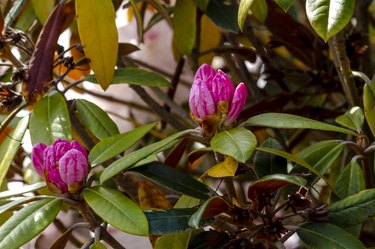
Healthy, vibrant leaves are an important part of the spring performance of a rhododendron (Rhodenderon spp.). The shrub's colorful blossoms are meant to be viewed against a lustrous backdrop of green. When brown leaves show up in a rhododendron, it's usually at winter's end -- right before flowering time. Winter damage that makes foliage brown can have several causes, but all relate to excessive drying of rhododendron leaves. Reviewing your rhododendrons' culture may reveal the culprit.
Overexposure and Placement
Video of the Day
Rhododendrons are naturally understory plants that flourish in sheltered, filtered shade. When exposed to drying winds or excessive sunlight, water evaporates from their leaves. When water is lost faster than the plants can replace it, water-deprived cells turn brown and die. The outermost leaves and twigs -- the parts farthest from a rhododendron's waterways -- are affected most. The problem often happens in winter when cold or frozen soil prevents roots from replenishing excessive water loss. Sunburn and sunscald go hand in hand with water lost from leaves. Rhododendrons require protection from wind and direct sunlight, especially during midday when sunrays are at their peak. Morning light with afternoon shade or filtered light is best for the shrubs.
Video of the Day
Improper Planting Depth
Rhododendrons require a delicate balance of soil moisture and plentiful oxygen to keep their shallow root systems healthy. When planted, the shrubs should sit slightly higher than the surrounding soil surface to ensure good drainage and aeration. When planted too deep, rhododendron roots struggle to get the oxygen they need. Anything that inhibits root health inhibits root activity, including the movement of water and nutrients through the plants. As a result, rhododendrons suffer browning of leaf tips or edges. Deprived of water and nutrients, entire leaves and twigs eventually turn brown and die. Correct planting depth circumvents the problem.
Poor Water Management
Poor drainage and overwatering are common causes of browning leaves and stems. Underwatering has the same effect. Rhododendrons grow best in soil that is consistently moist but never soggy. Waterlogged roots suffocate and shut down, leaving no avenue to replace water lost to drying winds and sunlight. Prolonged saturation leads to diseases that kill an entire plant, not just its leaves. Rhododendrons should be watered regularly and thoroughly so that each plant's entire root zone is moistened. Check soil with your fingers to ensure it moist, not overly wet. A 3- to 4-inch thick layer of organic mulch retains soil moisture and reduces temperature fluctuations, but keep mulch at least 2 inches from plant stems. Prepare your rhododendrons for winter by watering their soil deeply before the ground freezes.
Frost or Fertilizer Damage
Rhododendron varieties are hardy from U.S. Department of Agriculture plant hardiness zones 4 through 9, depending on the species. Plant only varieties suited to your growing zone. Shrubs too tender for the rigors of your climate will suffer leaf browning and loss. Shallow rhododendron roots are sensitive to overfertilizing; fertilizer burn leaves foliage brown as well. Avoid late-summer or fall fertilizing, which stimulates growth. Tender, vulnerable new growth affects the plants' hardiness overall. If you fertilize, do so early in the year, and flush the soil thoroughly so damaging fertilizer salts don't accumulate.
- The Seattle Times: Many Things Can Cause Rhododendron Leaves to Turn Brown
- The Connecticut Agricultural Experiment Station: Common Problems of Rhododendrons and Azalea
- Cornell University Cooperative Extension, Suffolk County: Diagnosing Rhododendron Problems
- University of California Integrated Pest Management Online: Pests in Gardens and Landscapes -- Rhododendron
- Washington State University Extension: How to Identify Rhododendron and Azalea Problems