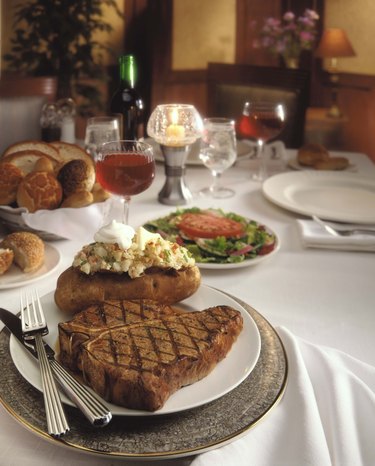
How to Age Steak

How to Age Steak thumbnail
Beef being dry aged commercially.

There are two kinds of aging when it comes to beef: wet aging and dry aging. Wet aging is when the beef is put into a vacuum sealed plastic bag and allowed to age in its own juices. Wet aging takes less time than dry aging, generally around seven days. Wet aging is the type of aging that most butchers do now. Dry aging is different though, and is actually when you want the beef to dry out. It takes anywhere from seven to twenty-one days to dry age beef.
The reason people like dry aged beef is that the process allows the moisture in the muscle to evaporate, and this gives the meat a beefier flavor. Also, the beef is naturally tenderized because of the fact that the enzymes in the beef are breaking down. One thing to keep in mind is that you cannot dry age single steaks because they are too thin.
For the purposes of this article you will need a piece of beef such as a whole ribeye or a whole loin strip. Does this Spark an idea?

Things You'll Need

  • Rectangular pan that is only two inches or so deep Wire rack Several large immaculate white cotton dish towels Refrigerator thermometer
Show More

Instructions

    • 1

      Rinse your piece of beef with cold water.

    • 2

      Dry the beef well with one or two large white dish towels. Set it aside for a minute and allow it to drain.

    • 3

      Put your pan and wire rack on the bottom shelf of your refrigerator (because this is where it is coldest).

    • 4

      Wrap your beef in another of your large white dish towels and put it on the rack. Using your thermometer measure the temperature, you don't want a temperature any warmer than 36 degrees F.

    • 5

      Change the towel(s) wrapping your beef daily. Empty and rinse the pan daily as well. This is to ensure that your beef stays as dry as possible and that hopefully no mold or any other kind of bacteria has a chance to start growing.

    • 6

      Age your beef for ten days to two weeks. Cut off anything on the outer layer that is dry, crusty, or that seems like it could be bad for you to eat such as if you notice some green mold growing for example.

    • 7

      Store dry aged beef in your refrigerator for up to twenty-one days. If you haven't eaten all the beef in twenty-one days, cut the rest of it into steaks. Put it in freezer-proof, heavy duty plastic wrap, or plastic bags and put it in your freezer.

Tips & Warnings

  • To get your white dish towels clean soak them in cold water overnight. Then soak them in cold salted water for 2 to 3 hours. This will get out any blood stains. Then just wash them like you normally would. Check your thermometer daily to make sure the temperature isn't above 36 degrees F. If it is any warmer it could cause the meat to spoil. Use only USDA Prime or USDA Choice that is yield grade 1 or 2 only cuts of meat when dry aging beef. The reason for this is that these have a thick layer of fat that will prevent your beef from spoiling while you dry age it.

  • If you see anything on your beef that looks like it could harm you if you ate it at any time, be sure and cut it off right away, so there is little to any chance that you accidentally give yourself food poisoning. One thing to bear in mind before you decide to dry age beef at home is that The National Cattleman's Beef Association does not endorse dry aging beef at home because of concerns about beef spoiling and people getting food poisoning. Only get into your refrigerator when you really need to. Don't be constantly opening it to check on your beef as this could disrupt the even temperature necessary to dry age your beef, and could make the beef spoil before the process is complete.

Related Searches:

Resources

Comments

  • John Debi Sparkman Feb 14, 2011
    why no updates?
  • thebigboerewors Sep 24, 2010
    I have just embarked upon the epic adventure of dry aging two bone in rib eye roasts, on is 6 lbs the other 6.7. I will update my progress as things unfold

You May Also Like

  • How to Dry Age Steaks

    Dry-aged steaks are flavorful and can expensive at a steakhouse. It is possible to dry age steaks at home to create the...

  • How to Age Beef

    If you love beef and you live for a nice steak, then you must try aging it at home. This is the...

  • How to Age Meat

    Beef is aged to increase tenderness and to improve flavor. While the preferred flavor of beef is a personal preference, most consumers...

  • How to Dry Age Steak at Home

    Dry aged steaks are created by exposing whole pieces of beef to the open air for an extended length of time. This...

  • How to Properly Age Beef for Cooking

    Learn how to properly age beef or steak for cooking in this free expert cooking video on preparing a delicious steak dinner.

  • How to Wet Age Beef at Home With Lemon Juice

    Beef benefits from the aging process. It creates a new, distinctive flavor because the texture and the beef itself improves over time....

  • How to Age Steaks at Home

    More than 20 years ago, before vacuum sealing, dry aging beef was the normal way of preparing steaks. Dry aging steaks allows...

  • What Is Aged Steak?

    What makes for a perfect steak is the subject of much debate. Experts argue the merits of grain-fed versus grass-fed cattle, cooking...

  • How to Age Beef at Home

    Aging of beef is the time, in days, from slaughter until the meat is cut down, sold and eventually consumed. The average...

  • How to Wet Age Beef

    Comments. You May Also Like. How to Age Steak. There are two kinds of aging when it comes to beef: wet aging...

  • How to Age Beef Steak

    USDA Prime cut of beef Wire rack Baking pan Paper towels Separate refrigerator (optional)

  • How to Dry-Age Meat at Home

    Aging meat allows the enzymes present in the meat to break down the muscle tissue, resulting in better texture and flavor. Most...

  • What Equipment Is Needed for Aging Beef at Home?

    How is it that the beef at the steakhouse always tastes better than the steak you have at home? The secret is...

  • How to Wet Aged Beef at Home

    Comments. You May Also Like. How to Wet Age Beef. Many high-end restaurants boast that their steaks are wet aged. This means...

  • How Do You Broil Ribeye Steaks?

    Beef has been a popular food choice for many years. In fact, according to an article in Time magazine in 2007, the...

  • The Differences Between Prime & Dry Aged Steak

    The Differences Between Prime & Dry Aged Steak. Both prime and dry aged steak are delicious cuts of beef that are served...

  • How Long Do You Cook Pork Steaks?

    Pork steaks, also known as blade steaks, are pieces of pork cut from the pork shoulder. They resemble beef steaks in appearance...

  • How to Age Deer Meat

    Hunters love to go after deer for their lean, savory and healthy meat. A single deer can provide several months worth of...

  • How Do You Clean Meat Processing Equipment?

    Meat processing equipment is used in locations such as private homes, butcher shops, or any business that sells meats. This equipment includes...

  • How to Age T-Bone Beef Steaks

    Aging a T-bone steak is essential if you are looking for that classic steakhouse flavor. Aging allows for the beef's natural enzymes...

Related Ads

Know Your Knives: Josh Ozersky’s Comprehensive Guide

I have a lot of knives. You probably do too. I really don’t know what to do with them all. There’s a Chinese cleaver, aï؟½

Featured