Things You'll Need
Spade shovel
Buckets
Clay
Water
Plaster bats
Hammer
Large serving spoon
Sieve
Plastic wrap
Plastic bag
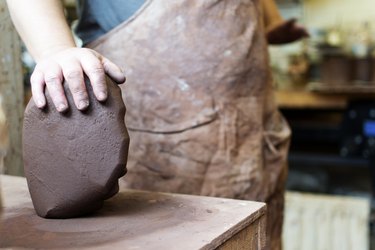
Terra-cotta is a popular variety of reddish clay that's used for an assortment of projects ranging from pottery to jewelry making. To make terra-cotta, you will need to source clay from an area near your home to use as a base – it can usually be extracted by digging it up from the ground. Making terra-cotta requires some physical exertion, but can still be a do-it-yourself project for the novice or experienced hobbyist.
Digging and Preparing Clay
Step 1
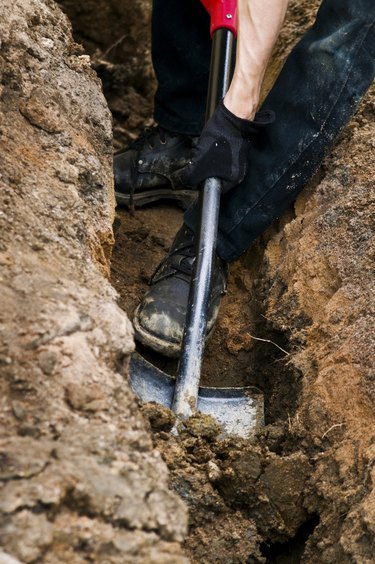
Dig clay from the ground using a spade shovel. Depending on your location and environmental conditions, the clay you find may be dry or wet. If it is wet clay, make sure you have dug far enough down so that you pull up clay and not mud. Clay has a smoother consistency and smaller particles than mud. You can test dry clay to ensure it is good by crumbling some up and mixing it with a small amount of water. Fill up enough buckets until you have your desired amount of clay.
Video of the Day
Step 2
Pour the buckets of clay onto plaster bats and arrange it into a thin layer. Allow the clay to dry completely.
Step 3
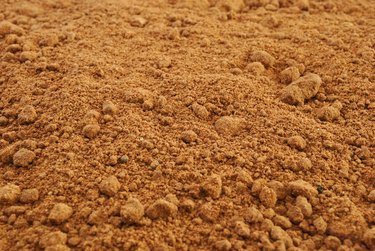
Move the dried clay to a flat surface. Break it into pea-sized pieces using a hammer.
Making the Terra-Cotta
Step 1
Measure an amount of water that is equal to the amount of dried clay particles that you have. Slowly add the clay to the water, mixing with serving spoon as you go to prevent clumping. Continue to add more water until the clay is a watery consistency. Let the mixture sit for a minimum of three hours or up to three weeks.
Step 2
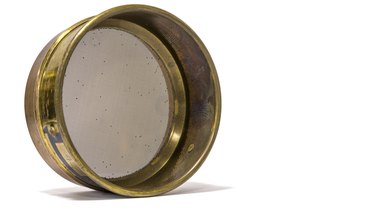
Stir the rested clay mixture thoroughly and pour into a bucket through a sieve. Add water to the sieve as necessary to keep clay mixture flowing through. Allow it to settle. Carefully pour off excess water. Repeat until the consistency becomes similar to mud.
Step 3
Spread the clay onto plaster bats in a thin layer. Allow to stiffen, then knead the clay to remove air bubbles. Wrap the terra-cotta in several layers of plastic. Place the wrapped clay in a plastic bag to store until you are ready to use for your project.
Tip
If you are having a hard time finding clay near your home, look where land has been cleared for building a structure or a road, as well as near ponds and lakes.
Warning
As you dig the clay, use caution to prevent any stones, twigs or dirt from getting into it.
When breaking the dried clay into pea-sized pieces, it's a good idea to wear safety goggles to protect your eyes from flying debris.
Video of the Day