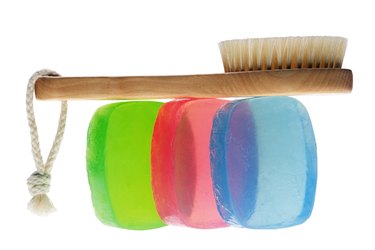
If you want to make your own homemade soap, don't start out by making a batch of complicated cold-pressed soap that uses lye. Instead, opt for glycerin soap, which you can make quickly with only a few basic ingredients. Liquid glycerin allows even the most inexperienced crafts person a chance to create a cleansing and functional soap that leaves you feeling fresh.
Measure The Molds
Video of the Day
If you measure the molds first, it prevents you from overfilling them during the soap-making process. Fill individual soap molds or a standard 13-by-9-inch glass casserole dish with water, and then pour the water into a glass measuring cup. Notate the amount indicated on the measuring cup, which tells you how much liquid glycerin you need to fill the molds. Discard the water. Do not use aluminum molds or tools when making liquid glycerin soap because the aluminum can corrode and react with the ingredients in your soap.
Video of the Day
Protect Eyes and Skin
Melted soap base can irritate your eyes and burn skin upon contact. Protect yourself during the soap making process by putting on eye goggles and heavy duty rubber gloves; exchange the rubber gloves for oven mitts when handling hot liquid glycerin. If hot melt-and-pour soap base does burn your skin, immediately rinse your skin in cool water. Always keep hot soap-making ingredients and equipment out of the reach of children.
Liquid Glycerin Base Prep
Prepare a double boiler for melting the soap base. Add water to the bottom of a double boiler, and set it on the stove, adjusting the temperature to high to boil the water. Once the water begins to boil, turn down the heat to medium to allow it to continue simmering. Add the top part of the double boiler to the pan and fill it with melt-and-pour cubes. Stir thoroughly with a wooden spoon while the soap base melts until it reaches a smooth and even consistency.
Add Fragrance, Herbs and Color
Squeeze a few drops of food coloring into the liquid glycerin base and stir until thoroughly combined. If you want a scented soap, add 10 to 15 drops of pure essential oil of choice, mixing the oil in completely with the spoon. Avoid using fragrance oil, which can irritate the skin for some people. Add in 1/2 cup of dried herbs or flowers, such as chamomile, lavender or calendula, stirring well to combine into the soap base.
Pour Into Molds
Spray your soap molds or the glass casserole dish with nonstick cooking spray, and pour in the liquid glycerin soap. Cooking spray enables the finished soaps to gently slip right out of the molds. Allow the molds to sit undisturbed until the soap completely cools, solidifies and hardens, then pop out the soap and cut it into bars if you used a block mold. Keep homemade glycerin soap bars out of direct sunlight and away from excessive moisture or they could melt and dissolve. Store the glycerin soaps by wrapping them in plastic wrap or in a plastic storage bag and place them in a cool, dark cupboard until ready to use.