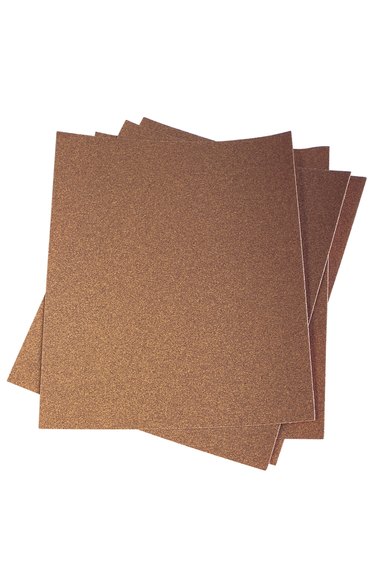
Sandpaper is made of mineral abrasives that remove layers from surfaces -- usually wood and metal -- to help paint or other sealants adhere better. Sandpaper comes in different "grits," or levels of abrasiveness. Coarse grits have a lower number of particles per inch and are used for the first round of sanding to remove big pieces of material that make the surface uneven. Fine grits have more particles per inch and are used for removing small stains. Use the right grit and technique to get the most use of your sandpaper.
Step 1
Choose the correct grit of sandpaper for the job you're doing. For example, it you're stripping paint off a wooden item, use a coarse grit. If you're applying a second coat of paint, use a fine grit to sand the first coat.
Video of the Day
Step 2
Cut a sandpaper sheet in half lengthwise. Take one long piece and fold it in half horizontally. Unfold it and fold each end in so that they meet at the middle fold.
Step 3
Sand the wooden item with the wood grain. When one side is used up, unfold and refold with a new side. Continue sanding.
Step 4
For a metal item, start with a fine grit -- at least 220 -- and sand down to the depth of the deepest scratch. Follow up with finer grits until you get the shine you want.
Warning
Wear a mask when sanding to protect your eyes and lungs.
Video of the Day