Things You'll Need
Sterling silver, gold or other base sheet metal
Drill bits
Scribe, punch or automatic center punch
Drill
Wooden block
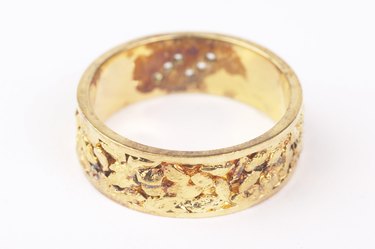
Metal jewelry often contains intricate designs that look beautiful on the wearer. To fabricate metal into jewelry you must learn to saw and pierce sheet metal. Sometimes you can begin sawing at the edge of metal. Other times the design requires the jewelry maker to create a cut in the center of sheet metal and begin sawing in the middle of the metal. To begin sawing in the center of the metal, you will need to drill a hole.
Step 1
Select a drill bit that will create a hole large enough for the saw blade to slip through. Insert the drill bit into your drill. Drill bits come in different numbered sizes. Lower numbers are larger bits.
Video of the Day
Step 2
Mark the sheet metal where you want to drill. You can use a scribe, punch or automatic center punch to create this registration mark. Marking the metal before drilling ensures that there is no slippage -- a safety, as well as an aesthetic, concern
Step 3
Dip the drill bit into paraffin wax or some other lubrication before drilling to protect the bit. Insert the drill bit you selected and coated into the chuck and secure it.
Step 4
Place the metal on top of a wooden block that should cover your table surface.
Step 5
Place the drill inside the line you have drawn on your sheet metal to mark where the design will be sawed if you are making an interior cut. If you drill on the line itself, then you will have an unsightly mark in your design that will require extra attention when sanding and filing.
Step 6
Drill the hole using a slow pace. If you drill too fast, it will cause the drill bit to get hot and possibly dull or break.
Tip
Straight drilling is most easily done with a drill press. It can, however, also be done with a hand drill, flex shaft or other drill. Not all drills are motorized. You can use inexpensive hand drills to pierce metal.
Warning
Wear eye goggles when drilling.
Video of the Day