Difficulty: Moderately Easy
Things You’ll Need:
- watercolor paints.. crayola paints work well
- watercolor paper or handmade paper
- large round watercolor brushes
- small bowls for water
- flat water safe surface on which to work.
- shallow pan of water larger than the paper
- small clean sponge
Step1
prepare your brushes by placing them in water to soften
Step2
prepare your moist cakes of paint by dropping water onto the cake to let it dissolve
Step3
prepare your paper by soaking one sheet at a time in the pan of water for approximately 30 seconds... then remove it gently and spread it on your flat water safe surface.
Step4
wipe off most of the water from your brush... leaving it wet but not dripping and dab it into the color of paint you want to use.... let us start with red.... load the brush with red paint... it should be wet but not dripping.
Step5
holding the brush upright move over the paper and bring the brush straight down and dab a red circle onto the paper. watch how the paint spreads from the area of initial contact with the brush.
Step6
load another brush with yellow paint and dab a yellow cirlce next to but not quite touching the red circle. watch the paint spread and mix. observe how the colors mix and form new colors.
Step7
load a third brush with blue paint and dab a blue circle near both the red and the yellow circles... forming a triangel.... observe how the spreading paint forms new colors.... The circle or dot is your first design element.
Step8
Next place a loaded brush of color on the paper and draw it toward you forming a straight line. Add another line next to it with another color. Draw a third line with a third color that crosses the first two lines.... the straight line is your second design element. observe how the colors spread and mix.
Step9
The third design element we will work with today is the curved line. Draw three curved lines that run parallel or cross each other from three different colors of paint and observe how the paint spreads and mixes.
Step10
When you are ready to move on, practice making designs that use more than one design element. If you paper begins to dry... wet it with the sponge.
Step11
give the children some structure to follow in their designs such as... "we will now make a design using three different design elements that do not touch but that are close enough together that the paint will move to each other and touch." Or "Use at least three different design elements and at least three different colors" This gives them some structure to get them started... but is open ended and allows them to be creative. Stress that the object is to work with design elements... not to draw pictures... you want them to look at the play of colors and at the movement of the paint... not be disappointed or critical of the accuracy of their work.
Step12
Keep them supplies with fresh paper and do not allow their work to become muddled by too much painting too close together....
Step13
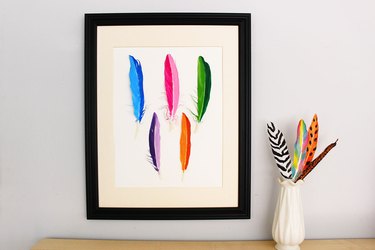
Allow the finished pieces to dry thoroughly. Many will be suitable for mounting and framing.
Step14
cover the paints tightly when finished and wash and dry the brushes well.
Enjoy
Angel
Comments
MidniteWriter said
on 7/12/2008 This makes total sense. You explained the steps to this process very precisely! Watercolors are fun for kids and adults alike! Good to see this article, can't wait to read more from you!