How to tape and mud drywall

Taping and mudding drywall is a messy job but it's not very difficult. The worst part is the sanding, and the better you are with the mudding part, the less drywall sanding you'll have to do. There's a few techniques that will help and the right tools make all the difference to your tape and mud job. Plan on the job taking three or four days to allow for the joint compound to dry between coats. Does this Spark an idea?

Things You'll Need

  • Drywall tape
  • Scissors or razor knife
  • Joint compound
  • Mud pan
  • 6" drywall knife
  • 9-12" drywall knife
  • Corner drywall knife
  • At least one clean bucket
  • Ladders
  • Drop cloths or plastic sheeting if you need to protect floors and belongings
  • Medium-fine grade sanding sponge
  • Foam backed drywall sanding block
  • Mesh sanding pads
  • Dust mask
Show More

Instructions

    • 1

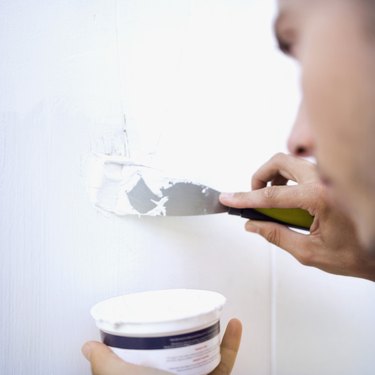
      Before you start laying mud and tape, go over all surfaces to ensure drywall nails or screws are set below the surface. If you're not sure, run the 6" knife down the seams. You'll feel the heads if they are sticking up.Because inside corners are tricky, start with the long flat seams to get a feel for the tools and materials. Apply a smooth coat of mud with the 6" knife, one seam at a time. (The 9" knife is for the final coats.) Cut the tape and lay it along the mud line, pressing it gently down with your hand. Now lay a thin coat of mud over the tape. Rinse off your knife between coats by dipping it in a bucket of clean water. This is boring work so I suggest having your favorite radio station on, or some good company!

    • 2

      Inside corners are finicky but there are tricks. First apply a thin coat of mud. Make sure it's filling in the gap in the corner completely. Cut your tape and wet it lightly in your water bucket. Press it carefully into the corner. Using your corner knife, lay a thin coat down the corner. If you have outside corners, run the knife down each side, removing clumps along the corner as you go. Finally, go around the room and hit all the screw heads. Remove big globs of excess mud as you work because these are hard to sand down later.

    • 3

      Everything has to dry for a day. If you were able to get this all done early in the morning and drying conditions are perfect you might be able to do your second coat in the evening. It's easy to see if the mud is dry because it will turn white. If there are gray areas, it's still wet. You want everything to be thoroughly dry. Always clean all your tools completely when you are done working and never scrape unused mud back into the bucket. Don't scrape it down the drain either because you can create awful clogs. Leftover mud goes into the trash. If you clean your tools out in the sink this is fine but let the water run for a little while to make sure residue gets washed out of the J-trap.

    • 4

      Use the 9-12" knife for your next coat. Before you start, go over the walls and scrape off any blobs or big ridges you may have missed the day before. Try to do smooth, wide swathes of mud as you work. Do a second coat on everything you first coated.

    • 5

      If you plan on putting a texture on the walls, you can get away with sanding and doing your texture after the second coat. Unless you are very skilled, a smooth wall will require a third coat. I sand everything at this point, and take a good hard look in good light. Then I only coat what looks and feels uneven. Use the sanding sponge with a light touch for corners. The sanding block and drywall sanding pads work better on large surfaces.

    • 6

      If you want to be extra special picky, sand your third coat and prime the walls. Then go over it one more time looking for ridges and air bubbles because they will be more obvious when the wall is painted. Wrap your primer set up completely in a trash bag so you can use it to spot-prime any touch-ups.

Tips & Warnings

  • You can buy special tape for doing inside corners. It is pre-creased and much easier to set to ensure a straight line.

Related Searches:

Comments

You May Also Like

  • How to Mudd & Tape Drywall

    Walls erected using modern construction techniques are typically made of drywall. The drywall needs to be taped and mudded in order to...

  • How to Texture Walls With Drywall Mud

    Walls textured with drywall mud can add beauty to your home. Buy special texturing tools or use a broom, dry brush or...

  • How to Repair Drywall Tape

    Drywall tape tends to peel over time, especially tape that is located in areas that are exposed to abuse from furniture, children...

  • Taping & Mudding Drywall

    Drywall is one of the most popular building materials available today. It is used for walls, ceilings, and many other architectural features....

  • How to Apply Joint Tape

    I've been doing finish drywall work for many years, and I always add some water to my all-purpose mud before starting to...

  • How to Mud & Tape Drywall Corners

    Adding tape and mud--known as float or compound--to drywall corners will help seal the room and aid both insulation and prevent the...

  • How to Apply Drywall Mud

    Drywall mud, or joint compound, is used to smooth joints in walls and ceilings before they're painted or wallpapered. When it's properly...

  • How to Use Drywall Mud and Tape

    If you have seams in your newly-installed drywall, you can use drywall mud and mesh tape to cover them over and create...

  • How to Tape & Mud Sheetrock and Drywall

    What the construction industry calls mudding is a simple task if you prepare. The drywall or sheetrock seam is taped then drywall...

  • How to Apply Drywall With Tape & Mud

    Drywall, also called Sheetrock, is a paper-covered gypsum wallboard product that is used to cover interior walls. It is non-flammable, and provides...

  • How Do I Mud & Tape Drywall Joints on the Ceiling?

    Joint compound, commonly referred to as "mud," is a type of mixture used in drywall construction to hold and join the drywall...

  • How to Tape the Corner of Sheetrock

    When working with sheetrock and sheetrock mud it is essential to allow each coat of the mud to dry thoroughly before moving...

  • Drywall Mud & Tape Instructions

    Applying the mud and tape to drywall will make the difference between a smooth, seamless wall and one that shows every seam....

  • Applying Mud to Drywall

    Mud needs to be used on drywall before it's taped. Learn how to add a new bathroom to a home, including tips...

  • Taping & Mudding Drywall

    Taping and mudding drywall involves applying mud, or a joint compound, with successive thin coats, as a thinner coat will leave a...

  • How to Apply Drywall Joint Tape

    Most do-it-yourself enthusiasts are fairly confident in their ability to install drywall sheets. Where they start to have misgivings is when it...

  • How to Tape & Mud Drywall Seams

    When hanging drywall, several sheets are needed to cover the area. Drywall is slightly tapered at the edges, creating minor indentations along...

  • How to Mud Drywall Corners

    Drywall is a popular building choice for interior wall coverings. Drywall panels are made of a gypsum plaster, which is sandwiched between...

Related Ads

Featured